
Steel vs. Aluminum Trench Boxes
Steel and aluminum trench boxes perform the same basic job: creating a shielded working area that protects employees from cave-in forces.
The better choice depends on the specific trench-box model, allowable depth, shield weight, available lifting equipment, transportation requirements, working dimensions, project conditions, and how frequently the box must be moved.
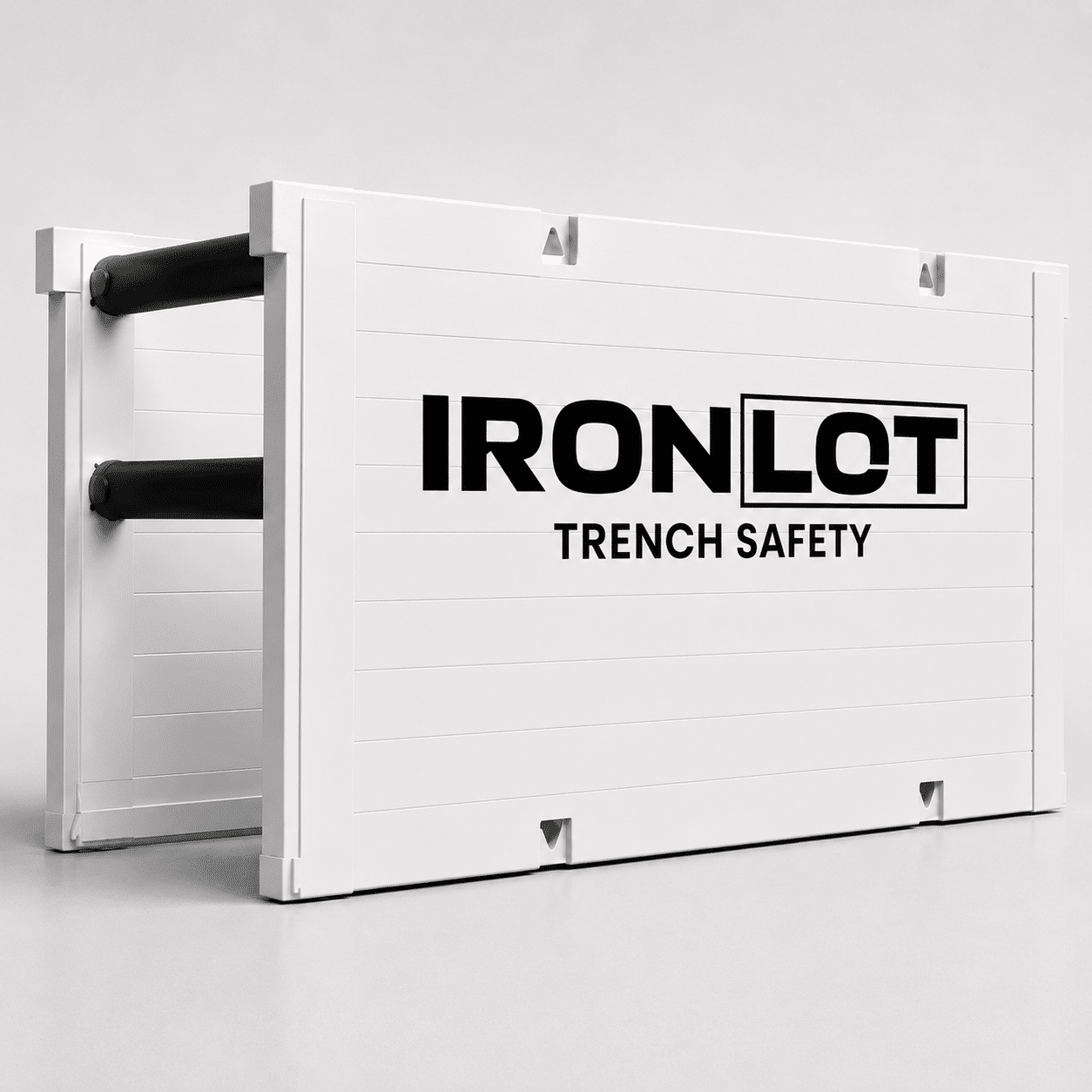
Steel and Aluminum Boxes Serve the Same Basic Purpose
Both steel and aluminum trench boxes are shield systems. They are positioned inside an excavation to create a protected working area for employees.
The material changes important characteristics such as weight, handling, transportation, construction, and the types of shield designs available from a manufacturer. It does not change the basic function of the equipment.
Do not choose between steel and aluminum from material alone. Compare the actual shield's weight, dimensions, depth rating, spreader configuration, tabulated data, and jobsite requirements.
Steel vs. Aluminum at a Glance
The infographic provides a quick visual comparison. The table below adds the equipment-selection details that should be considered before choosing a specific shield.

| Factor | Steel Trench Box | Aluminum Trench Box |
|---|---|---|
| Primary Function | Shields workers inside the protected working area. | Shields workers inside the protected working area. |
| Weight | Typically heavier for comparable shield sizes and configurations. | Typically lighter, reducing lifting and transportation demands in many applications. |
| Lifting Equipment | Heavier configurations may require larger excavators or lifting equipment. | Lower shield weight may allow use with smaller equipment, depending on the actual model and lift. |
| Depth Rating | Determined by the specific shield's manufacturer tabulated data. | Determined by the specific shield's manufacturer tabulated data. |
| Mobility | Greater weight can make frequent loading, unloading, and repositioning more equipment-dependent. | Lower weight can be advantageous where the shield must be transported or moved frequently. |
| Available Designs | Available in many standard, mainline, heavy-duty, and specialty configurations. | Available in standard shields as well as a variety of lightweight and modular configurations. |
Steel Trench Boxes
Steel trench boxes are widely used in underground utility, sewer, water, municipal, road, and heavy civil work.
Steel product lines are available in a broad range of panel heights, lengths, wall designs, spreader configurations, and engineered depth ratings.
One of the most important practical considerations is weight. Larger steel shields can place significant demands on the excavator, lifting equipment, trailer, and transportation plan.
Steel product lines commonly include many heights, lengths, wall designs, and working-width configurations.
Steel is commonly used where contractors need larger shield packages and have equipment available to handle the weight.
The excavator or lifting equipment must be capable of safely handling the actual assembled shield.
Shield weight and dimensions should be evaluated against trailer capacity, freight requirements, and mobilization needs.
Aluminum Trench Boxes
Aluminum trench boxes provide the same basic shielding function while reducing equipment weight compared with many similarly sized steel configurations.
That lower weight can be useful for municipal utility work, service connections, repair projects, congested jobsites, and operations where crews reposition trench-protection equipment frequently.
Some aluminum systems also use modular panels or adjustable configurations. The permitted arrangement, depth rating, and use still depend on the specific manufacturer's design and current tabulated data.
A lighter shield can reduce lifting demands on excavators and other handling equipment.
Lower weight can simplify moving equipment between projects or excavation locations.
Aluminum can be useful where smaller equipment or limited jobsite space affects equipment selection.
Some aluminum product lines use modular panels and adjustable components for additional configuration options.
Does Steel Automatically Have a Higher Depth Rating?
No. Material alone does not establish the allowable depth of a trench shield.
Depth ratings depend on the engineering of the complete shield, including panel construction, wall thickness, structural design, spreaders, connections, shield dimensions, and the conditions established in the applicable manufacturer tabulated data.
A particular steel shield may have a greater allowable depth than a particular aluminum shield, but contractors should compare the ratings of the actual models rather than relying on the material alone.
Two trench boxes with similar exterior dimensions can have different allowable ratings. Verify the current manufacturer tabulated data for the specific shield being used.
Excavator and Lifting Requirements
Shield weight is one of the most practical differences between steel and aluminum.
The machine must be capable of safely lifting, placing, repositioning, and removing the assembled trench box under the actual lift conditions.
The complete handled weight may include panels, spreaders, connection hardware, and other components being lifted as part of the shield assembly.
Transportation and Jobsite Mobility
Transportation becomes especially important when trench boxes move frequently between projects.
Heavier shields consume more available trailer payload and may require different loading, unloading, or freight planning. Lower-weight shields can provide an advantage for crews making frequent service calls or moving between municipal work locations.
For a shield that remains on one large project for an extended period, transportation weight may be less important than working dimensions, depth rating, and overall configuration.
Working Space and Spreader Configuration
The material of the panels is only one part of trench-box selection. The shield must also provide enough usable space for the work.
Panel thickness, spreader width, spreader position, inside clearance, pipe diameter, fitting dimensions, structure size, and equipment access can all affect whether a particular shield is practical.
The dimensions of the pipe, structure, or utility component should be verified against the actual trench box configuration.
Where Each Material Can Make Sense
These are practical tendencies rather than fixed rules. The actual shield still has to meet the project's dimensional, engineering, tabulated-data, and jobsite requirements.
Mainline Utility Work
Steel boxes are frequently considered for repetitive water, sewer, storm, and other utility installation where larger equipment is already available.
Localized Utility Work
Either material can work for repairs, tie-ins, vaults, service connections, and localized excavations when the actual shield dimensions and ratings fit the work.
Frequent Mobilization
Aluminum can be attractive where reduced shield weight helps crews move equipment frequently between jobsites or excavation locations.
Can Steel and Aluminum Trench Boxes Be Stacked?
Some steel and aluminum trench-box systems are designed for stacking, while others are not.
The upper box, lower box, connection hardware, spreaders, and complete stacked configuration must be permitted by the applicable manufacturer information.
Stacking does not create a new allowable excavation depth simply by adding together the physical heights of the boxes.
Which Material Costs Less?
There is no universal answer. Purchase price is only one part of the cost of owning and operating a trench box.
Compare actual models, sizes, spreaders, and required accessories.
Weight, dimensions, distance, and trailer requirements can affect delivered cost.
A heavier shield may require larger lifting equipment than a lighter alternative.
Frequent moves can increase the value of lower equipment weight.
Consider which shield configurations fit the contractor's typical excavation work.
Inspection, maintenance, repair, and actual operating conditions should be included in the long-term comparison.
How to Choose Between Steel and Aluminum
Start with the excavation and the work being performed, then compare specific trench-box models that meet those requirements.
The Competent Person should evaluate the actual excavation and confirm that the selected protective system is appropriate for the conditions.
Common Steel vs. Aluminum Selection Mistakes
- Assuming every steel trench box has a higher depth rating than every aluminum trench box.
- Selecting a box only because it is lighter.
- Selecting a heavy steel shield without verifying available lifting capacity.
- Comparing exterior dimensions without checking inside working clearance.
- Ignoring the dimensions of the pipe, fitting, manhole, vault, or utility component.
- Comparing purchase price without considering freight and mobilization.
- Assuming stackability from material or appearance alone.
- Failing to review current manufacturer tabulated data for the specific shield.
Frequently Asked Questions
Are aluminum trench boxes safe?
Yes. Aluminum trench boxes are shield systems and can provide appropriate worker protection when the specific shield is selected and used within its applicable manufacturer tabulated data.
Are steel trench boxes stronger than aluminum trench boxes?
Material alone is not enough to compare the capacity of two complete trench shields. Compare the actual engineered ratings and manufacturer tabulated data for the models being considered.
Is aluminum always better for a small excavator?
No. Lower shield weight may make an aluminum box easier to handle with smaller equipment, but the machine still needs sufficient lifting capacity and the shield must meet the project's other requirements.
Which material is better for deeper excavations?
Compare the allowable ratings of the specific shields being considered. Do not determine allowable depth from material alone.
Which is better for municipal utility work?
Both may be appropriate. Aluminum can provide a handling advantage where lower weight and frequent repositioning are important. A steel shield may be preferable when its dimensions, rating, and configuration better match the project.
Choose the Shield, Not Just the Material
Steel versus aluminum is only the beginning of the selection process. The final decision should account for the specific shield's depth rating, dimensions, weight, spreader configuration, working clearance, lifting requirements, transportation needs, project conditions, manufacturer tabulated data, and Competent Person review.
Need Help Choosing Steel or Aluminum?
Iron Lot supplies steel trench boxes, aluminum trench boxes, manhole boxes, spreaders, and related trench-safety equipment for underground utility, municipal, public works, excavation, and construction projects.
Contact us with your excavation dimensions, required working area, available lifting equipment, and delivery location for current pricing, availability, and freight coordination.