
Trench Box vs. Shoring: What’s the Difference?
A trench box and a shoring system can both be part of an excavation protective system, but they protect workers in different ways.
A trench box is a shield designed to protect workers inside the box from cave-in forces. Shoring supports the sides of the excavation to help prevent soil movement or collapse.
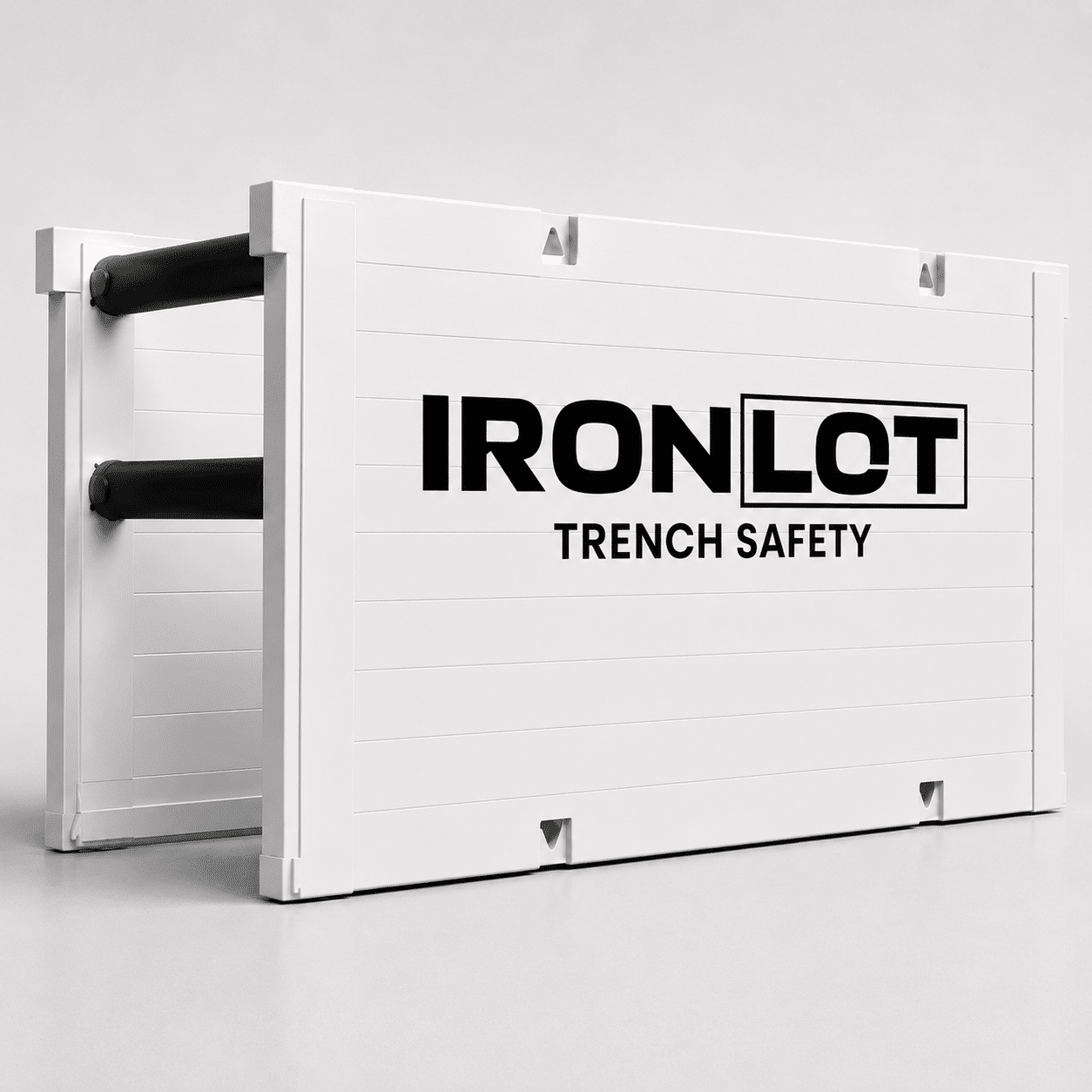 Shield System
Trench Box
Shield System
Trench Box
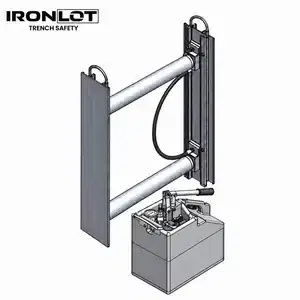 Support System
Hydraulic Shoring
Support System
Hydraulic Shoring
What Does “Shoring Box” Mean?
The terms used on excavation jobsites are not always the same as the terminology used in regulations and manufacturer documentation.
“Shoring box” may be used informally in conversation, but it does not clearly identify which type of protective system is being discussed. A contractor using that term may be referring to a trench box, trench shield, or some form of shoring equipment.
For equipment selection and protective-system planning, it is better to distinguish between a trench box or shield system and a shoring or support system.
A trench box shields workers from cave-in forces. A shoring system supports the excavation walls.
What Is a Trench Box?
A trench box, also called a trench shield, is a protective structure positioned inside an excavation to create a shielded working area for personnel.
A standard trench box typically consists of two side panels connected by spreaders. The panels are positioned between workers and the excavation walls, while the spreaders establish the working width inside the shield.
The box is not intended to hold the trench walls in position. If surrounding soil moves or caves in, the shield is designed to withstand the forces permitted by its design and manufacturer tabulated data while protecting workers who remain within the protected area.
What Is a Shoring System?
Shoring is a support system used to support the sides of an excavation. Rather than creating only a shielded area inside the trench, shoring interacts with the excavation walls as part of the support system.
Shoring is a broad category. Systems may include hydraulic, mechanical, timber, slide-rail, or other engineered configurations. Each type has its own design, installation method, limitations, and appropriate applications.
Vertical hydraulic shoring, for example, uses rails and hydraulic cylinders to apply controlled pressure against opposing excavation walls.
Shielding System
Creates a protected working area inside the excavation and is designed to withstand applicable cave-in forces.
Support System
Supports the sides of the excavation using a system designed for the soil, depth, loading, geometry, and other project conditions.
Trench Box vs. Shoring: Key Differences
The most important difference is not the material, weight, or size of the equipment. It is the function the protective system performs in the excavation.
| Factor | Trench Box | Shoring System |
|---|---|---|
| Primary Function | Shields workers inside a protected working area. | Supports the sides of the excavation. |
| Excavation Walls | The trench walls may remain unsupported unless another support system is used. | The support system is designed to act against or support the excavation walls. |
| Typical Equipment | Steel or aluminum panels connected by spreaders. | Hydraulic, mechanical, timber, slide-rail, or other engineered systems. |
| Wall Access | Continuous shield panels can limit direct access to the excavation walls. | Depends on the shoring system. Some systems provide relatively open access between support members. |
| Repositioning | Portable shields may be moved as work progresses when done in accordance with the applicable procedures. | Installation and removal depend on the specific support system and its design. |
| Selection Basis | Shield dimensions, depth rating, spreader configuration, working area, jobsite conditions, and tabulated data. | Soil, excavation depth and geometry, spacing, loading, groundwater, installation requirements, and applicable design or tabulated data. |
When Can a Trench Box Be a Good Fit?
A trench box can be practical when the work can be performed from inside a defined shielded area and the excavation has adequate space for the selected shield and required working clearance.
Mainline Utility Work
Trench shields are commonly used where pipe or other utility components are installed sequentially along an excavation.
Localized Excavations
Shorter trench boxes can also be useful for repairs, tie-ins, utility exposure, vaults, and other localized work when the actual box configuration provides the required protected working area.
Movable Protection
Portable shields can be repositioned as excavation and installation work progresses when the movement is performed in accordance with the applicable requirements.
The correct shield should be selected around the actual pipe, structure, utility component, excavation, and working area. Exterior box height and length alone do not determine suitability.
When Can Shoring Be a Good Fit?
Shoring can be appropriate when the excavation requires a system that supports the trench walls rather than only providing a shielded working area.
The particular type of shoring matters. Vertical hydraulic shores, slide-rail systems, timber shoring, and other support systems do not have identical applications or design limits.
Wall Access
Some shoring systems allow crews greater direct access to pipe, fittings, utilities, and portions of the excavation walls.
Limited Excavation Width
Certain support systems can be practical where the space occupied by a trench shield would interfere with the work or require unnecessary excavation width.
System-Specific Conditions
Different shoring systems can address different excavation geometries and project conditions when used within their applicable design requirements.
Can a Project Use Both Trench Boxes and Shoring?
Yes. A project may involve more than one type of protective system as excavation conditions and work activities change.
For example, one portion of a project may be suited to a trench shield while another portion is better suited to a support system.
However, protective systems should not simply be combined or modified in the field because the components appear to fit together. When systems are used together in the same excavation, the complete configuration must be supported by the applicable manufacturer's tabulated data, engineering design, or other required documentation.
Using more equipment does not automatically create a better protective system. The complete configuration must be appropriate for the excavation and supported by the applicable design information.
How Do You Choose Between a Trench Box and Shoring?
Start with the excavation and the work being performed, not with a preferred piece of equipment.
The Competent Person should evaluate the excavation conditions and use the applicable protective-system requirements when selecting and laying out the system.
What Does OSHA Require?
OSHA 29 CFR 1926 Subpart P recognizes several types of excavation protective systems, including shield systems, support systems, sloping, and benching.
When Protection Is Required
Employees generally must be protected from cave-ins by an adequate protective system unless the excavation is entirely in stable rock, or it is less than 5 feet deep and a Competent Person finds no indication of a potential cave-in.
Use the Applicable Design Information
Support systems, shield systems, and other protective systems must be selected and constructed under one of the design options permitted by the excavation standard.
Do Not Exceed Design Loads
A shield must not be subjected to loads greater than those it was designed to withstand.
Competent Person Inspections
Excavations, adjacent areas, and protective systems require Competent Person inspections before work, as needed during the shift, and after rainstorms or other hazard-increasing events.
The Competent Person's Role
The equipment itself does not determine whether the excavation is safe. The Competent Person must be able to identify existing and predictable hazards and have the authority to take prompt corrective action.
Protective-system selection should account for actual conditions including soil, depth, water, surcharge loads, nearby structures, equipment activity, protective-system condition, and changes that occur as the work progresses.
Manufacturer tabulated data, engineering documentation when required, and the Competent Person's jobsite evaluation should be used together.
Frequently Asked Questions
Is a trench box the same as shoring?
No. A trench box is a shield system designed to protect workers inside the box from cave-in forces. Shoring is a support system designed to support the sides of the excavation.
Is “shoring box” another name for a trench box?
The term is sometimes used informally, but it is ambiguous. For equipment selection, identify whether the project requires a trench shield or a shoring system rather than relying on the phrase “shoring box.”
Is shoring always better in deeper trenches?
No. Depth alone does not determine which type of protective system should be used. The allowable depth and configuration depend on the specific system, soil and jobsite conditions, applicable tabulated data, and any required engineering.
Can a trench box be used for localized utility work?
Yes, when the shield's dimensions, depth rating, spreader configuration, working clearance, and other requirements are suitable for the excavation. Shorter boxes can be particularly useful where a longer shield would be unnecessarily difficult to position.
Can hydraulic shoring replace a trench box?
They perform different functions. Hydraulic shoring supports excavation walls while a trench box provides a shielded working area. The appropriate system depends on the excavation, work activity, and applicable protective-system requirements.
Choose the Function the Excavation Requires
The decision is not simply “trench box or shoring?” Start with the excavation, work activity, soil conditions, dimensions, working clearance, wall access, surcharge loads, water, nearby structures, manufacturer tabulated data, and Competent Person requirements. Then select the shield or support system that fits those conditions.
Need a Trench Box or Hydraulic Shoring?
Iron Lot supplies steel trench boxes, aluminum trench boxes, manhole boxes, vertical hydraulic shores, and related trench-safety equipment for underground utility, municipal, public works, excavation, and construction projects.
Contact us with your excavation dimensions, project requirements, and delivery location for current pricing, availability, and freight coordination.