
What Is a Trench Box?
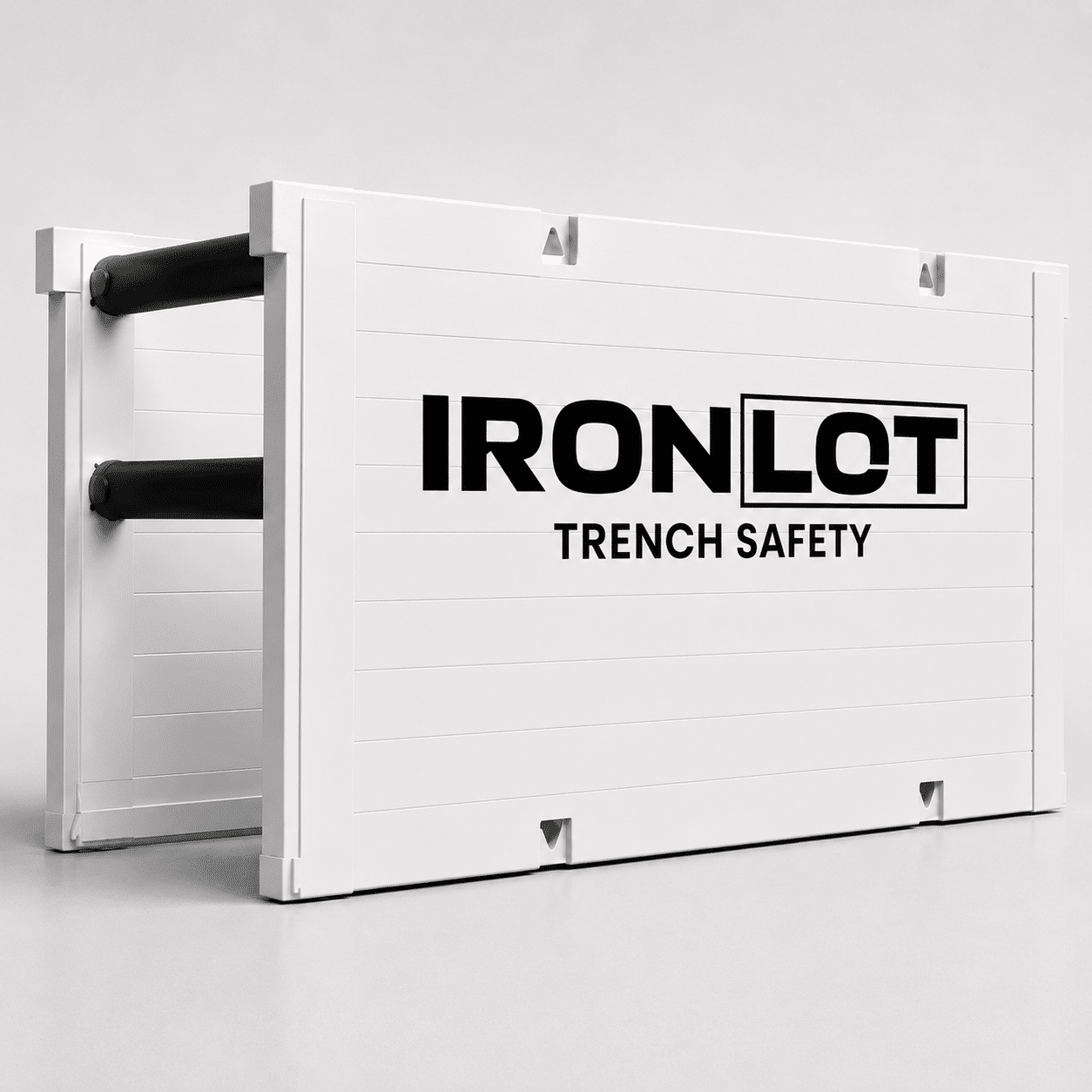
A trench box, also called a trench shield, is a protective structure placed inside an excavation to protect workers from the forces of a cave-in.
Unlike a shoring system that supports the excavation walls, a trench box creates a shielded working area for employees inside the excavation.
How Does a Trench Box Work?
A trench box creates a protected working area inside an excavation. The box is placed in the trench with its side panels positioned between the workers and the excavation walls. Spreaders hold the panels apart and provide the working width needed for pipe, structures, tools, and personnel.
A trench box is a shielding system, not a system intended to prevent the trench walls from moving. If soil caves in or falls away from the excavation wall, the shield is designed to withstand the loads permitted by its manufacturer's tabulated data and protect workers who remain within the shielded area.
On many utility projects, the trench box moves with the work. As excavation, pipe installation, backfilling, or other operations progress, the shield can be repositioned to provide protection at the next work location. The method used to install, move, and remove the box must follow the manufacturer's instructions, applicable tabulated data, and the procedures established for the jobsite.
The size and configuration of the trench box also affect how it functions in the excavation. Panel height and length, spreader width, working clearance, excavation depth, soil conditions, surcharge loads, and the dimensions of the pipe or structure being installed all need to be considered when selecting and positioning the shield.
A trench box is designed to shield the workers inside it. It should not be described as a system that automatically prevents the trench walls from collapsing.
Trench Box vs. Trench Shoring
Trench boxes and shoring systems are both excavation protective systems, but they perform different functions.
Shields the Working Area
A trench box is designed to withstand cave-in forces and protect employees working inside the shielded area.
Supports the Excavation
Shoring uses structural members, hydraulic components, or other systems to support the sides of the excavation or adjacent structures.
Contractors sometimes use informal terms such as "shoring box," but a standard trench box is technically a shield system. When system type matters, the manufacturer's terminology and tabulated data should control.
What Are the Main Parts of a Trench Box?
Trench box designs vary by manufacturer, but standard shields typically use two side panels held apart by spreaders.
Side Panels
The primary shield panels form the protected sides of the working area and are designed for the loads specified in the manufacturer's tabulated data.
Spreaders
Spreaders connect the two panels and establish the working width between them. Spreader configuration affects available clearance.
Connection Hardware
Pins, collars, sockets, stacking hardware, and other components vary by system and must be used in accordance with the manufacturer's instructions.
Steel vs. Aluminum Trench Boxes
Trench shields are commonly manufactured from steel or aluminum. Both materials can provide effective shielding when the equipment is properly selected and used within its tabulated limits.
Durable Shielding for Demanding Work
Steel trench boxes are commonly used for utility, sewer, water, road, municipal, and heavier excavation work.
Their greater weight generally means equipment capacity and handling requirements are an important part of selection.
Lighter Handling Options
Aluminum trench boxes are commonly considered where lower equipment weight, smaller machinery, transport, or easier handling are important.
Actual allowable depth and use still depend on the specific shield's manufacturer tabulated data.
Read the Steel vs. Aluminum Trench Boxes Guide →
What Are Trench Boxes Used For?
Trench shields are used across underground construction, excavation, utility, municipal, and infrastructure work.
The appropriate box for any of these applications depends on the actual excavation and work being performed. Exterior height and length alone do not determine suitability.
Is a Standard Trench Box the Same as a Manhole Box?
No. A standard open-ended trench shield and a purpose-built manhole shield should not automatically be treated as interchangeable.
Manhole boxes are designed for certain excavations around manholes, vaults, structures, utility connections, and similar work where access around the structure is important.
End-wall, corner, clearance, and access configurations can differ from a standard trench shield. The dimensions of the manhole, vault, pipe, or utility component should be checked against the actual box configuration before equipment is selected.
How Do You Choose the Right Trench Box?
Selecting a trench box involves more than matching the height of the panel to the excavation depth.
The project should be evaluated as a complete working system.
For localized utility excavations, a shorter shield may be more practical than a long mainline box when the required protected working area and manufacturer requirements permit. Conversely, longer shields can be useful where a larger protected working area is needed for repetitive utility installation.
The correct choice depends on the dimensions of the pipe, structure, utility component, excavation, and working area—not on trench-box dimensions alone.
What Is Trench Box Tabulated Data?
Manufacturer tabulated data identifies the specifications, recommendations, limitations, and allowable configurations for the particular trench shield system.
Depth ratings are not universal across trench boxes. Two boxes with similar exterior dimensions can have different allowable ratings or use limitations because their designs, materials, wall construction, spreaders, and engineering differ.
The manufacturer tabulated data for the specific box being used should therefore be reviewed rather than relying on a general trench-box depth chart.
Do not select a trench box from panel height alone. Verify the specific shield's depth rating, configuration, limitations, and required components in its current manufacturer tabulated data.
What Does OSHA Require for Trench Shields?
OSHA 29 CFR 1926 Subpart P establishes requirements for excavation protective systems, including shield systems. The correct protective system must be selected for the actual excavation conditions.
The 5-Foot Threshold
Employees generally need an adequate protective system unless the excavation is entirely in stable rock or is less than 5 feet deep and the Competent Person finds no indication of a potential cave-in.
Do Not Exceed Design Loads
A shield system must not be subjected to loads greater than those it was designed to withstand.
Employees Out During Vertical Movement
Employees are not permitted inside shields while the shields are being installed, removed, or moved vertically.
Restrict Hazardous Movement
The shield must be installed to restrict hazardous lateral or other movement if sudden lateral loads are applied.
Protect Access to the Shield
Employees must also be protected from cave-in hazards while entering or leaving the area protected by the shield.
The 2-Foot Provision Is Conditional
Excavation may extend no more than 2 feet below the bottom of a shield only when the shield is designed for the forces calculated for the full trench depth and there is no indication of soil loss behind or below the shield.
What Is the Competent Person's Role?
The Competent Person evaluates the excavation and jobsite conditions that affect protective-system selection and use.
This includes factors such as soil conditions, trench depth, water, surcharge loads, nearby equipment, adjacent structures, changes in the excavation, and the condition of the protective equipment.
Manufacturer tabulated data and the Competent Person's jobsite evaluation work together. One should not be used as a substitute for the other.
Common Trench Box Selection and Use Mistakes
- Describing a trench box as though it actively supports the trench walls.
- Choosing a box only from its exterior height or length.
- Ignoring the manufacturer-specific depth rating.
- Failing to account for pipe, structure, or utility component dimensions.
- Using a spreader configuration that does not provide the required working clearance.
- Assuming a standard trench box and a purpose-built manhole box are interchangeable.
- Using damaged components without the required evaluation.
- Ignoring changed soil, water, surcharge, or other jobsite conditions.
Match the Shield to the Excavation
A trench box should be selected as part of the complete excavation protective system. Trench depth, width, required protected length, pipe or structure dimensions, spreader clearance, soil conditions, surcharge loads, equipment capacity, manufacturer tabulated data, and Competent Person review all affect whether a particular shield is appropriate for the work.
Need a Trench Box for an Upcoming Project?
Iron Lot supplies steel trench boxes, aluminum trench boxes, manhole boxes, spreaders, and related trench-safety equipment for underground utility, municipal, public works, excavation, and construction projects.
Contact us with your trench dimensions, project requirements, and delivery location for current pricing, availability, tabulated-data information, and freight coordination.