
Road Plate Information
Steel Road Plates & Tabulated Data
Steel road plates provide temporary coverage across trenches, utility cuts, excavations, and other openings where access needs to be maintained during construction.
Iron Lot supplies road plates for contractors, utility crews, municipalities, public works departments, road builders, and excavation companies. Contact us for current sizes, pricing, availability, freight coordination, and tabulated-data information.
- ASTM A36 steel options
- Multiple plate sizes and thicknesses
- Road and utility applications
- Nationwide freight coordination
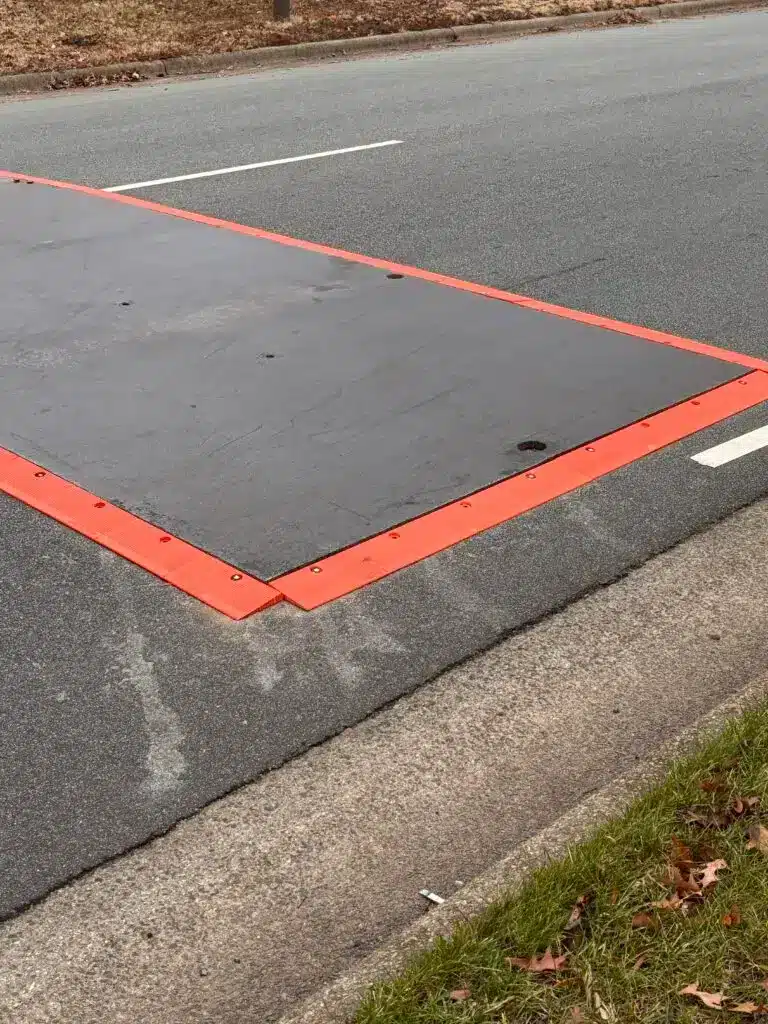
What Are Steel Road Plates?
Steel road plates, also called trench plates or crossing plates, are placed over temporary openings to help maintain access while construction, utility, road, or excavation work remains underway.
They may be used where vehicles, equipment, or pedestrians need to pass across an excavation. The plate must be selected and installed for the actual opening, supporting surfaces, traffic conditions, loading, and project requirements.
A plate’s outside dimensions do not determine the allowable unsupported span. Plate thickness, support, overlap, traffic conditions, and applicable tabulated data all matter.
Common Road Plate Applications
The appropriate plate and installation depend on the specific project. A plate used for a pedestrian or off-road application may not be appropriate for roadway vehicle traffic.
How to Select a Steel Road Plate
Road plate selection should begin with the complete installation rather than plate length and width alone.
If you are looking to purchase heavy-duty steel options, view our inventory of steel road plates for sale.
Clear Unsupported Span
Determine the actual distance between supporting surfaces that the plate must bridge.
Thickness and Dimensions
Confirm that plate thickness, width, length, weight, and bearing area fit the project.
Surface and Trench Stability
The supporting surfaces and trench need to provide the conditions assumed by the applicable design information.
Speed, Loading, and Roadway Use
Vehicle loading, traffic speed, roadway slope, impact, and local requirements can affect the installation.
Overlap and Positive Contact
The plate needs adequate support beyond the opening and positive contact with the supporting surfaces.
Anchorage and Transition
Pinning, welding, transition material, or other requirements may apply based on the project and traffic conditions.
Road Plate Specifications and Tabulated Data
Iron Lot’s road plate tabulated data references HS20-44 traffic loading and minimum ASTM A36 steel with a minimum yield strength of 36 ksi.
The table below summarizes the listed weights and maximum allowable spans for common 1-inch and 1¼-inch steel road plates.
Maximum Allowed Span
The listed maximum unsupported span is 4 feet 6 inches under the referenced tabulated-data conditions.
Maximum Allowed Span
The listed maximum unsupported span is 7 feet under the referenced tabulated-data conditions.
| Plate Size | 1″ Weight | 1″ Max Span | 1¼″ Weight | 1¼″ Max Span |
|---|---|---|---|---|
| 4′ × 8′ | 1,307 lb | 4′-6″ | 1,633 lb | 7′ |
| 4′ × 10′ | 1,633 lb | 4′-6″ | 2,042 lb | 7′ |
| 5′ × 8′ | 1,633 lb | 4′-6″ | 2,042 lb | 7′ |
| 5′ × 10′ | 2,042 lb | 4′-6″ | 2,552 lb | 7′ |
| 6′ × 10′ | 2,450 lb | 4′-6″ | 3,062 lb | 7′ |
| 6′ × 12′ | 2,940 lb | 4′-6″ | 3,675 lb | 7′ |
| 8′ × 10′ | 3,267 lb | 4′-6″ | 4,084 lb | 7′ |
| 8′ × 12′ | 3,920 lb | 4′-6″ | 4,900 lb | 7′ |
| 8′ × 14′ | 4,573 lb | 4′-6″ | 5,717 lb | 7′ |
| 8′ × 15′ | 4,900 lb | 4′-6″ | 6,125 lb | 7′ |
| 8′ × 16′ | 5,227 lb | 4′-6″ | 6,533 lb | 7′ |
| 8′ × 20′ | 6,533 lb | 4′-6″ | 8,167 lb | 7′ |
| 10′ × 12′ | 4,900 lb | 4′-6″ | 6,125 lb | 7′ |
| 10′ × 14′ | 5,717 lb | 4′-6″ | 7,146 lb | 7′ |
| 10′ × 20′ | 8,167 lb | 4′-6″ | 10,208 lb | 7′ |
Approximate listed weights are based on the referenced plate dimensions and thicknesses. Plate availability and project requirements should be confirmed before ordering.
¾-Inch Plate Is Not Listed for On-Road Vehicle Traffic
The tabulated-data notes restrict ¾-inch steel plate to off-road applications such as sidewalks or foot traffic inside warehouses when covering smaller trenches. It is not listed for on-road vehicle traffic.
Why Clear Span Matters
Clear span is the unsupported distance between the surfaces carrying the plate. It is not the same as the overall trench width, plate width, or plate length.
A large plate does not automatically permit a large unsupported opening. The plate must also extend beyond the excavation far enough to provide the required bearing and edge overlap.
Any unsupported space exceeding the published tabulated limits requires engineering.
Support and Edge-Overlap Requirements
The tabulated data calls for positive contact between the plate and all supporting surfaces. Voids can allow the plate to rock, move, or deflect under traffic.
Minimum plate width equals trench width plus 24 inches, providing 12 inches of overlap on each side.
Minimum plate width equals trench width plus 48 inches, providing 24 inches of overlap on each side.
Minimum plate width equals trench width plus 48 inches, providing 24 inches of overlap on each side.
The referenced tabulated data requires engineering for this condition.
When Road Plates May Require Anchorage
Road plate movement can create a significant roadway or jobsite hazard. The installation may require pinning, welding, or another approved anchorage method based on the actual conditions and local requirements.
Anchorage may be required when traffic speeds exceed 45 MPH.
Anchorage may be required when the roadway slope exceeds 5 percent.
Municipal, roadway, project, competent-person, or engineering requirements may impose additional conditions.
The referenced data calls for an 18-inch minimum cold-mix transition ramp around the plate.
The tabulated-data notes also require engineering for asphalt roadway traffic exceeding 55 MPH.
Road Plate Placement and Installation
Road plates are heavy and normally require mechanical equipment for unloading, placement, repositioning, and removal.
Evaluate the Opening
Measure the clear span and confirm the condition of the excavation and supporting surfaces.
Confirm Plate Selection
Check plate size, thickness, weight, allowable span, traffic loading, and project requirements.
Prepare the Support
Establish the required bearing area, edge overlap, and positive supporting contact.
Place the Plate Mechanically
Use equipment and lifting procedures appropriate for the plate’s actual size and weight.
Secure and Transition
Install required anchorage and transition material according to the applicable requirements.
Inspect During Use
Confirm that the plate, support, anchorage, overlap, and surrounding conditions remain acceptable.
Handling Steel Road Plates
Even smaller road plates can weigh more than 1,000 pounds, while larger plates can weigh several thousand pounds. The available machine, rigging, lifting points, working radius, access, and unloading method should be considered before ordering.
Options may include lifting holes or compatible lifting devices. Ask Iron Lot about available handling options when requesting a quote.
What to Review Before Using a Road Plate
Plate thickness and dimensions
Clear unsupported span
Required edge overlap
Positive supporting contact
Trench and supporting-surface stability
Traffic speed and loading
Roadway slope
Anchorage requirements
Transition-ramp requirements
Plate handling and lifting equipment
Municipal or project requirements
Applicable tabulated data or engineering
Road Plates vs. Trench Plates
The terms are often used interchangeably. “Road plate” is commonly used for temporary steel plates placed in roadways, access areas, or construction zones. “Trench plate” often refers more specifically to a plate used over a trench or excavation.
The terminology does not determine the allowable span or installation requirements. The actual plate, opening, traffic conditions, support, and applicable design information control the selection.
Frequently Asked Questions About Road Plates
What are steel road plates used for?
Steel road plates are used to temporarily cover trenches, utility cuts, excavations, and construction openings where access needs to be maintained during work.
Are road plates and trench plates the same?
The terms are often used in similar ways. Road plate is a broad term for temporary steel access plates, while trench plate may refer more specifically to plates spanning trenches or excavations.
What size road plate do I need?
The correct size depends on the clear span, required overlap, plate thickness, support, traffic conditions, handling requirements, and applicable tabulated data or engineering.
How much does a road plate weigh?
Weight depends on plate dimensions and thickness. For example, the referenced data lists a 1-inch 4′ × 8′ plate at approximately 1,307 pounds and a 1¼-inch 4′ × 8′ plate at approximately 1,633 pounds.
What road plate thicknesses are available?
Iron Lot’s displayed tabulated-data examples include 1-inch and 1¼-inch steel plates. Other thicknesses may be available depending on the application and project requirements.
Can Iron Lot ship road plates nationwide?
Yes. Contact Iron Lot with the required plate size, quantity, delivery ZIP code, timeline, and unloading information for current freight options.
Road Plate Selection
Evaluate the Complete Installation
Plate size is only one part of the installation. Thickness, unsupported span, edge overlap, positive bearing, trench stability, anchorage, traffic speed, roadway slope, transition material, handling equipment, local requirements, and applicable tabulated data all affect proper road plate use.
Road Plate Resources
Continue With Road Plate Information
Review detailed installation guidance, browse available road plates, or open the complete tabulated data.
Current Pricing and Availability
Request a Steel Road Plate Quote
Tell us the plate size, thickness, quantity, intended use, project location, required date, and delivery requirements.
Also let us know whether you need lifting holes, handling equipment, tabulated-data information, or help gathering the project details needed to review available plate options.
Plate size and quantity
Intended use and opening dimensions
Project location and timeline
Delivery and unloading requirements
Road Plate Quote Form
Submit the form and Iron Lot will follow up about your steel road plate requirements.