
National Trench Safety Month — Week 3 Training Series
Trench Boxes, Shields, and Shoring: Choosing the Right Protection System
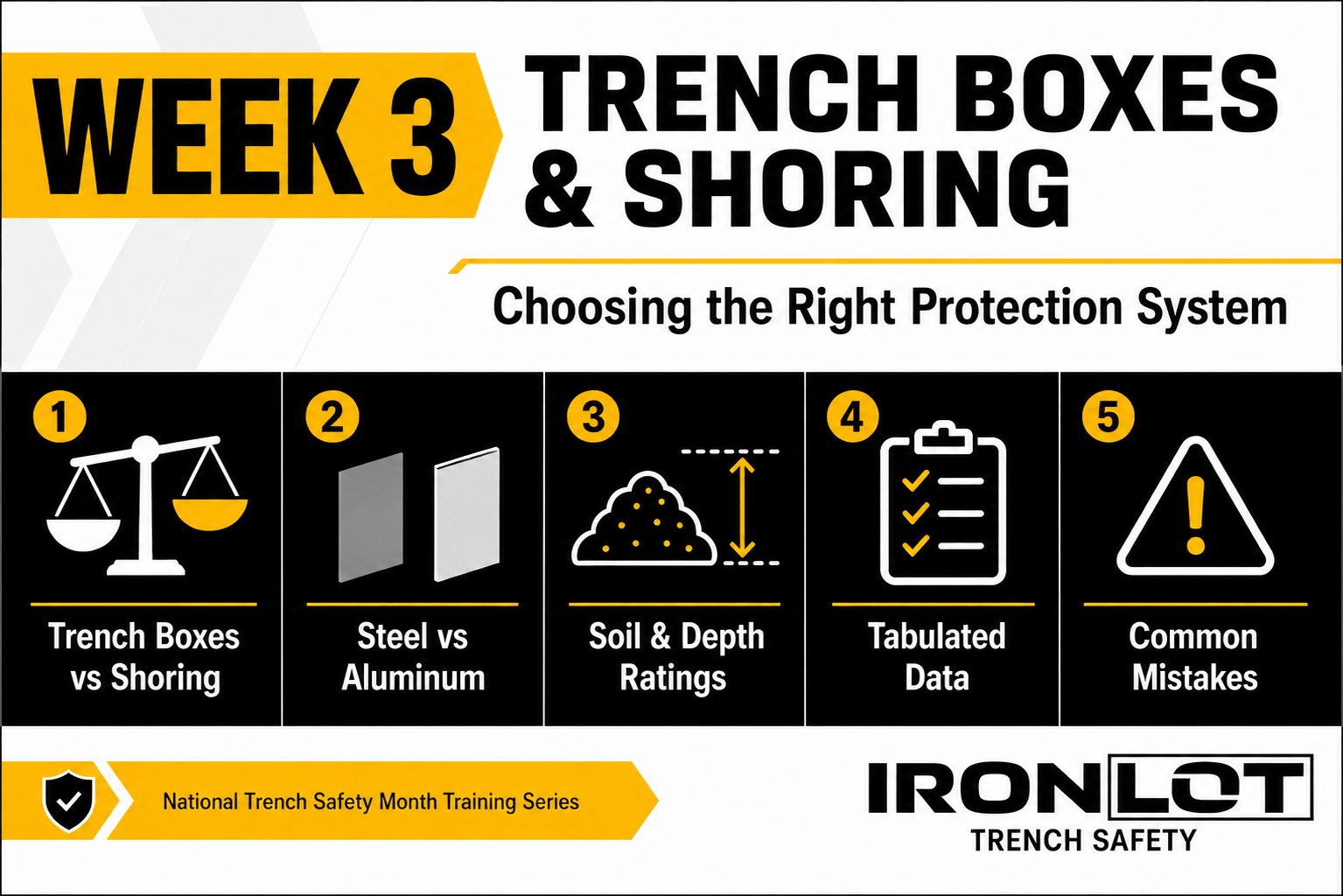
Choosing the right trench protection system is one of the most important decisions on an excavation jobsite.
Each system serves a different purpose.
The right choice depends on:
- Soil conditions
- Trench depth
- Trench width
- Water conditions
- Nearby structures
- Equipment working near the trench
- Manufacturer tabulated data
- Competent person review
There is no single trench protection system that fits every job.
The correct system must be selected, installed, inspected, and used properly before workers enter the excavation.
Protective Systems Are Required
OSHA excavation standards are found in 29 CFR 1926 Subpart P. These standards include requirements for protecting workers from cave-ins and other excavation hazards.
OSHA 29 CFR 1926.652 generally requires workers in excavations to be protected from cave-ins by an adequate protective system, with limited exceptions such as excavations made entirely in stable rock or certain excavations less than 5 feet deep where a competent person determines there is no indication of a potential cave-in.
Protective systems may include:
- Sloping
- Benching
- Shoring
- Shielding with trench boxes
The protective system should match the excavation conditions. Soil type, depth, water, nearby equipment, spoil piles, vibration, and changing site conditions can all affect what system should be used.
Protective systems should be selected and used in accordance with OSHA requirements, manufacturer tabulated data, and competent person review.
What is a Trench Box?
A trench box is a protective shield placed inside an excavation to help protect workers if soil movement or a cave-in occurs.
Trench boxes are commonly used in:
- Underground utility work
- Water and sewer projects
- Storm drain installation
- Pipeline work
- Municipal excavation projects
- General trenching applications
A trench box usually includes two sidewalls connected by spreaders. Workers perform their work inside the protected area of the box.
A trench box is not designed to prevent all soil movement. It is designed to help protect workers inside the box if soil movement occurs.
That distinction matters. Workers should stay inside the protected area of the trench box, and the box should be used according to its manufacturer tabulated data.
For equipment options, see Iron Lot’s trench boxes, including steel trench boxes and aluminum trench boxes.
Trench Box vs. Trench Shield vs. Shoring
The terms trench box and trench shield are often used interchangeably in the field.
OSHA defines shields as structures that can withstand cave-in forces and protect employees within the structure. OSHA also notes that shields used in trenches are usually referred to as “trench boxes” or “trench shields.”
In simple terms:
- A trench shield is the protective system category.
- A trench box is the common field term for a shield made with sidewalls and spreaders.
- Shoring is different because it supports the trench walls.
A trench box shields workers inside the protected area.
What is Shoring?
Shoring supports the excavation walls.
Both can be useful, but they are not the same method of protection.
For a deeper comparison, read Iron Lot’s guide to trench box vs. shoring box.
Shoring is a protective system designed to support the walls of an excavation.
Common shoring systems may include:
- Hydraulic shoring
- Aluminum hydraulic shoring
- Timber shoring
- Engineered shoring systems
Shoring is commonly used where the goal is to support trench walls directly.
It may be selected when trench conditions, site restrictions, adjacent structures, or work requirements make shielding or sloping less practical.
The difference can be summarized this way:
- Shoring supports the soil.
- Shielding protects workers within the shielded area.
Both systems require proper selection, installation, inspection, and competent person oversight.
Steel vs. Aluminum Trench Boxes
Steel and aluminum trench boxes serve different jobsite needs.
Neither material is automatically better in every situation.
The right choice depends on the job.
Steel Trench Boxes
Steel trench boxes are often used for:
- Larger excavations
- Deeper trench applications
- Heavy-duty utility work
- Jobs with larger excavators or lifting equipment
- Projects where durability and strength are major considerations
Steel boxes are common on demanding excavation jobs where machine capacity and trench conditions support their use.
View Iron Lot’s steel trench boxes for available equipment options.
Aluminum Trench Boxes
Aluminum trench boxes are often used for:
- Smaller crews
- Municipal utility work
- Service line work
- Jobs with smaller equipment
- Projects requiring easier transport and handling
- Excavations where reduced weight is helpful
Aluminum systems can be a practical choice when crews need a lighter protective system that is easier to handle with compact equipment.
View Iron Lot’s aluminum trench boxes for available options.
Soil conditions play a major role in trench protection decisions.
A trench box or shoring system that is appropriate for one job may not be appropriate for another.
Common factors include:
- Soil classification
- Previously disturbed soil
- Water accumulation
- Nearby traffic or equipment vibration
- Adjacent structures
- Spoil piles or materials near the edge
- Trench depth and width
Depth ratings matter because trench boxes and shields are designed for specific conditions and configurations.
The competent person should verify that the selected system matches the excavation conditions before workers enter the trench.
For more on OSHA requirements and trench safety fundamentals, review Week 2: OSHA Trench Safety Basics.
Manufacturer Tabulated Data Must Be Followed
Manufacturer tabulated data is one of the most important documents associated with trench boxes and trench shields.
Tabulated data may include information such as:
- Allowable depths
- Soil conditions
- Panel configurations
- Spreader requirements
- System limitations
- Assembly details
- Engineering information
- Use restrictions
OSHA allows certain support systems, shield systems, and other protective systems to be designed using manufacturer tabulated data when used according to the requirements in 29 CFR 1926.652.
OSHA also defines tabulated data as tables and charts approved by a registered professional engineer and used to design and construct protective systems.
Every trench box Iron Lot sells comes with manufacturer tabulated data that includes depth ratings and a registered professional engineer stamp.
That does not mean a trench box is automatically appropriate for every excavation.
The competent person should review the tabulated data and confirm that the trench box is appropriate for the excavation, soil conditions, depth, configuration, spreader setup, and jobsite conditions.
Avoid shortcuts.
A trench box should be used according to its tabulated data, manufacturer instructions, OSHA requirements, and competent person review.
Basic Installation and Use Practices
For help with selection factors, see Iron Lot’s guide on how to choose a trench box.
Protective systems only work as intended when they are installed and used correctly.
Basic trench box and shield use practices include:
- Review manufacturer tabulated data before use
- Inspect panels, spreaders, pins, and connections
- Use the correct spreader size and configuration
- Do not use damaged components
- Keep workers inside the protected area
- Provide safe access and egress
- Keep spoil piles and equipment back from the trench edge
- Monitor water accumulation
- Reinspect when conditions change
OSHA requires a safe means of egress, such as a stairway, ladder, ramp, or other safe exit, in trench excavations 4 feet or more in depth. OSHA also requires that egress be located so workers do not have to travel more than 25 feet laterally.
OSHA also requires excavated material and equipment to be kept at least 2 feet from the edge of excavations or otherwise retained to help prevent material from falling or rolling into the excavation.
Many of these basics connect directly to the topics covered in Week 2: OSHA Trench Safety Basics.
Common Protective System Mistakes
A protective system can create a false sense of security if it is used incorrectly.
Common mistakes include:
- Using a trench box outside its tabulated data
- Using the wrong box for the depth or soil conditions
- Missing, incorrect, or damaged spreaders
- Using damaged panels or components
- Workers standing outside the protected area
- Improper ladder placement
- Spoil piles too close to the trench edge
- Heavy equipment operating too close to the excavation
- Ignoring water accumulation
- Failing to inspect after rain or changing conditions
- Assuming one trench box works for every job
These mistakes are preventable.
Training, inspection, and competent person oversight help reduce the risk of misuse.
The Competent Person Must Evaluate the System
The competent person plays a central role in protective system selection and use.
Before workers enter the excavation, the competent person should evaluate:
- Soil type
- Trench depth
- Protective system selected
- Manufacturer tabulated data
- Water conditions
- Spoil pile placement
- Equipment near the trench
- Access and egress
- Signs of movement or instability
- Visible damage to protective equipment
The competent person must also have authority to take corrective action when unsafe conditions exist.
This topic will be covered in more detail in Week 4: The Competent Person: The Most Important Role on a Trench Site.
Key Takeaways
Choosing the right trench protection system requires more than selecting equipment from a yard.
Key points to remember:
- Trench boxes and shoring serve different purposes.
- A trench box is commonly used as a trench shield.
- Shielding protects workers inside the shielded area.
- Shoring supports trench walls.
- Steel and aluminum trench boxes serve different jobsite needs.
- Soil conditions and depth ratings must be considered.
- Manufacturer tabulated data must be reviewed and followed.
- The competent person must verify that the system is appropriate.
- Workers should stay inside the protected area of the trench box.
- Protective systems must be inspected and used correctly.
Trench safety depends on planning, proper equipment, and disciplined jobsite practices.
Because every worker deserves to go home.
Download and Print Week Training Module
 Download and Print Week 3 Training: Trench Box, Shields, and Trench Shoring
Need Help Finding the Right Trench Box?
Iron Lot supplies steel trench boxes, aluminum trench boxes, modular aluminum panel shields, and other trench safety products for contractors, municipalities, and utility crews.
If you need help comparing trench box options, contact Iron Lot for current equipment availability, specifications, and quote requests.
Browse Trench Safety Products →
Request a Quote →
Continue the National Trench Safety Month Series
Next Week: The Competent Person: The Most Important Role on a Trench Site
Week 4 will cover competent person responsibilities, inspection duties, changing site conditions, hazard recognition, and corrective action.