
Trench Safety Planning Must Happen Before the Collapse
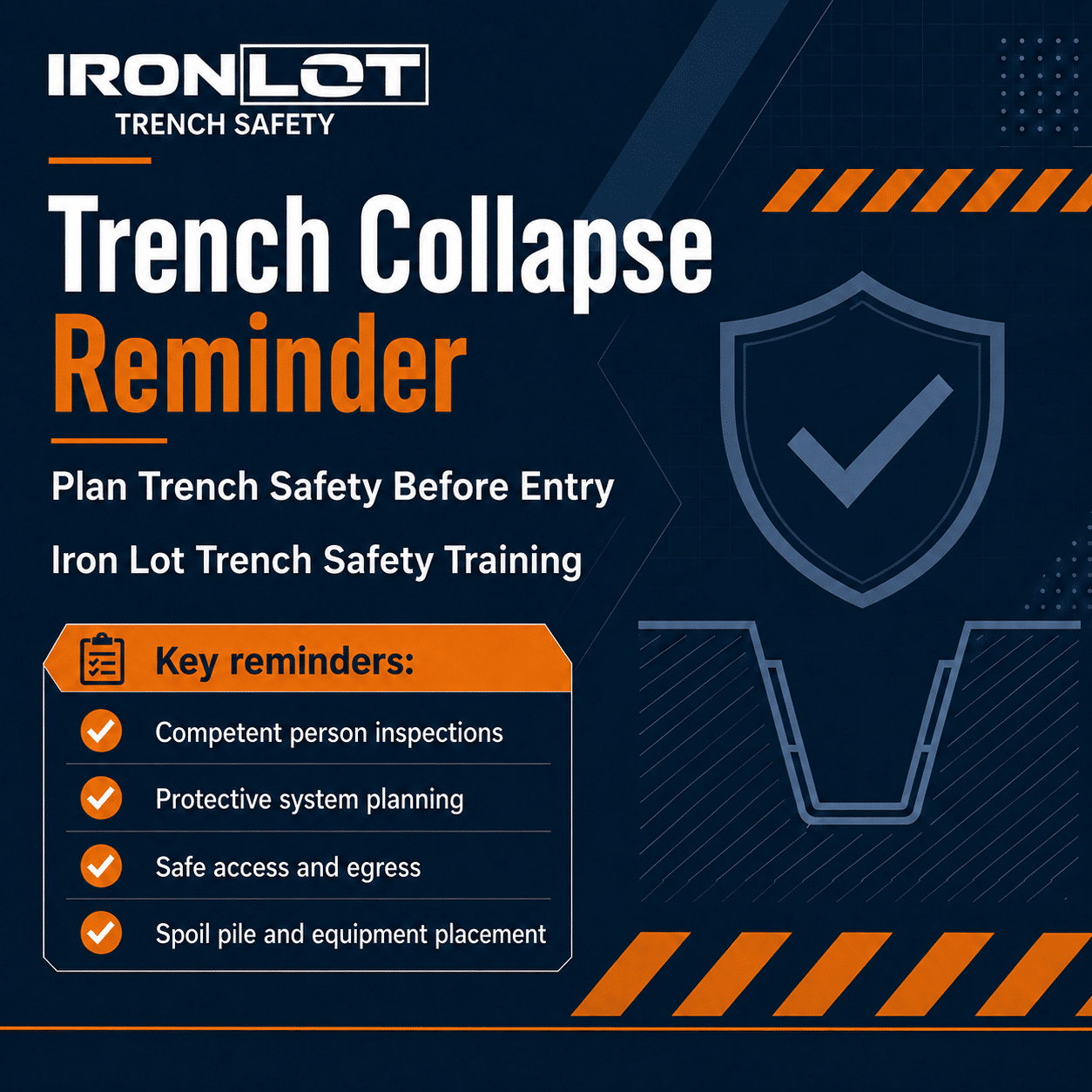
A recent trench collapse in Lincoln, Nebraska, on June, 30 2026 is another reminder of how quickly excavation work can become dangerous.
According to a local news report, Lincoln Fire and Rescue responded to a construction site in east Lincoln after a 37-year-old man became trapped in a trench collapse. The worker was reportedly buried up to his neck while rescue crews worked to clear dirt, protect his airway, and remove him from the trench. The trench was reported to be about 15 feet deep, and responders were concerned about the possibility of additional collapse while the rescue was underway.
Thankfully, the worker was removed from the trench alive. But incidents like this should make every excavation contractor, utility crew, municipal crew, and jobsite supervisor stop and review a basic question:
Was trench safety planned before anyone entered the excavation?
This article is not written to assign blame for that specific incident. Public reports rarely include every site detail, and the final cause of a trench collapse may depend on soil conditions, protective systems, water, vibration, nearby loads, excavation geometry, and other factors. But the situation does highlight several trench safety lessons that apply to jobsites across the country.
A 15-Foot Trench Is Not a Minor Excavation
When a trench reaches 15 feet deep, the risk level is serious. Soil can shift quickly, and once a wall begins to fail, workers may have little or no time to react.
Under OSHA 29 CFR 1926 Subpart P, trenches 5 feet deep or greater generally require a protective system unless the excavation is made entirely in stable rock. Even trenches less than 5 feet deep may require protection if the jobsite’s competent person identifies signs of a potential cave-in.
Protective systems may include:
- Trench boxes or trench shields
- Hydraulic shoring
- Timber shoring
- Sloping
- Benching
- Other engineered protective systems
The right system depends on the soil type, trench depth, trench width, nearby loads, water conditions, utilities, and the work being performed. A trench box that is appropriate for one job may not be appropriate for another job unless the competent person verifies that it fits the site conditions and manufacturer tabulated data.
Rescue Conditions Can Become Dangerous Too
One detail from the news report stands out: responders were concerned about additional collapse while rescue work was underway.
That is one of the most dangerous parts of a trench collapse. The first collapse may not be the last. Loose soil, unsupported walls, spoil piles, equipment vibration, water, and disturbed ground can all make rescue conditions unstable.
Coworkers naturally want to help immediately. But entering an unstable trench without proper rescue training, equipment, and protection can put additional workers in danger. Emergency responders often have to work slowly because they are trying to protect both the trapped worker and the rescue crew from a secondary collapse.
The best rescue plan is prevention. Ongoing trench safety training attributes to a keeping safety first. Before trench work begins, crews should already know:
- Who the competent person is
- What protective system will be used
- How workers will enter and exit the trench
- Where spoil piles and equipment will be placed
- How water or changing conditions will be handled
- What to do if conditions change during the shift
- Who to call in an emergency
The Competent Person Is a Critical Part of Trench Safety
A trench safety plan is not just a piece of equipment. It also depends on the person responsible for evaluating the excavation.
OSHA requires a competent person to inspect excavations, adjacent areas, and protective systems daily before workers enter the trench and as needed throughout the shift. Inspections are also required after rainstorms or other events that could increase hazards.
A competent person must be able to identify existing and predictable hazards and must have the authority to take prompt corrective action. That authority matters. If the trench is unsafe, the competent person must be able to stop work and remove workers from the hazardous area until the issue is corrected.
On a jobsite, this can include decisions such as:
- Removing workers from the trench
- Changing the protective system
- Moving spoil piles farther from the edge
- Addressing water accumulation
- Rechecking soil conditions
- Reviewing tabulated data
- Calling for engineering support when needed
A trench box, shoring system, or other protective system should never be treated as a “set it and forget it” solution. Conditions can change during the day.
Trench Boxes Must Be Matched to the Job
Trench boxes and trench shields are commonly used because they can help protect workers inside the shielded area if a cave-in occurs. But they must be selected and used correctly.
Before using a trench box, contractors should review:
- Trench depth
- Soil classification
- Box height, length, and width
- Pipe clearance needs
- Spreader length and configuration
- Manufacturer tabulated data
- Depth ratings
- Any limitations or restrictions
- Access and egress
- Whether the box must be stacked or paired with other protective methods
Every trench box should be used according to the manufacturer’s tabulated data. The tabulated data tells the competent person how the system is rated, what soil conditions it applies to, and what limitations must be followed. Contractors should not assume that any trench box will work for any trench.
For excavations over 20 feet deep, OSHA requirements become even more specific and may require a registered professional engineer or tabulated data prepared or approved by a registered professional engineer. Deep excavations need careful planning before work begins.
Spoil Piles, Equipment, and Loose Dirt Matter
The news report described the location as a construction site with loose dirt. Loose soil near the edge of an excavation can become a serious hazard.
OSHA requires employees to be protected from excavated or other materials that could fall or roll into the excavation. Spoil piles, tools, materials, and equipment should generally be kept at least 2 feet back from the excavation edge unless other protective measures are used.
That distance matters because extra weight near the trench edge can increase pressure on the trench wall. On busy jobsites, it is easy for spoil piles, pipe, bedding material, road plates, buckets, or equipment to end up too close to the excavation. The competent person should be watching for these conditions throughout the shift.
Heat and Rescue Time Add More Risk
The report also noted that temperatures were around 90 degrees during the rescue. Heat can make trench rescue even more difficult for both the trapped worker and the rescue crews.
Hot weather increases the importance of planning ahead. Crews should consider hydration, shade, work-rest cycles, emergency access, and how long workers may be exposed to heat while performing excavation work. Heat does not cause a cave-in, but it can make an already dangerous situation harder to manage.
Practical Trench Safety Reminders for Contractors
Before workers enter a trench, contractors should ask:
- Has the competent person inspected the excavation?
- Is the trench 5 feet deep or greater?
- Is a protective system required?
- Has the soil type been evaluated?
- Is the trench box, shoring system, sloping, or benching appropriate for the job?
- Is the manufacturer tabulated data available and being followed?
- Are spoil piles, materials, and equipment kept back from the edge?
- Is there safe access and egress?
- Has water accumulation been addressed?
- Have site conditions changed since the last inspection?
- Does the crew know what to do in an emergency?
These are basic questions, but they can save lives.
Iron Lot Can Help Contractors Source Trench Safety Equipment
Iron Lot supplies trench safety equipment for contractors, utility crews, excavation companies, and municipal/public works buyers. Available equipment may include steel trench boxes, aluminum trench boxes, trench shields, road plates, bedding boxes, spreaders, and related accessories.
If you are planning a trenching project, do not wait until the last minute to think about protective systems. Review your trench depth, soil conditions, pipe clearance, jobsite access, and equipment needs before workers enter the excavation.
Iron Lot can help you review available trench box options, current pricing, freight considerations, and quote support. Contractors are still responsible for following OSHA requirements, manufacturer tabulated data, competent person inspections, and site-specific professional judgment.
Need trench safety equipment for an upcoming job? Call Iron Lot at 336-516-8011 or request a quote for current pricing and availability.