
Hydraulic Shoring vs. Trench Boxes
Hydraulic shoring and trench boxes are both used as excavation protective systems, but they protect workers in different ways.
Hydraulic shoring is designed to support opposing trench walls. A trench box primarily provides a shielded working area inside the excavation.
What Is the Basic Difference?
The simplest distinction is the way each protective system interacts with the excavation.
Supports the Trench Walls
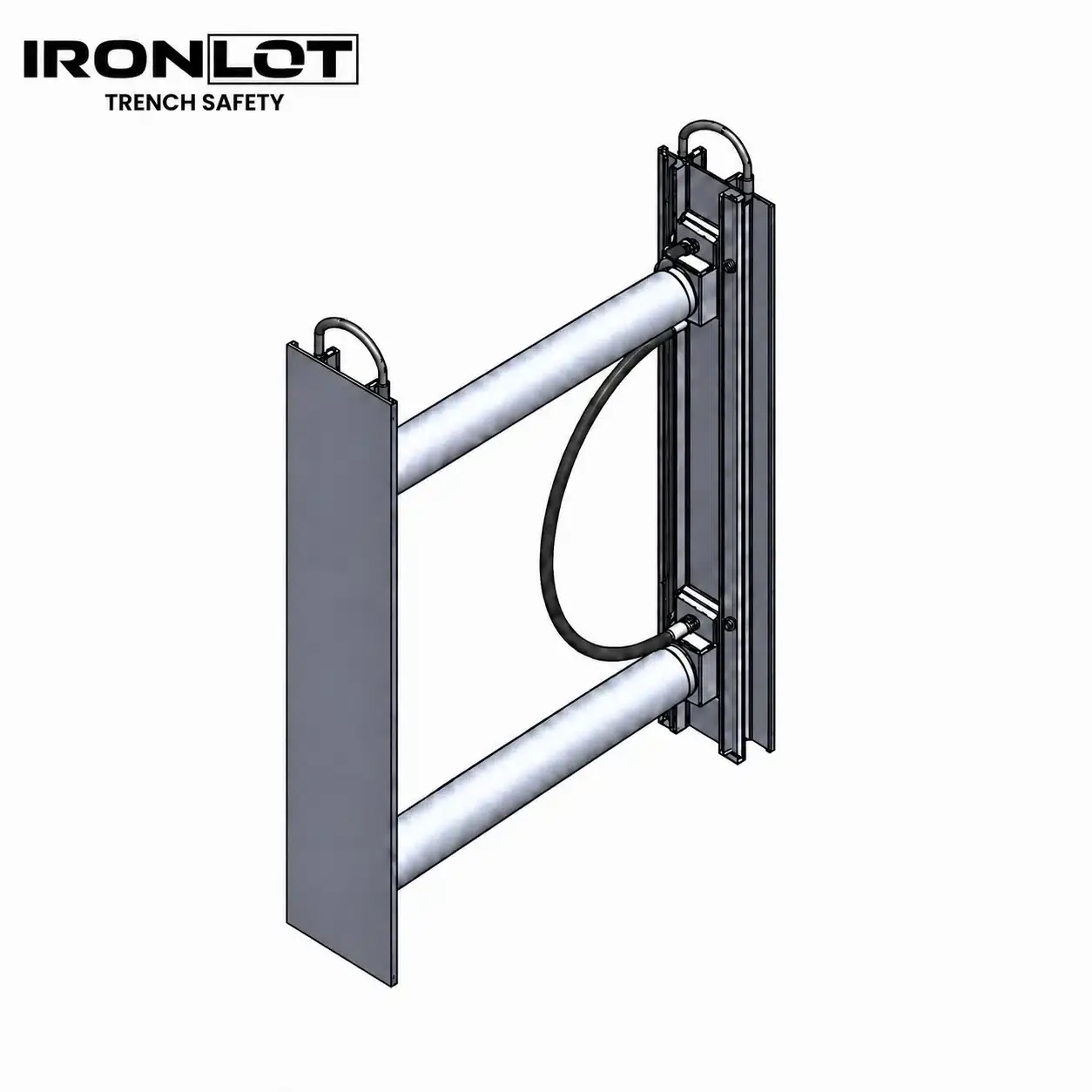
Vertical hydraulic shores use hydraulic cylinders and rails to apply pressure against opposing excavation walls as part of a trench-support system.
Shields the Working Area
A trench box is positioned inside the excavation to provide a protected working area for personnel inside the shield.
Hydraulic shoring supports. A trench box shields. Neither system is automatically the better choice for every excavation.
Hydraulic Shoring and Trench Box Comparison
The practical differences become clearer when the systems are compared by function, working space, access, and typical project use.
| Factor | Hydraulic Shoring | Trench Box |
|---|---|---|
| Primary Function | Supports opposing excavation walls. | Provides a shielded working area inside the excavation. |
| Wall Access | Provides relatively open access to the excavation walls between shore locations. | Continuous sidewalls can limit direct access to the trench walls. |
| Working Area | Open working space between individual vertical shores. | Working area is contained between the shield panels and spreaders. |
| Excavation Width | Can help limit unnecessary excavation width where system requirements permit. | Excavation must accommodate the outside width of the shield plus required clearance. |
| Common Work | Utility repair, service connections, tie-ins, crossings, valves, fittings, and work requiring wall access. | Mainline utility installation, pipe-laying operations, and other work where the shield can move with production. |
| Selection Basis | Soil, depth, trench dimensions, spacing, surcharge loads, sheeting, and current tabulated data. | Shield dimensions, depth rating, spreader configuration, excavation dimensions, soil conditions, and current tabulated data. |
When Can Hydraulic Shoring Be a Good Fit?
Hydraulic shoring can be useful when maintaining open access to the trench walls and utility components is important to the work.
Utility Connections
Open wall access can be useful around service connections, taps, tees, crosses, valves, fittings, and existing utilities.
Congested Excavations
Hydraulic shores can be practical where streets, easements, structures, traffic, or existing utilities make unnecessary excavation width undesirable.
Localized Work
Repairs, utility exposure, maintenance, and other work requiring direct access to the excavation walls may benefit from an open shoring system.
When Can a Trench Box Be a Good Fit?
Trench boxes are often practical where crews need a defined shielded working area that can move through a linear excavation as production progresses.
This can make trench shields particularly useful for repetitive underground utility installation where pipe and other components are installed sequentially along the trench.
Trench boxes are available in different lengths, heights, panel thicknesses, and spreader configurations. The correct box depends on the actual excavation and work being performed rather than exterior dimensions alone.
How Does Working Space Differ?
Working-space requirements are often one of the biggest practical differences between the two systems.
Hydraulic shores leave the excavation relatively open between individual shore locations. This can provide direct access to pipe, valves, fittings, existing utilities, and the excavation walls.
A trench box creates a defined working area between its sidewalls. That configuration can provide substantial protected workspace, but the shield panels and spreaders also occupy space within the excavation.
What Factors Should Be Considered?
The protective system should be selected around the actual excavation, soil conditions, work activity, and applicable tabulated data.
Which System Is Better?
There is no single protective system that is automatically best for every excavation.
A project that benefits from open access to trench walls may favor hydraulic shoring. A repetitive mainline installation may favor a trench box. Some contractors use different protective systems on different portions of the same project as excavation conditions and work activities change.
Match the System to the Excavation
Do not select hydraulic shoring or a trench box solely from one equipment dimension. Soil classification, excavation depth, trench dimensions, utility or structure size, working clearance, surcharge loads, groundwater, manufacturer tabulated data, and the project Competent Person all affect protective-system selection and use.
Need Hydraulic Shoring or a Trench Box?
Iron Lot supplies hydraulic shoring and trench boxes for underground utility, municipal, public works, and excavation projects. Contact us for current pricing, availability, and freight coordination.