
Hydraulic Shoring Soil Classification Guide
Soil classification is one of the most important factors in determining how a hydraulic-shoring system is laid out in an excavation.
Soil conditions can affect allowable excavation depth, horizontal shore spacing, cylinder placement, sheeting requirements, and whether a particular hydraulic-shoring configuration can be used.
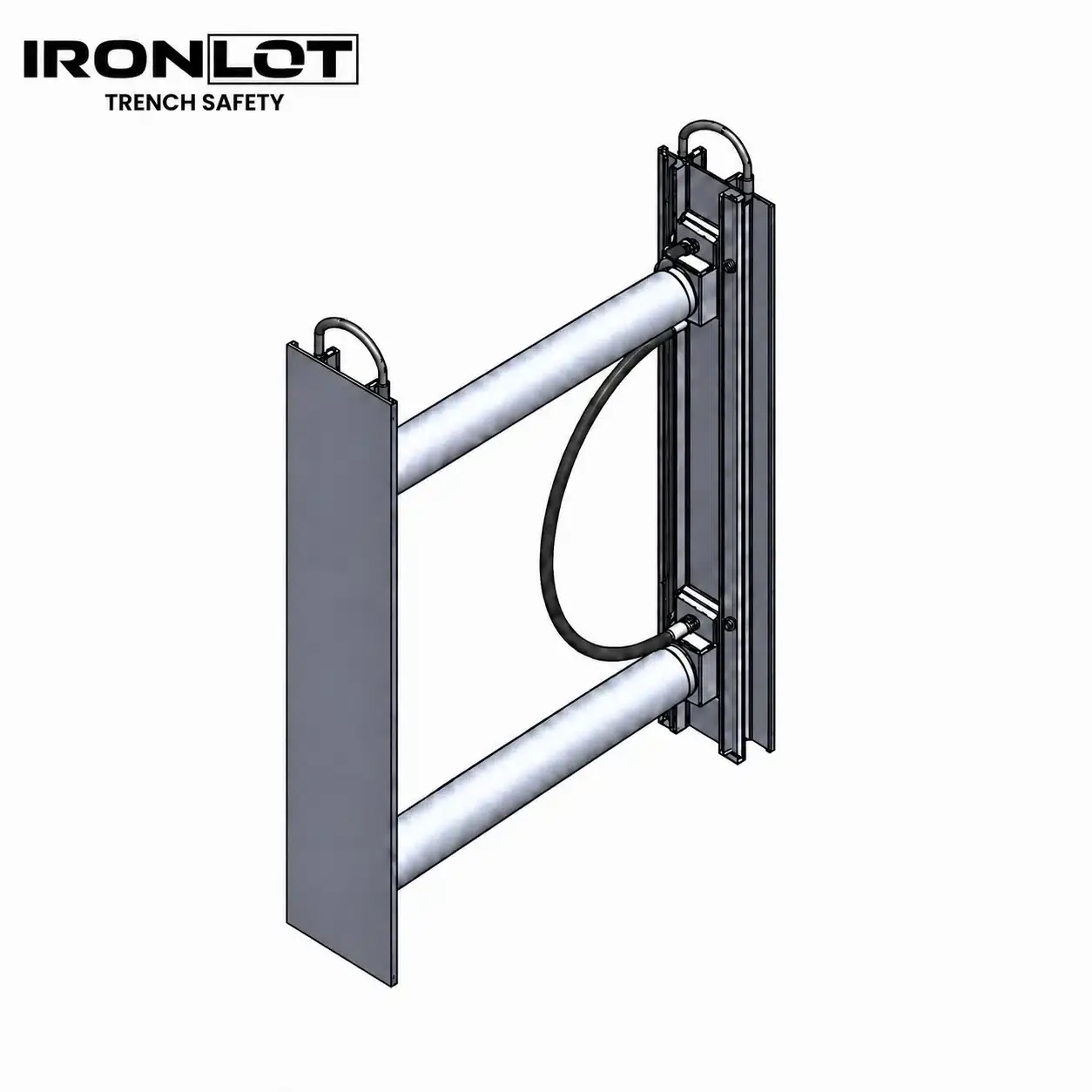
Why Soil Classification Matters
Hydraulic shores work as part of a system that supports opposing excavation walls. The characteristics of the soil directly affect how that system must be configured.
A spacing or depth configuration that is permitted for one soil condition may not be permitted for another.
The project Competent Person should classify the soil before the hydraulic-shoring system is installed and then use the applicable manufacturer's current tabulated data to establish the protective-system layout.
Soil classification is not simply a description of the dirt. It is an input used to determine the allowable protective-system configuration.
OSHA Soil Classification and Hydraulic Shoring
OSHA Appendix A establishes the soil-classification process used for excavation work. For hydraulic-shoring selection, the Competent Person first classifies the soil and then applies the appropriate manufacturer's tabulated data.
The vertical hydraulic-shoring tabulated data used with the equipment sold by Iron Lot addresses Type A and Type B soils along with a manufacturer-defined C-60 condition.
Type A
Type A represents the more stable end of the OSHA soil-classification system when all applicable requirements for that classification are met.
The applicable hydraulic-shoring tabulated data must still be used to determine allowable depth, spacing, and system configuration.
Type B
Type B represents different soil characteristics and typically results in different hydraulic-shore spacing requirements as excavation depth increases.
The Competent Person must use the applicable tabulated-data requirements for the actual conditions present.
Type C-60
C-60 is a designation used in the applicable hydraulic-shoring manufacturer's tabulated data for certain Type C soil conditions.
C-60 is not a separate OSHA soil classification.
Type C-60 Is Not an OSHA Soil Classification
The term C-60 appears in the hydraulic-shoring manufacturer's tabulated data. It should not be described as an OSHA Type C-60 classification.
The Competent Person must first classify the soil in accordance with OSHA Appendix A and then determine whether the manufacturer's applicable C-60 requirements can be used.
How Soil Classification Affects the Shoring Layout
Soil classification can change several parts of the hydraulic-shoring system at the same time.
Horizontal Shore Spacing
Allowable spacing along the length of the trench can change based on soil classification and excavation depth.
Excavation Depth
The relationship between soil condition and depth affects which tabulated configuration applies.
Sheeting Requirements
Sloughing, raveling, depth, and soil condition can require allowable sheeting behind or between the hydraulic shores.
Complete System Layout
Soil classification works together with cylinder placement, surcharge loads, trench dimensions, and other project conditions.
When Should the Soil Be Classified?
Soil classification should reflect the actual excavation conditions that exist when the protective system is being installed.
The applicable hydraulic-shoring tabulated data calls for the soil to be classified just before installation.
Review the actual soil and excavation conditions rather than relying only on project plans or previous site assumptions.
The Competent Person determines the applicable soil classification using the required classification process.
Use the soil classification together with depth, width, surcharge conditions, and other factors to establish the shoring layout.
Reevaluate the excavation when water, vibration, soil movement, loading, or other conditions change.
Soil Conditions Can Change During the Job
A soil classification made earlier in the project should not automatically be assumed to remain valid throughout the excavation.
Conditions that can change the behavior of the excavation include:
If conditions change, the Competent Person should reevaluate the soil and protective system. Shore spacing, sheeting, or other parts of the configuration may need to be changed before work continues.
What Does C-60 Mean?
C-60 is a manufacturer-defined condition used within the applicable vertical hydraulic-shoring tabulated data.
It describes soil that does not qualify as Type A or Type B under OSHA Appendix A but can stand with vertical walls long enough for the hydraulic shore to be safely inserted and pressurized under the conditions addressed by that tabulated data.
Because C-60 is manufacturer-defined, it should only be used in the context of the specific current tabulated data that establishes it.
What About Type C-80 Conditions?
The current vertical hydraulic-shoring tabulated data supplied for these shores distinguishes the manufacturer-defined C-60 condition from the less stable Type C condition represented in that data at an equivalent weight of 80 pounds per square foot per foot of depth.
Under that tabulated data, the vertical hydraulic shores must not be used in the Type C-80 condition.
Do not assume that because a hydraulic shore is permitted in a manufacturer-defined C-60 condition, it is also permitted in all Type C soil conditions.
Soil Conditions and Sheeting
Vertical hydraulic shores leave portions of the excavation wall exposed between adjacent rails.
If the soil is likely to slough or ravel, allowable sheeting may be required to retain loose material between the shores.
Sheeting requirements should be determined from the manufacturer's current tabulated data and actual excavation conditions. When sheeting is required, its material, dimensions, placement, and required depth must match the applicable system requirements.
The Competent Person's Role
The Competent Person plays a central role in hydraulic shoring because soil conditions, excavation geometry, surcharge loads, and other jobsite conditions must be evaluated as part of the protective-system design and use.
The Competent Person should determine the applicable soil classification, select the appropriate tabulated-data configuration, monitor the excavation for changed conditions, and determine whether the protective system needs to be adjusted.
Soil Classification Drives the System Layout
A hydraulic shore should never be selected or spaced without considering the soil. Soil classification, excavation depth, horizontal and vertical spacing, surcharge loads, groundwater, sheeting requirements, manufacturer tabulated data, and Competent Person review all affect the complete protective-system configuration.
Need Hydraulic Shoring for an Upcoming Project?
Iron Lot supplies vertical hydraulic shores and related hydraulic-shoring equipment for underground utility, municipal, public works, and excavation projects. Contact us for current pricing, availability, and freight coordination.