
Hydraulic Shoring Installation & Removal
Vertical hydraulic shores are designed so they can be installed and removed from outside the excavation, helping crews establish trench-wall support before workers enter the protected area.
Proper installation requires more than pressurizing a shore. Soil conditions, shore spacing, sheeting, trench-wall contact, hydraulic pressure, equipment condition, and the manufacturer's current tabulated data all need to be considered.
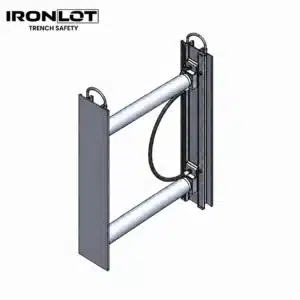
Prepare the Excavation Before Installation
Before hydraulic shores are placed, the Competent Person should confirm that the planned protective system remains appropriate for the actual excavation conditions.
Soil conditions should be evaluated near the time of installation because conditions can change as excavation work progresses.
For more information, see the Hydraulic Shoring Soil Classification Guide .
Inspect the Shore and Installation Equipment
The hydraulic shore and the equipment used to install it should be inspected before the shore is placed into the excavation.
Rails, Cylinders & Hardware
Check vertical rails, hydraulic cylinders, hinge connections, pins, fittings, and other required hardware for damage or improper operation.
Pump, Hose & Gauge
Inspect the hydraulic pump, fluid supply, hose, fittings, and operating pressure gauge before installation begins.
Release Tool & Removal Hook
Confirm that the proper release and removal tools are available before the system is placed into service.
Do Not Ignore Damage
Damaged or improperly functioning components should be evaluated and corrected in accordance with the manufacturer's requirements before use.
Install Required Sheeting
Sheeting may be required when sloughing or raveling is likely to occur between hydraulic shores.
Depending on the permitted configuration, sheeting may be placed separately or incorporated with the hydraulic shore. When required, it should extend to the top of the excavation and to the depth required by the applicable manufacturer tabulated data.
Sheeting used with vertical hydraulic shores helps control sloughing and raveling. It should not automatically be treated as the primary structural support element of the system.
See the Hydraulic Shoring Sheeting Requirements Guide for additional information.
How Are Vertical Hydraulic Shores Installed?
Vertical hydraulic shores are hinged so the assembly can be folded for placement, lowered into the excavation from outside the trench, opened against the opposing walls, and pressurized after proper positioning.
Confirm the Layout
Identify the required shore locations, horizontal spacing, vertical cylinder positions, and sheeting requirements using the applicable tabulated data.
Prepare the Shore
Inspect the assembly and tools, connect the hydraulic hose, and prepare the hinged shore for controlled placement.
Lower It From Outside the Excavation
Place the shore into the trench from outside the excavation using the handling method appropriate for the shore, crew, and equipment.
Open and Position the Shore
Open the hinged assembly so the vertical rails engage the opposing excavation walls at the required locations.
Pressurize the Shore
Use the compatible hydraulic pump and gauge to establish the installation pressure required by the applicable manufacturer's instructions.
Verify Pressure and Wall Contact
Confirm that pressure holds, the shore remains properly positioned, and the rails have firm contact at the required trench-wall locations.
Complete and Inspect the System
Repeat the procedure at each required shore location and inspect the complete protective system before workers enter the shored area.
What Pressure Is Used to Install Hydraulic Shores?
The manufacturer tabulated data currently used for the vertical hydraulic shores referenced by Iron Lot specifies the following installation-pressure range:
The pressure gauge should hold without unexplained loss after the shore is pressurized. Always verify the current manufacturer's instructions for the specific equipment being used.
Installation pressure does not determine allowable excavation depth or shore spacing. Those requirements come from the manufacturer's current tabulated data and the approved system configuration.
Maintain Proper Trench-Wall Contact
A hydraulic shore should not be considered properly installed simply because the pump reached the required pressure.
The rails also need to remain correctly positioned and in contact with the excavation walls at the locations required by the system.
Voids, irregular excavation faces, soil movement, or other changing conditions can interfere with proper contact and should be evaluated before work continues.
Install Shores at the Required Spacing
Vertical hydraulic shores work together as a complete protective system. Horizontal shore spacing and vertical cylinder spacing must be established from the manufacturer's current tabulated data for the actual soil classification, excavation depth, trench width, surcharge conditions, and system configuration.
For the tabulated system referenced by Iron Lot, a qualifying short trench requires at least two shores, while a longer trench requires at least three shores positioned at the allowable spacing.
The two-shore and three-shore provisions are protective-system layout requirements, not minimum purchase quantities.
See the Hydraulic Shore Spacing Guide for a more detailed discussion.
Keep Workers Outside Until the System Is Complete
Vertical hydraulic shores are designed so installation can be performed from outside the excavation. Workers should not enter an unprotected trench to position or pressurize the shores.
Before workers enter, the Competent Person should confirm that the protective system and excavation conditions are acceptable.
Handling Larger Hydraulic Shores
As rail length, cylinder count, and overall shore weight increase, equipment-assisted handling may be necessary. The contractor should establish a handling procedure appropriate for the specific shore, lifting equipment, crew, and jobsite.
- Use lifting equipment appropriate for the actual shore weight and configuration.
- Use suitable rigging and maintain control of the suspended shore.
- Keep workers clear of suspended equipment.
- Keep hands away from hinge areas and other pinch points.
- Control the shore as it folds or unfolds.
- Keep unnecessary personnel and equipment away from the excavation edge.
Inspect the System During Use
Installation does not end the inspection process. Hydraulic shores and excavation conditions should continue to be monitored while work is underway and whenever conditions change.
For additional information, see the Hydraulic Shoring Inspection & Safe Use Guide .
How Are Hydraulic Shores Removed?
Hydraulic shores should also be removed from outside the excavation. The removal sequence should remain coordinated with bedding, backfill, compaction, adjacent shores, sheeting, and worker protection.
Confirm the Removal Sequence
Review the planned backfill and shore-removal sequence before releasing any hydraulic pressure.
Complete Required Bedding and Initial Backfill
Coordinate bedding and backfill operations so worker protection is maintained as the need for trench support is progressively reduced.
Release Hydraulic Pressure
Use the proper release tool and confirm that hydraulic pressure has been released before the shore is pulled or lifted.
Fold and Retrieve the Shore
Prepare the shore for removal according to the manufacturer's instructions and retrieve it from outside the excavation using the removal hook or appropriate lifting equipment.
Continue Backfill and Removal
Repeat the process in coordination with the remaining protective system so workers are not exposed to an unprotected section of the excavation.
Inspect the Shore After Removal
Inspect the removed shore before it is returned to service, transported, or placed into storage.
Always Release Pressure Before Pulling the Shore
Do not pull or lift a hydraulic shore while it remains pressurized. Release the hydraulic pressure with the proper tool before beginning removal. Pulling a pressurized shore can damage the equipment and can create uncontrolled movement.
Coordinate Removal With Backfill
Hydraulic shores should not simply be removed from an open excavation all at once. The removal process should progress with the work so employees remain protected while the excavation is backfilled.
Where necessary, remote compaction methods should be used so employees are not placed in an unprotected portion of the excavation.
Common Installation & Removal Mistakes
Treat Installation and Removal as Part of One Protective-System Plan
The installation, use, inspection, backfill, and removal sequence should be established for the actual excavation and follow the hydraulic-shoring manufacturer's current tabulated data and instructions together with the requirements established by the project Competent Person.
Need Hydraulic Shoring for an Upcoming Project?
Contact us with your excavation dimensions, project requirements, soil information, and delivery location for current hydraulic-shoring options, pricing, availability, and freight coordination.