
How to Choose a Bedding Box
Choosing a bedding box involves more than selecting the largest cubic-yard capacity available.
The right box should match the amount and type of material being handled, the crew's production rate, the loading and excavating equipment on the project, the space available along the trench, and the way the box will be transported and repositioned.
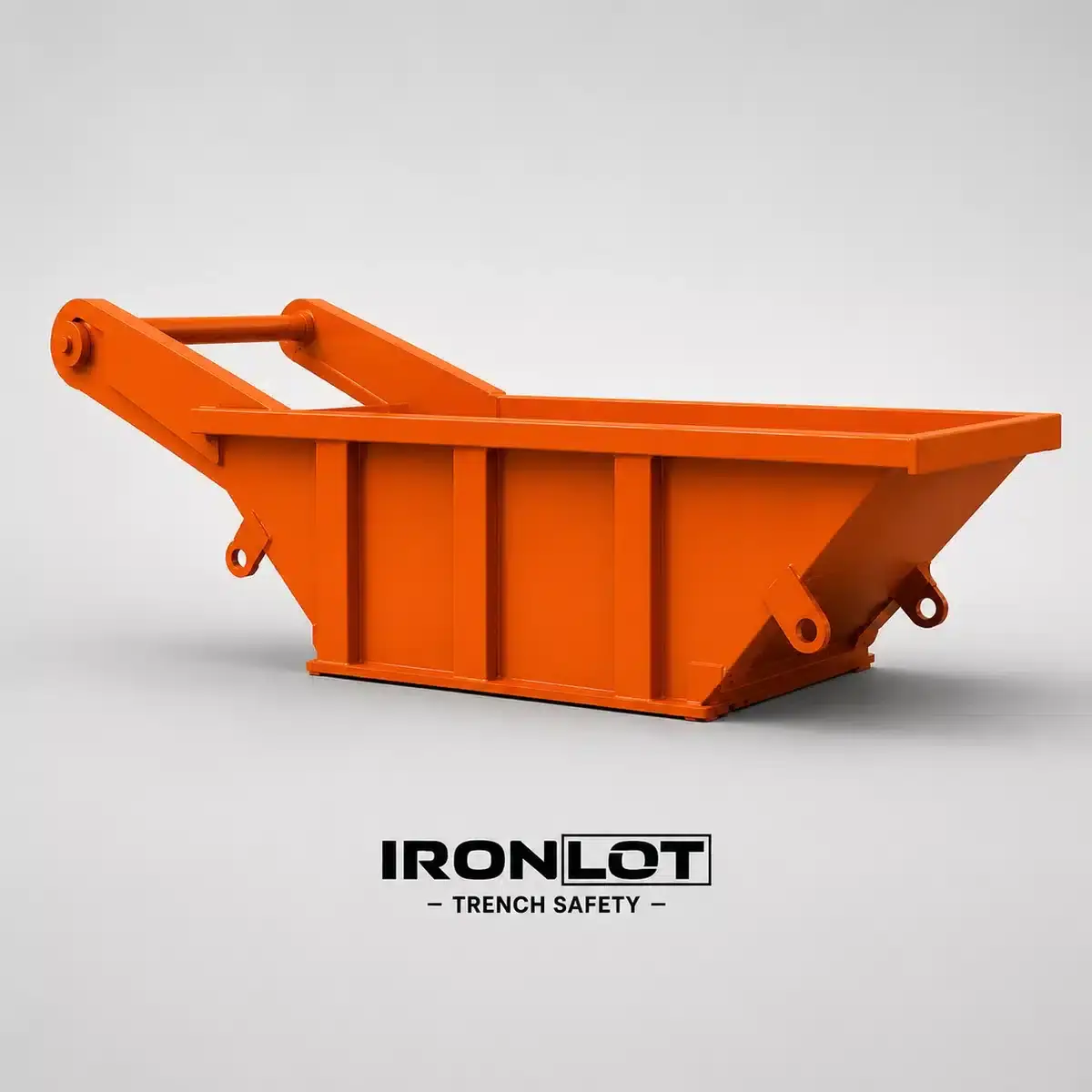
Start With the Job, Not Just the Box Capacity
Nominal capacity is an important specification, but it does not tell you whether a bedding box will fit the complete material-handling plan.
A larger box can hold more aggregate between refills, but it can also be heavier, physically larger, more difficult to move, and more demanding on the equipment used to load, transport, or reposition it.
The best bedding box is usually the one that fits the production cycle and equipment already on the job rather than simply the box with the greatest nominal capacity.
The Main Bedding Box Sizing Factors
How Much Material Is Being Used?
Consider how quickly the crew consumes bedding or aggregate and how often the box can practically be replenished.
What Will the Box Weigh When Full?
The empty box weight and the weight of the material inside it both matter when evaluating handling and equipment capability.
What Machines Are Available?
The loader, excavator, lifting equipment, and other machines involved in the workflow should be considered before selecting a box.
Will the Box Fit the Jobsite?
Length, width, height, access, trench-side clearance, and transportation space can be as important as cubic capacity.
How Fast Is the Crew Advancing?
Long production runs can justify a different box size than short repairs or intermittent bedding work.
How Will the Box Be Moved?
Verify the manufacturer's permitted lifting, pulling, dragging, or repositioning methods for the specific bedding box.
1. Estimate the Material Demand
Start by determining how much bedding or aggregate the crew normally needs during the active installation cycle.
The goal is not necessarily to fit an entire project's material requirement into one box. A bedding box typically serves as a working supply near the excavation while a larger stockpile or delivery source replenishes it.
A box that is too small may need frequent replenishment. A box that is unnecessarily large may create additional weight and handling demands without improving production.
2. Calculate the Loaded Bedding Box Weight
Cubic capacity does not tell the complete story because different materials can produce very different loaded weights.
Crushed stone, gravel, sand, and other aggregates have different bulk densities, and moisture content can also change the actual weight of the material being handled.
Material weight can be estimated from the actual volume being carried and an appropriate bulk-density value for the material. Use project or supplier information rather than assuming one universal aggregate weight.
Two boxes carrying the same volume can place very different demands on equipment if the material density, moisture content, box empty weight, or actual fill level is different.
3. Match the Bedding Box to the Available Equipment
The machines loading and repositioning the bedding box should be considered as part of the selection process.
Do not assume that an excavator can safely handle a bedding box simply because it can move the box when empty. The actual handling method and weight involved need to be evaluated.
Lifting, dragging, pulling, and repositioning are different operations. Follow the manufacturer's instructions and use only the designated lifting or pulling points for the specific model.
4. Check the Physical Dimensions
A bedding box must physically fit the work area in addition to holding the required material.
This can be especially important on roadway utility projects, narrow easements, urban work, and other jobsites where equipment and material staging compete for limited space.
Smaller vs. Larger Bedding Boxes
Compact and Easier to Position
A smaller box may be appropriate when material demand is moderate, jobsite space is limited, the work involves shorter runs, or smaller equipment is being used.
The tradeoff is generally a smaller working supply and potentially more frequent refilling.
More Material Between Refills
A larger box may benefit higher-production utility installation where crews consume aggregate steadily and sufficient equipment and staging space are available.
The tradeoff can be greater empty and loaded weight, larger physical dimensions, and more demanding transportation and handling.
5. Consider the Material Being Handled
The material itself affects both the usefulness of the box and its loaded weight.
Projects may use gravel, crushed stone, sand, select aggregate, or other specified granular material. Project documents determine what material is acceptable.
6. Match the Box to the Production Rate
A bedding box should support the production cycle rather than become another bottleneck.
Consider how quickly pipe or utility installation advances, how much aggregate is placed during each cycle, and how long it takes to replenish the box.
A useful sizing question is: How long should the crew be able to work before the bedding box needs to be replenished?
A high-production mainline operation may benefit from a larger working supply, while a spot repair or localized utility excavation may not require the same capacity.
7. Compare Construction and Duty Level
Capacity is not the only difference between bedding-box models. Construction details may also vary.
Do not assume every bedding box can be lifted, dragged, or pulled in the same manner. Check the construction and manufacturer's instructions for the specific model.
8. Plan for Transportation and Mobilization
The bedding box needs to get to and from the project, and larger physical dimensions can affect how the box fits with other equipment on a truck or trailer.
Bedding Box Sizing Checklist
Before choosing a specific bedding box, gather the following information.
What material will be carried?
How much material is consumed during a normal work cycle?
How frequently can the box be replenished?
What is the empty weight of the box?
What is the estimated material weight?
What is the estimated loaded box weight?
What excavator will be working beside the box?
What machine will load the box?
How will the box be repositioned?
How much room is available beside the trench?
Will the box fit the planned truck or trailer?
Does the selected model have the required handling features?
Common Bedding Box Sizing Mistakes
Size the Complete Material-Handling System
A bedding box should be selected as part of the complete jobsite workflow. Material demand, actual loaded weight, machine capability, production rate, physical dimensions, transportation, available working space, and the manufacturer's permitted handling methods should all be considered before a specific box is chosen.
Need Help Choosing the Right Bedding Box?
Contact us with your desired capacity, material type, available equipment, project requirements, and delivery location for current bedding-box options, pricing, availability, and freight coordination.