
Guide to Trench Sheets
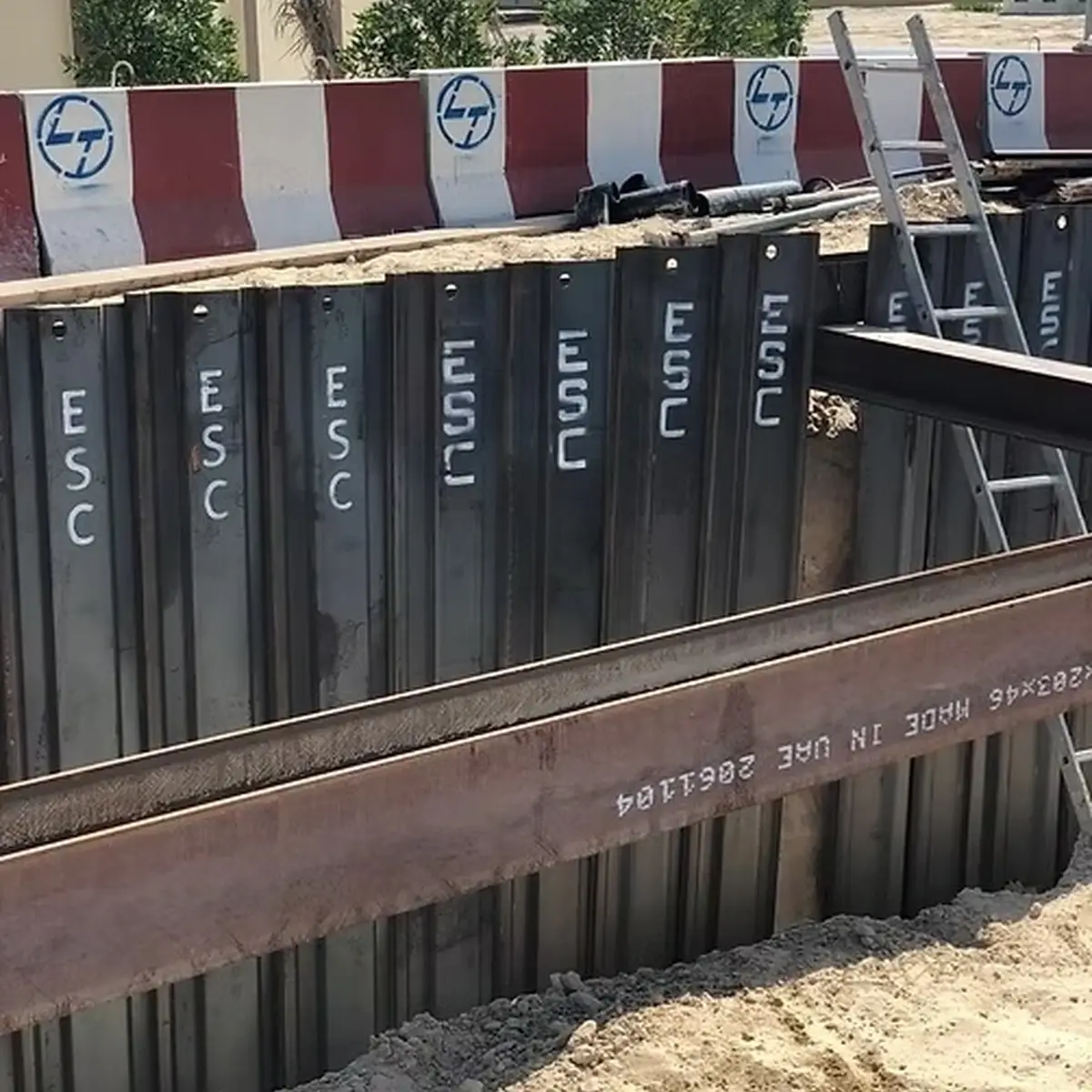
Trench sheets are lightweight steel sections used to provide earth retention for shallow excavations, service trenches, waterway banks, and other temporary or permanent works.
Their combination of strength, installation speed, flexibility, durability, and ease of extraction makes trench sheets a practical option for projects where a continuous sheet-shoring system is appropriate.
 Steel Trench Sheets
Lightweight steel retention sections for trench,
earth-retention, and waterway applications
Steel Trench Sheets
Lightweight steel retention sections for trench,
earth-retention, and waterway applications
What Are Trench Sheets?
Trench sheets are steel sections used as an earth retention system in excavation and sheet-shoring applications.
They are particularly suited to shallow excavations where sheets can be installed alongside the excavation to retain soil and help support earth banks during the work.
Trench sheets can also be used for reinforcement of waterway banks and service trenches, and they may be incorporated into either temporary or permanent works when the selected system is appropriate for the project.
Trench sheets are an earth-retention and shoring product. They should be selected as part of the complete shoring or retaining system required for the actual excavation and project conditions.
Common Trench Sheet Applications
The combination of relatively light steel sections, continuous earth retention, and installation flexibility allows trench sheets to serve several construction and civil applications.
Shallow Excavations
Trench sheets can provide a practical retention system for shallow excavations where sheet shoring is appropriate.
Service Trenches
Trench sheets can be used in service trenches where excavation sides require a sheet-retention system during utility or civil work.
Earth-Bank Support
The sheets can be used to support earth banks where a continuous steel retaining face is required for the work.
Waterway-Bank Reinforcement
Trench sheets can also be incorporated into projects intended to reinforce waterway banks and provide soil retention.
Why Use Trench Sheets?
Trench sheets combine several characteristics that can make them useful where a relatively lightweight steel retention system is required.
Steel construction provides structural capacity for earth-retention applications when the selected profile and complete system are appropriate for the design.
Trench sheets are intended to provide an efficient sheet-retention solution for suitable excavation and shoring applications.
The sheets can be used across several forms of temporary and permanent construction work.
Steel trench sheets provide a durable earth-retention component for construction and civil applications.
The relatively light sheet configuration can support efficient handling and installation on appropriate projects.
Where sheets are used as temporary works, their ability to be extracted after use can support reuse and more sustainable construction practices.
Temporary and Permanent Uses
Trench sheets are not limited to one type of project duration. They can be incorporated into both temporary and permanent works.
Installed for the Construction Phase
For temporary work, trench sheets can provide earth retention during excavation or construction and then be extracted when they are no longer required.
Left as Part of the Finished Work
Where the project design calls for it, trench sheets may also remain in place as part of a permanent earth-retention or bank-reinforcement system.
Available Steel Grades
Trench sheets can be supplied in different structural steel grades depending on the project specification.
One of the listed steel-grade options for trench sheet production.
A higher-strength ASTM A572 grade available for trench-sheet production.
Other steel grades may be available when required by the project.
The steel grade is only one part of trench-sheet selection. The required profile, section properties, length, support arrangement, loading, and complete system design must also match the project.
Trench Sheet Lengths
Trench sheets can be produced in project-specific lengths rather than being limited to a single standard length.
These sheets have a maximum production length of 39.37 feet.
Project-specific lengths can be produced within the available manufacturing limits.
Sheets can be supplied with lifting holes as a delivery option.
Handling and Delivery
Trench sheets can be produced with lifting holes to assist with handling. The actual lifting method and equipment should be appropriate for the sheet length, weight, site conditions, and installation procedure.
For transportation, trench sheets can be shipped by container or as break-bulk cargo depending on order size, sheet length, destination, and project logistics.
Lifting holes can be incorporated to provide a defined handling point on the trench sheet.
Container shipment may be available depending on the sheet lengths and order configuration.
Break-bulk transportation provides another delivery method for project quantities or dimensions requiring it.
Length and material requirements can be matched to the project rather than relying solely on stock dimensions.
Installation and Extraction
Ease of installation and extraction is one of the practical advantages identified for trench sheets.
On temporary projects, extraction allows the sheets to be removed after the retention system is no longer required. This creates the potential for reuse on future work rather than leaving all of the steel permanently in place.
Select the Required Sheet
The profile, steel grade, length, and complete retaining system should be selected for the project requirements.
Plan the Installation
Installation equipment and procedures should be matched to the trench sheets and project conditions.
Use as the Designed Retention System
The installed sheets should function as part of the complete earth-retention or shoring configuration specified for the work.
Extract When Appropriate
For temporary installations, sheets can be extracted when the construction sequence and project requirements permit removal.
Reuse and Sustainable Construction
The ability to install and later extract steel trench sheets can make them useful on temporary works where the material may be reused.
Rather than automatically becoming a permanent part of the completed construction, extracted sheets may remain available for future projects when their condition and the requirements of the next application permit reuse.
What Should Be Considered When Selecting Trench Sheets?
A trench sheet should be selected as part of the complete retaining or shoring system, not simply by choosing a convenient sheet length.
A longer trench sheet is not automatically suitable for a deeper excavation. Allowable use depends on the selected sheet profile and the design of the complete retaining or shoring system.
Frequently Asked Questions
What are trench sheets used for?
Trench sheets are used for earth retention in applications such as shallow excavations, service trenches, support of earth banks, and reinforcement of waterway banks.
Are trench sheets only for temporary work?
No. They can be incorporated into both temporary and permanent works when the selected system is appropriate for the project.
What steel grades are available?
ASTM A572 Grade 36 and Grade 50 are listed options. Other grades may be available for project-specific requirements.
How long can trench sheets be?
These sheets have a maximum production length of 39.37 feet, with project-specific lengths available within the manufacturing limits.
Can trench sheets be removed after a project?
Yes. Ease of extraction is one of the stated advantages of trench sheets for temporary construction, allowing sheets to be removed when the project sequence permits.
Can trench sheets be supplied with lifting holes?
Yes. A lifting hole is listed as an available order and delivery option.
How are trench sheets shipped?
Available delivery methods include container and break-bulk shipment, depending on the order and project logistics.
Treat the Sheets as Part of the Complete Retention System
Trench-sheet selection should account for the required profile, steel grade, sheet length, application, soil and site conditions, installation method, temporary or permanent use, handling, extraction, and the engineering requirements of the complete shoring or earth-retention system.
Planning a Trench Sheet Project?
Steel trench sheets can provide a practical earth-retention option for service trenches, shallow excavations, earth-bank support, waterway reinforcement, and other temporary or permanent works.
Contact Iron Lot with your project application, required lengths, quantities, steel-grade requirements, delivery location, and schedule for current pricing and availability.