
How to Choose a Hydraulic Shore
Choosing a hydraulic shore starts with the excavation, not simply the rail length or cylinder range printed on the equipment.
Trench width, excavation depth, soil classification, shore spacing, surcharge conditions, sheeting requirements, working clearance, and the manufacturer's current tabulated data all affect the protective-system configuration.
Start With the Excavation, Not the Shore
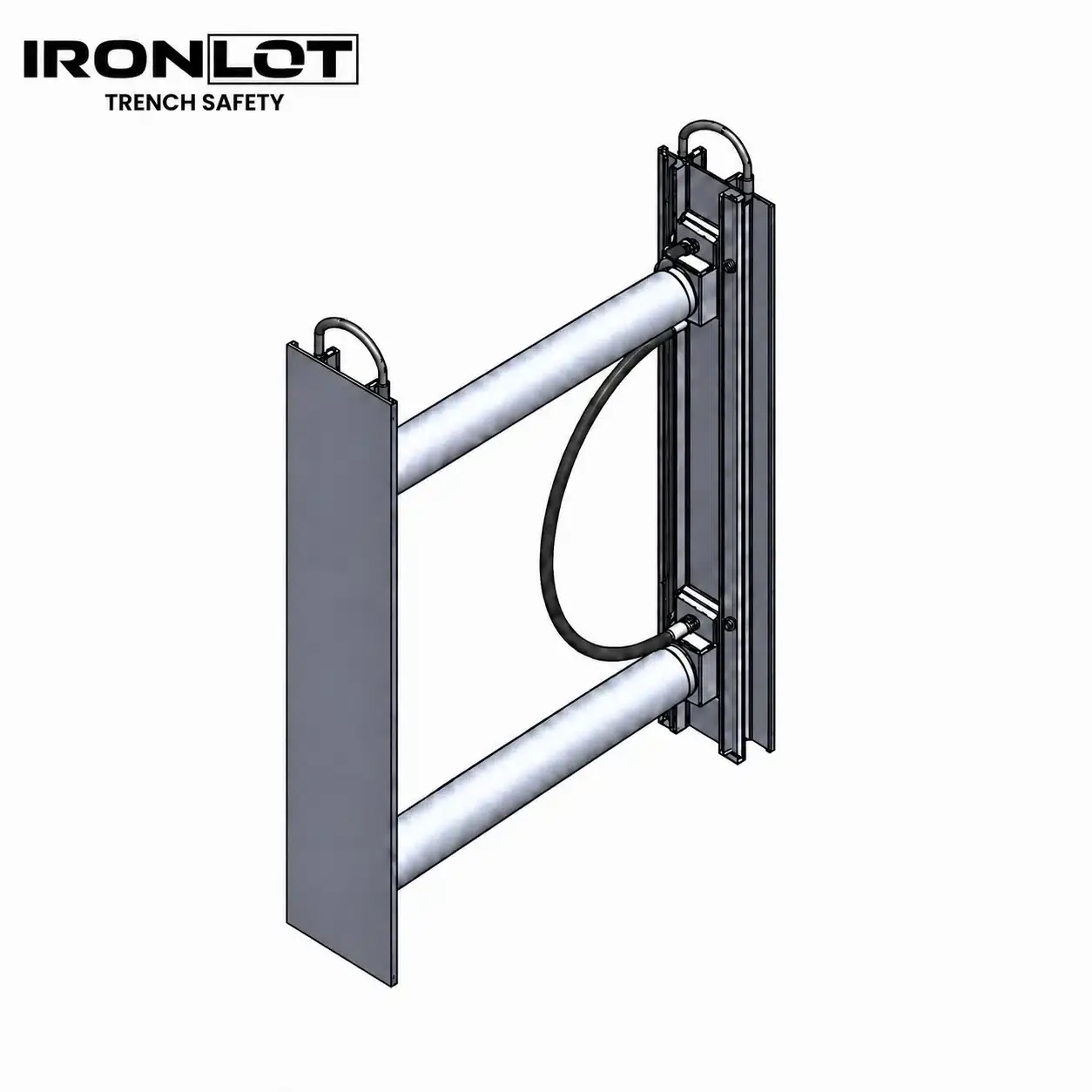
A hydraulic shore is one component of a complete protective system. Physical fit is important, but a shore should not be selected solely because its cylinder can extend across the trench or because its rail appears to match the excavation depth.
The project conditions should be evaluated first. Those conditions are then used with the applicable manufacturer's current tabulated data to determine the required equipment and system layout.
First define the excavation and protective-system requirements. Then select the hydraulic shore that fits those requirements.
Hydraulic Shore Selection Process
A practical selection process generally considers these factors in order.
Measure the Trench Width
Determine the actual working width of the excavation and identify a cylinder range that can accommodate that width within the applicable system requirements.
Determine Excavation Depth
Record the planned depth and use the applicable tabulated data to determine required vertical coverage, cylinder placement, and allowable system configuration.
Classify the Soil
The project Competent Person should classify the soil and use the appropriate tabulated-data requirements for the conditions present.
Determine Shore Spacing
Horizontal and vertical spacing affect the entire system layout and the quantity of shores required along the excavation.
Evaluate Sheeting
Determine whether the excavation conditions require allowable sheeting to control sloughing or raveling between shore locations.
Review Jobsite Loads
Consider spoil piles, nearby equipment, traffic, structures, groundwater, vibration, and other conditions that can affect the protective system.
1. Trench Width and Cylinder Range
The hydraulic cylinder must be capable of spanning the excavation width while operating within the range and configuration permitted by the applicable manufacturer.
Measure the actual trench width where the shore will be installed rather than relying only on the planned bucket width or drawing dimensions.
Existing utilities, irregular excavation walls, sheeting, and other field conditions can affect the actual width the shore must accommodate.
A cylinder range tells you whether a shore can physically fit a width. It does not by itself establish that the shore is suitable for the excavation.
2. Rail Length and Excavation Depth
Rail length is another important equipment dimension, but it should not be treated as a direct excavation-depth rating.
The protective-system layout may depend on the number and position of hydraulic cylinders, vertical spacing, distance from the top and bottom of the excavation, soil classification, and other requirements contained in the current tabulated data.
Select the rail configuration only after the excavation depth and required cylinder locations have been reviewed.
3. Soil Classification
Soil classification affects the allowable layout of a hydraulic-shoring system.
The project Competent Person should classify the soil according to the applicable excavation requirements and then use the hydraulic-shoring manufacturer's current tabulated data to determine whether the system can be used and what spacing or additional protection is required.
Soil conditions can also change during the project. Rainfall, groundwater, vibration, excavation activity, and nearby loading can require the protective system to be reevaluated.
4. Shore Spacing and Quantity
Hydraulic shores function together as a protective system. The number of shores required cannot be determined from trench length alone.
Allowable horizontal spacing depends on the manufacturer's tabulated data, excavation depth, soil conditions, surcharge loads, and other project conditions.
Some tabulated systems also establish minimum shore layouts for short excavations. These are protective-system requirements and should not be confused with a sales or order minimum.
The Competent Person should establish the complete layout before workers enter the protected area.
5. Determine Whether Sheeting Is Required
Vertical hydraulic shores leave portions of the excavation wall exposed between adjacent rails.
If soil is likely to slough or ravel, allowable sheeting may be required behind or between the shores. The acceptable material, thickness, width, installation depth, and spacing must come from the applicable current tabulated data.
Sheeting should be considered as part of the protective system during equipment selection rather than as an afterthought once the shores arrive on the job.
6. Account for Jobsite Conditions
The excavation does not exist independently from the rest of the jobsite. Conditions around the trench can affect the load imposed on the protective system.
7. Consider Handling and Installation
Shore size also affects how the equipment will be handled on the job.
Review the weight and dimensions of the selected shore and determine whether the crew can safely position it using the required installation procedure or whether lifting equipment will be needed.
The project should also account for the hydraulic pump, compatible hose and fluid, release tools, removal equipment, allowable sheeting, and other components needed to install and remove the system.
Information to Have Before Requesting a Quote
The more accurately the excavation is defined, the easier it is to identify appropriate hydraulic-shoring options.
Provide the planned depth or depth range.
Provide the actual or expected inside excavation width.
Include the length of excavation that will need to be protected at one time.
Include the Competent Person's soil classification when available.
Describe the utility, repair, connection, structure, or other work being performed.
Provide the jobsite or delivery ZIP code for freight planning.
Do Not Choose a Shore From One Dimension
Cylinder range and rail length are useful equipment dimensions, but neither one independently determines whether a hydraulic shore is suitable for an excavation. Soil classification, excavation depth, shore spacing, cylinder placement, surcharge loads, sheeting, groundwater, manufacturer tabulated data, and Competent Person review all affect the complete protective-system configuration.
Need Hydraulic Shoring for an Upcoming Project?
Iron Lot supplies vertical hydraulic shores and related hydraulic-shoring equipment for underground utility, municipal, public works, and excavation projects. Contact us for current pricing, availability, and freight coordination.