
What Is a Bedding Box?
A bedding box is a heavy-duty material container used on trenching, utility, and excavation projects to keep pipe bedding and other granular material close to the active work area.
Instead of relying only on a loose stockpile located away from the trench, a crew can stage a working quantity of material in the box and reposition the box as the excavation and installation progress.
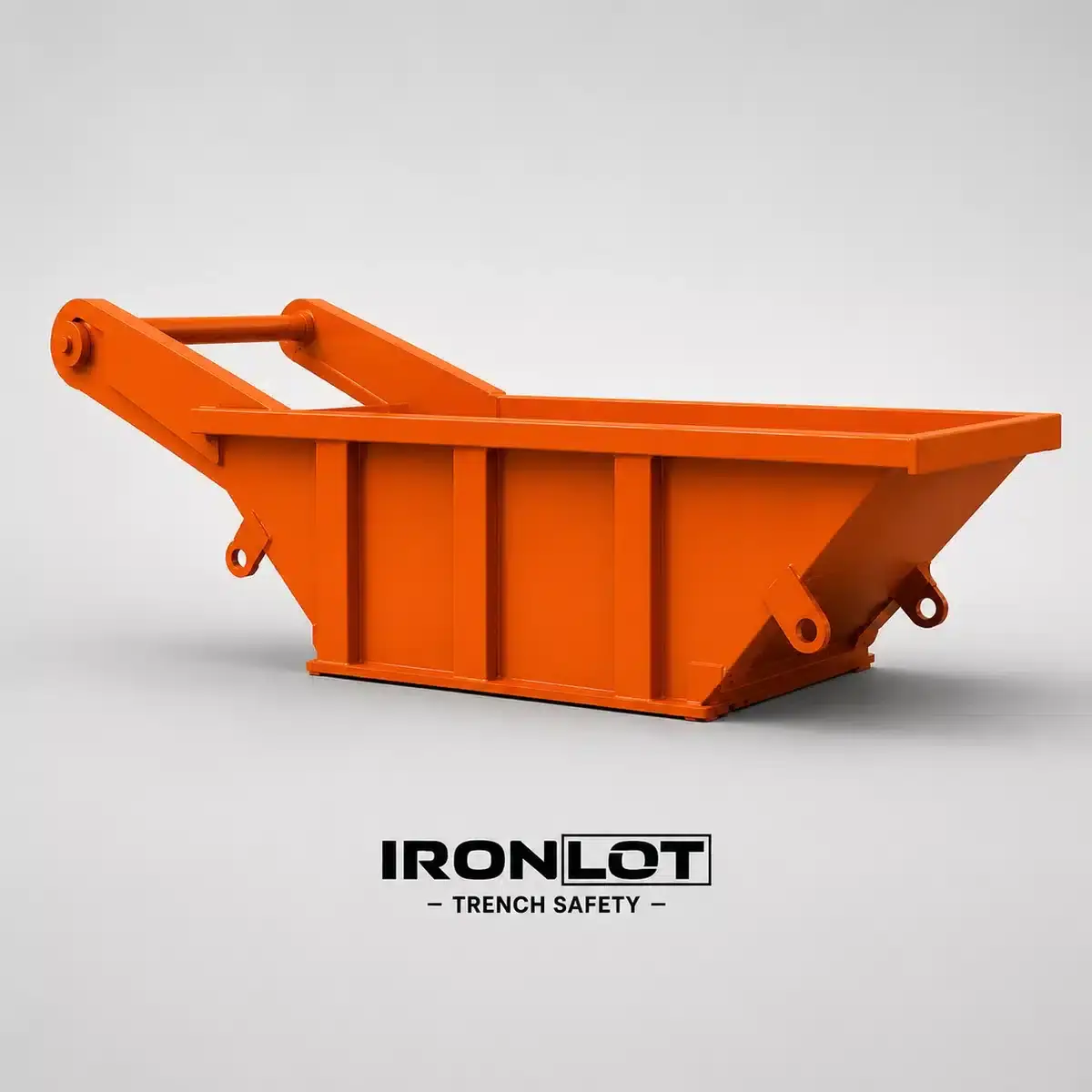
Bedding Box Definition
A bedding box is an open material container designed for use around excavation and trenching operations. Its primary purpose is to hold a supply of bedding, aggregate, or similar granular material where the excavator can retrieve it as the work progresses.
The box can then be repositioned along the trench line instead of requiring the operator to repeatedly travel back to a distant material pile every time more bedding is needed.
A bedding box is a material-handling and staging tool. It is used to hold a supply of aggragate during the construction of a utility trench project.
What Materials Are Commonly Staged in a Bedding Box?
Bedding boxes are commonly associated with granular materials used around underground pipe, conduit, drainage structures, and utility installations.
The specific material required for a project depends on the pipe system, design documents, specifications, agency requirements, and other project criteria.
A bedding box simply provides a practical way to stage and handle that material. It does not make an otherwise unsuitable aggregate acceptable for the installation.
How Do Crews Use a Bedding Box?
Exact procedures vary by project and bedding-box design, but a typical workflow is straightforward.
Stock the Box
A loader or other suitable machine places the required bedding or aggregate into the box.
Stage It Near the Work
The box is positioned so the excavator can retrieve material without unnecessarily leaving the active trench operation.
Place Material as Needed
The excavator takes material from the box and places it in the excavation as bedding, haunch material, or other specified fill according to the project requirements.
Advance the Box
As pipe installation and excavation advance, the box can be repositioned using the lifting, pulling, or dragging provisions provided for the specific model.
Restock as Required
The material-handling equipment can replenish the box as the crew consumes the staged material.
Common Bedding Box Applications
Bedding boxes are most useful on projects where granular material needs to be placed repeatedly as underground work advances.
Bedding Box vs. Loose Material Piles
A loose stockpile and a bedding box can both have a place on the same project. The difference is mainly how the crew stages material around the active work.
Contained Working Supply
A box keeps a defined quantity of material contained near the active trench operation and can be repositioned as the work progresses.
This can reduce repeated equipment travel between the active excavation and a larger stockpile.
Bulk Material Storage
A stockpile can hold a much larger volume of material and may serve as the primary source from which the bedding box is replenished.
Its usefulness depends on available staging space, equipment access, and distance from the active trench.
On many projects, the larger stockpile supplies the material while the bedding box serves as the working supply near the excavation.
Bedding Box, Gravel Box, and Stone Box Terminology
Construction crews and equipment manufacturers use several names for this general type of material box.
The Broadest Common Term
Usually refers to a box used to stage bedding or granular material for trenching and underground utility work.
Material-Based Terminology
Often used when gravel or similar aggregate is the primary material being handled.
Another Jobsite Term
Stone box is also used in the industry for boxes designed to contain and move aggregate along excavation work.
Terminology Varies
Utility bedding box, pipe bedding box, excavation bedding box, and bedding material box may also be used.
The name alone does not establish capacity, construction, dimensions, or handling features. Those details should be checked for the specific box.
Common Bedding Box Features
Construction varies by manufacturer, model, capacity, and duty level. Common bedding-box designs may include features intended to withstand repeated loading, material retrieval, and repositioning on excavation jobsites.
Heavy Steel Fabrication
Many bedding boxes use heavy or high-tensile steel construction suited to repeated aggregate handling.
Reinforced Surfaces
Depending on the design, bottoms, ends, pull points, or other high-wear areas may include additional reinforcement.
Lifting and Pulling Points
Many models incorporate lifting or pulling lugs, eyes, bars, or similar provisions for controlled handling.
Drag or Walking Bars
Some designs use drag bars or walking bars to help equipment reposition the box along the work area.
Multiple Box Sizes
Bedding boxes are produced in different capacities so contractors can match the box to material demand and available equipment.
Standard and Heavy-Duty Designs
Some manufacturers offer multiple construction levels for different capacities and working conditions.
When Might a Contractor Need a Bedding Box?
A bedding box becomes more useful when material placement is a repeated part of the production cycle and keeping a working supply close to the excavation can improve the material-handling layout.
A short-duration excavation with very little bedding material may not justify the same capacity or material staging setup as a long utility installation. The appropriate box depends on the production needs of the actual project.
How Do You Choose the Right Bedding Box Size?
Bigger is not automatically better. Bedding-box capacity should be considered together with the amount of material being consumed, the equipment available to load and reposition the box, jobsite access, trench production rate, and transportation requirements.
For a more detailed look at capacity, dimensions, material demand, machine size, and handling requirements, read our Bedding Box Sizing Guide.
Match the Box to the Material-Handling Plan
A bedding box is most useful when its capacity, dimensions, construction, weight, and handling features fit the equipment and workflow of the project. The box organizes and stages material; project specifications still determine what bedding or backfill material is acceptable for the installation.
Need a Bedding Box for an Upcoming Project?
Contact us with the box capacity you are considering, your equipment information, project requirements, and delivery location for current options, pricing, availability, and freight coordination.