
The 1-2-3-4-5-6 Rule of Trench Safety: Six Numbers Every Crew Should Know
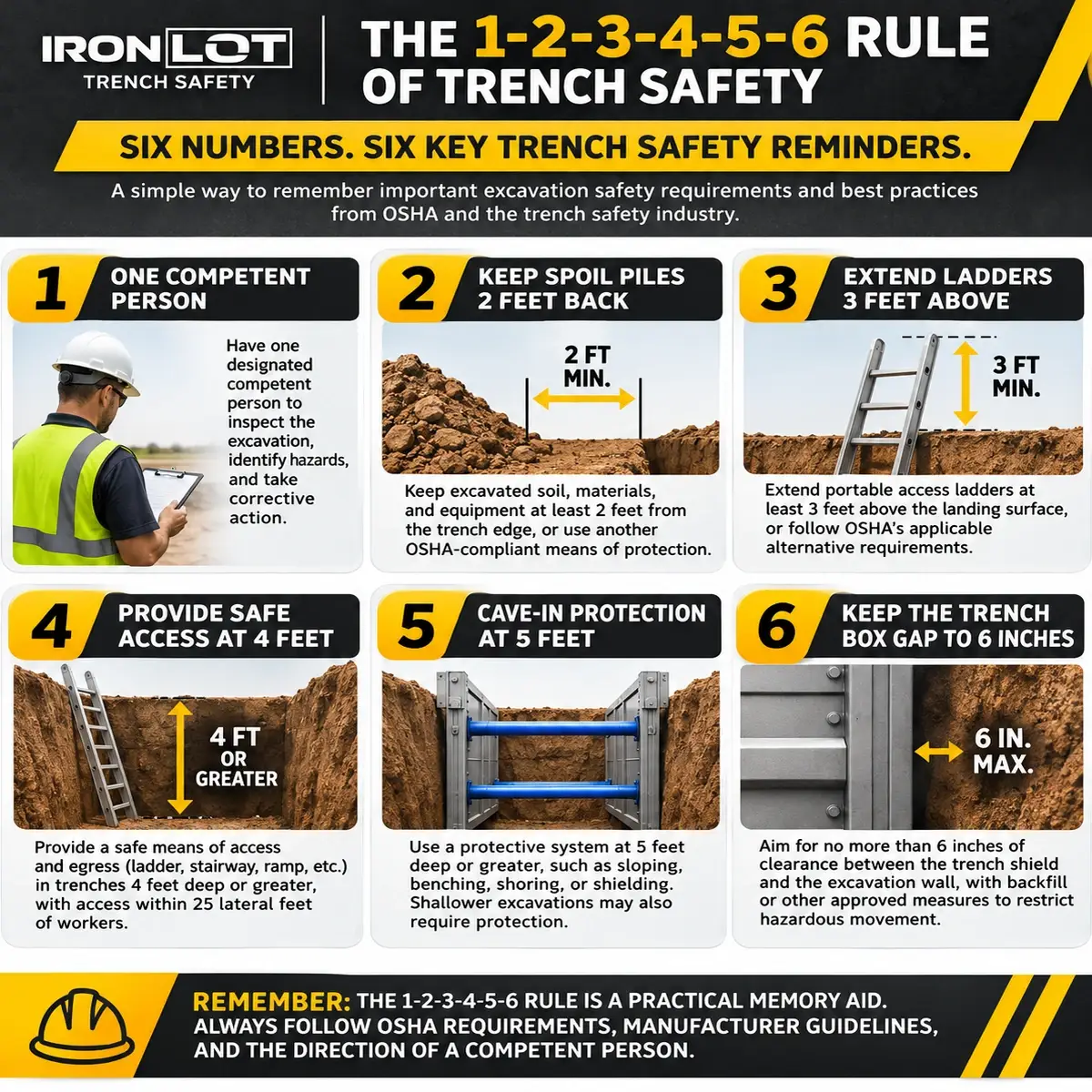
Trench safety involves numerous regulations, equipment requirements, and jobsite precautions. But some of the most important safety practices can be remembered using just six numbers.
The 1-2-3-4-5-6 rule of trench safety is a practical memory aid that combines important OSHA requirements with an additional trench shield installation recommendation.
From competent-person inspections to proper trench box installation, these six numbers help reinforce essential safety practices before workers enter an excavation.
Take These Safety Reminders to the Jobsite
Download Iron Lot's free, one-page printable 6 Rules of Trench Safety infographic for safety meetings, crew training, and jobsite reference.
Download Printable Safety Guide (PDF) ↓One Competent Person
Every excavation must be inspected by a designated competent person before work begins.
OSHA defines a competent person as someone capable of identifying existing and predictable hazards and authorized to take prompt corrective action.
The competent person evaluates soil conditions, identifies excavation hazards, and determines whether protective systems are appropriate for the work.
OSHA requires inspections before the start of work and as needed throughout the shift. Additional inspections are required following rainstorms or other events that could increase excavation hazards.
Keep Spoil Piles at Least 2 Feet Back
Excavated soil, construction materials, and equipment placed too close to a trench can create additional hazards.
Spoil piles may increase pressure on excavation walls and allow loose material to fall or roll into the trench.
OSHA requires employees to be protected from excavated materials and equipment that could fall or roll into excavations.
One common method is maintaining a minimum 2-foot setback between these materials and the excavation edge. Retaining devices or other compliant protective measures may also be used.
Heavy equipment operating near an excavation can introduce additional surcharge loads that must be considered when selecting a protective system.
Three Feet Above the Landing
Workers need a reliable way to enter and exit an excavation.
When a portable ladder is used for access to an upper landing surface, OSHA generally requires its side rails to extend at least 3 feet above the landing surface. On most ladders, 3 rungs above the top of the trench is equal to 3 feet above the trench.
This extension provides a secure handhold while workers transition between the ladder and the ground surface.
Where a 3-foot extension is not possible because of the ladder's length, OSHA provides specific alternative securing and grasping-device requirements.
Ladders must be properly positioned, inspected, and maintained in safe condition.
Provide Safe Access at 4 Feet
OSHA requires a safe means of access and egress in trench excavations 4 feet deep or greater.
A ladder, stairway, ramp, or another safe means of egress must be positioned so workers do not have to travel more than 25 lateral feet to reach it.
Access routes must remain unobstructed and workers must be protected from excavation hazards while entering or leaving the trench.
Crews should verify that access points remain properly positioned as excavation work progresses.
Cave-In Protection at 5 Feet
OSHA generally requires a protective system for excavations 5 feet deep or greater, except excavations made entirely in stable rock.
A protective system may also be required in excavations less than 5 feet deep when a competent person identifies a potential cave-in hazard.
Common methods of cave-in protection include:
- Sloping and Benching: Excavating soil at approved angles or in stepped configurations.
- Shoring: Supporting excavation walls with hydraulic, aluminum, steel, or other approved support systems.
- Shielding: Using trench boxes or trench shields to protect workers within the shielded area.
Manufactured trench boxes and shoring systems must be selected and installed according to applicable OSHA requirements and manufacturer tabulated data.
Excavation depth, soil classification, surcharge loads, groundwater, and protective system configuration must all be considered.
Keep the Trench Box Gap to 6 Inches
A trench box must be installed to restrict lateral or other hazardous movement if a cave-in occurs.
The space between the outside of a trench shield and the excavation wall is an important installation consideration.
A commonly recommended industry practice is to maintain no more than approximately 6 inches of clearance between the trench shield and the excavation sidewall.
Excessive clearance can allow collapsing soil to strike the shield and potentially cause hazardous movement.
Where appropriate, the space between the shield and excavation wall should be backfilled or otherwise controlled to restrict hazardous shield movement.
Important: OSHA does not establish a universal 6-inch maximum clearance for every trench shield installation.
OSHA requires shields to be installed in a manner that restricts lateral or other hazardous movement. The competent person must evaluate the excavation conditions and follow applicable manufacturer instructions and tabulated data.
Putting the 1-2-3-4-5-6 Rule Into Practice
The numbers are easy to remember, but their effectiveness depends on how consistently they are applied.
| Number | Trench Safety Reminder |
|---|---|
| 1 | One designated competent person. |
| 2 | Keep spoil piles at least 2 feet back, or use other compliant protection. |
| 3 | Extend portable access ladders 3 feet above the landing, subject to OSHA exceptions. |
| 4 | Provide safe access and egress in trenches 4 feet deep or greater. |
| 5 | Use cave-in protection at 5 feet or deeper, with applicable exceptions. |
| 6 | Aim for a maximum 6-inch trench shield gap, subject to manufacturer requirements and competent-person review. |
These six reminders are a useful starting point, but they do not cover every trench safety requirement.
Crews must also evaluate underground utilities, water accumulation, hazardous atmospheres, equipment loads, soil conditions, and other jobsite hazards.
Trench Safety Starts with Proper Planning
The best time to address trench safety is before excavation begins.
Selecting an appropriate protective system, understanding soil conditions, reviewing manufacturer tabulated data, and establishing safe work procedures are all essential parts of the process.
Whether a project requires a steel trench box, aluminum trench shield, or hydraulic shoring system, the equipment must be selected and installed for the actual excavation conditions.
At Iron Lot, we believe that providing contractors with reliable information about trench protection equipment is an important part of promoting safer underground construction.
Remember the numbers. Follow the requirements. Protect the crew.
Because every worker deserves to go home safely.
Additional Trench Safety Resources
Find the Right Trench Safety Equipment
Iron Lot offers trench boxes, aluminum trench shields, hydraulic shoring systems, and other excavation protection equipment.
Contact Iron Lot to discuss equipment options, specifications, pricing, and availability for your next project.
Browse all Equipment for SaleSafety Disclaimer: The 1-2-3-4-5-6 rule is an educational memory aid, not an official OSHA rule. The 6-inch shield clearance recommendation is a general industry practice, not a universal federal requirement. Always follow OSHA 29 CFR 1926 Subpart P, applicable state regulations, manufacturer tabulated data, and the direction of a designated competent person.