
How to Properly Backfill a Trench: Materials, Compaction, and Safety
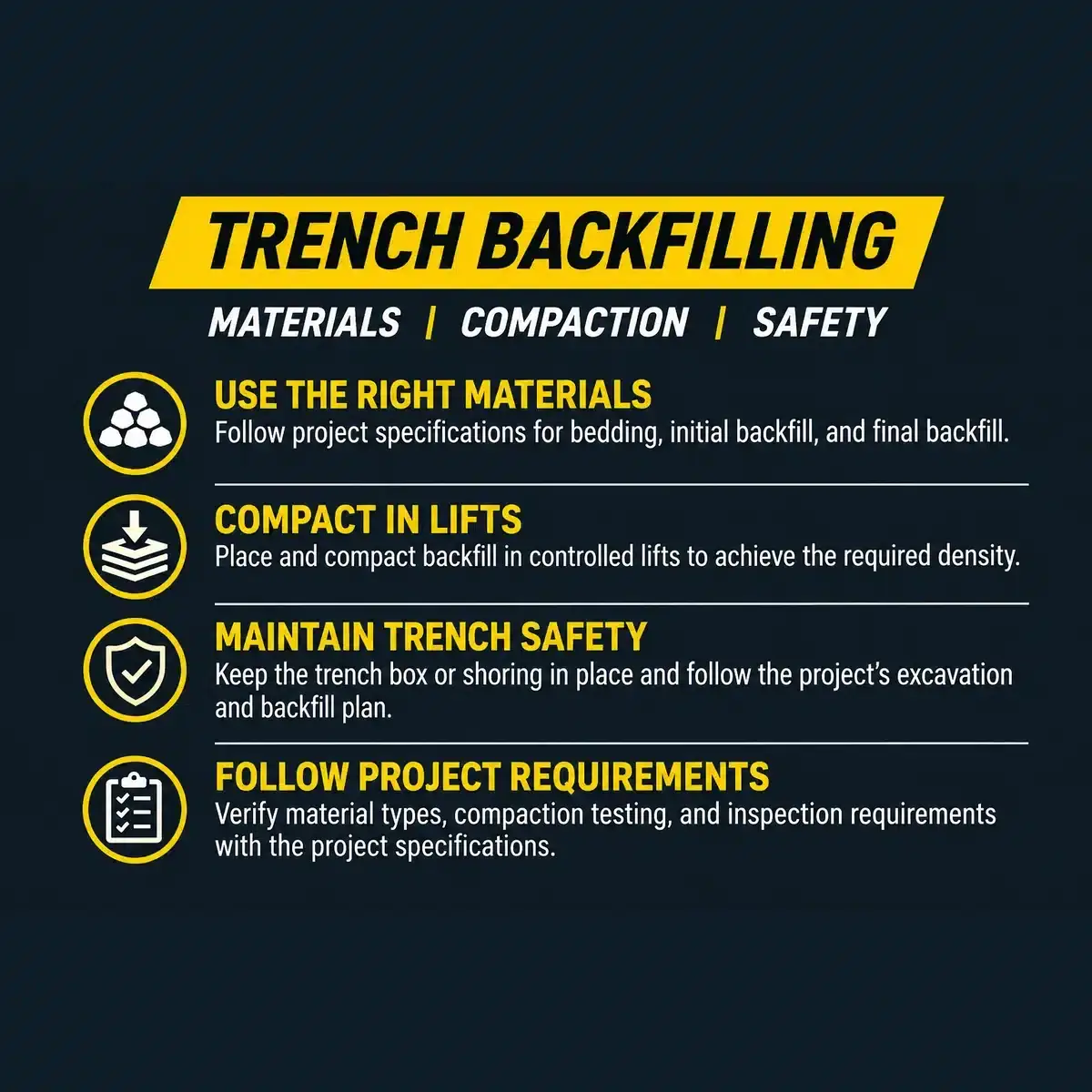
Excavating a trench and installing underground utilities are only part of the job. Once the pipe, conduit, or underground structure is in place, the excavation must be properly backfilled to provide support, restore the ground surface, and reduce the risk of future settlement.
Although backfilling may appear straightforward, improper material selection, poor compaction, and inadequate coordination with trench protection equipment can lead to costly problems.
From damaged utility lines to pavement settlement and unstable soil conditions, mistakes made during backfilling can affect the long-term performance of an underground installation.
Understanding the backfilling process is an important part of completing underground utility projects safely and efficiently.
What Is Trench Backfilling?
Trench backfilling is the process of replacing excavated material into a trench after underground construction work has been completed.
The objective is not simply to refill the excavation. Proper backfilling helps support buried utilities, distribute loads, reduce settlement, and restore the surrounding ground to the required condition.
Backfilling requirements depend on several factors, including:
- The type and size of pipe or underground structure.
- Soil conditions and groundwater.
- The location and depth of the excavation.
- Whether the trench is beneath a roadway, sidewalk, or landscaped area.
- Project specifications and required compaction levels.
- The protective system used during excavation.
For underground utility installations, backfilling typically involves several distinct stages.
Inspect the Trench Before Backfilling
Before placing backfill, the contractor should confirm that the underground installation is complete and ready to be covered.
This may include verifying pipe alignment, inspecting joints and connections, completing required testing, and obtaining necessary inspections or approvals.
The trench bottom and surrounding excavation should also be evaluated for unsuitable materials, standing water, and conditions that could affect the installation.
Before backfilling begins, confirm that:
- The installed utility meets project requirements.
- Required inspections and testing are complete.
- Bedding and foundation conditions are acceptable.
- Unsuitable debris and materials have been removed.
- Groundwater and drainage conditions are controlled.
- The trench protective system remains properly installed.
Backfill Around the Pipe and Haunches
Once the pipe is positioned on its bedding, approved material is placed along the sides and beneath the lower portions of the pipe.
This area is commonly referred to as the haunch zone.
For many buried pipe systems, proper haunch support is critical because it helps the pipe and surrounding soil work together to resist external loads.
Backfill material should be placed carefully on both sides of the pipe to avoid shifting or damaging the installation.
Special attention should be given to eliminating voids beneath the pipe's lower sides.
The appropriate placement and compaction methods depend on the pipe material. Flexible pipe systems, for example, may rely heavily on properly compacted side support.
Crews should avoid dropping large quantities of material directly onto exposed pipe or using compaction equipment that could damage the installation.
Place Initial Backfill Above the Pipe
After the haunch zone has been properly filled, initial backfill is placed along the sides and over the top of the pipe.
The initial backfill zone provides additional support and protection before heavier equipment or larger quantities of fill are introduced.
Backfilling operations do not automatically eliminate excavation hazards. The competent person must continue inspecting the excavation, adjacent areas, and protective systems as required by OSHA until workers are no longer exposed to excavation hazards.
The required cover depth, material type, and compaction method depend on the pipe manufacturer and project specifications.
Material containing oversized rocks, debris, or other unsuitable objects should not be placed where it could damage the pipe or interfere with proper compaction.
Initial backfill is typically placed in controlled layers rather than dumping the entire required volume into the excavation at once.
Backfill in Layers and Compact Properly
After the initial backfill is complete, the remaining excavation is filled using approved materials.
One of the most important principles of trench backfilling is placing and compacting material in controlled layers, often called lifts.
Each lift should be compacted to the density required by project specifications before additional material is placed.
The allowable lift thickness depends on the fill material, moisture conditions, compaction equipment, and required density.
Lift Thickness: Some utility specifications use 6-inch lifts in the pipe embedment zone and 8-inch lifts for final backfill. These are project-specific examples, not universal requirements.
Common Compaction Equipment
Vibratory Plate Compactors
Commonly used to compact granular materials in smaller work areas.
Trench Rollers
Designed for compacting soil in trench and utility backfill applications.
Rammers
Often used for confined spaces and cohesive soils where impact compaction is appropriate.
Larger Rollers
May be used where sufficient cover and working space are available.
Moisture content also affects compaction. Material that is excessively wet or dry may not achieve the required density without conditioning or replacement.
Where required, field density testing helps verify that compacted material meets project specifications.
Removing Trench Boxes and Shoring Systems During Backfilling
Removing trench protection equipment during backfilling requires careful planning to maintain worker safety and prevent damage to the installed utility. The procedures differ depending on whether the excavation uses a trench shield (trench box) or a support system (shoring).
Removing Shoring Systems
Shoring systems, including hydraulic and timber shoring, support excavation walls to prevent cave ins.
Under OSHA 29 CFR 1926.652(e)(1), support systems must be removed in a manner that protects employees from cave-ins, structural collapse, and falling or shifting components.
OSHA specifically requires: 1926.652(e)(1)(v): Removal must begin at the bottom of the excavation and progress upward. Support members must be released slowly to identify signs of instability or potential cave-ins. 1926.652(e)(1)(vi): Backfilling must progress together with the removal of the support system.
These requirements help prevent workers from being exposed to unsupported excavation walls as shoring components are removed.
Removing Trench Boxes
Trench boxes are shielding systems designed to protect workers inside the shield rather than directly support the excavation walls.
Trench shields are governed by OSHA 29 CFR 1926.652(g), which established specific requirements for their installation and use.
Key requirements include:
- 1926.652(g)(1)(i):Shields must not be subjected to loads exceeding their designed capacity.
- 1926.652(g)(2): Shields must be installed to restrict hazardous movement caused by sudden lateral loads.
- 1926.652(g)(1)(iii): Workers must be protected from cave-in hazards when entering or exiting shielded areas.
- 1926.652(g)(1)(iv):Workers are not permitted inside shields while they are being installed, removed, or moved vertically.
Unlike shoring systems, OSHA does not specifically require backfilling to progress together with trench shield removal under 1926.652(g). However, the removal process must still protect workers from excavation hazards and comply with applicable protective system requirements.
Protecting Pipe Bedding and Backfill
When a trench box is lifted or advanced during backfilling, movement of the shield can disturb previously placed bedding and backfill material.
This is particularly important around the pipe haunches and side-support zones, where properly compacted material contributes to the structural performance of the installed pipe.
Contractors should evaluate the potential for:
- Voids developing between the pipe embedment and surrounding soil.
- Disturbance or displacement of compacted bedding and haunching material.
- Loss of lateral support around flexible pipe installations.
- Settlement resulting from improperly filled or compacted areas.
The backfilling and shield-removal procedure should follow the applicable pipe installation specifications, protective system manufacturer's instrusctions, and project engineering requirements.
Important: Trench Shields and shoring systems serve different purposes and are subject to different OSHA removal requirements. Contractors should not apply the shoring-removal provisions of OSHA 1926.652(e) to trench shields without considering the seperate requirements of 1926.652(g).
Complete Final Backfill and Surface Restoration
Once the underground utility has adequate cover and protective equipment has been safely removed or advanced, the remaining excavation can be filled to the required elevation.
Final backfill requirements vary depending on the location of the project.
A trench beneath a roadway may require specific aggregate materials, higher compaction densities, and pavement restoration procedures.
A trench in an undeveloped area may have different material and surface restoration requirements.
Before completing the project, contractors should verify that:
- Backfill meets required compaction specifications.
- The final surface elevation is correct.
- Required testing and inspections are complete.
- Drainage patterns have been restored.
- Pavement, concrete, landscaping, or other surfaces are properly repaired.
Trench Backfilling Process at a Glance
The following table summarizes the major stages of a typical underground utility backfilling operation.
| Stage | Primary Objective |
|---|---|
| Inspection | Confirm the underground installation is complete and ready for backfill. |
| Bedding | Establish a stable, uniform foundation beneath the pipe. |
| Haunching | Provide proper support beneath the lower sides of the pipe. |
| Initial Backfill | Protect the pipe and establish the required initial cover. |
| Compaction | Place and compact approved fill in controlled lifts. |
| Shield Removal | Coordinate protective equipment movement with safe backfilling procedures. |
| Final Restoration | Restore the ground surface and verify project requirements. |
Common Trench Backfilling Mistakes
Even experienced crews can encounter problems when backfilling operations are rushed or improperly planned.
Using Unsuitable Backfill
Oversized rocks, debris, organic material, or excessively wet soil may interfere with proper compaction or damage underground utilities.
Failing to Compact in Lifts
Placing too much material at once can prevent equipment from achieving the required density throughout the fill.
Inadequate Pipe Haunching
Voids beneath the lower sides of a pipe can reduce support and contribute to deformation or movement.
Heavy Equipment Near the Pipe
Compaction equipment and construction traffic can damage buried utilities without adequate cover.
Ignoring Groundwater
Water can affect material stability, compaction, and the long-term performance of trench backfill.
Improper Shield Removal
Moving protective equipment without accounting for bedding, backfill, and excavation stability can create hazards.
Avoiding these mistakes begins with understanding project specifications and planning the backfilling operation before excavation begins.
Why Proper Backfilling Matters
Backfilling is one of the final stages of underground construction, but its effects can last for years.
Properly placed and compacted backfill helps maintain pipe support, reduce surface settlement, and protect surrounding infrastructure.
Poor backfilling practices can result in pavement depressions, utility damage, expensive repairs, and additional safety hazards.
For contractors, the objective should be to complete the excavation safely while providing a stable installation that meets the project's long-term performance requirements.
Trench Safety Throughout the Backfilling Process
Backfilling does not eliminate excavation hazards until the excavation has been safely restored.
Workers may still be exposed to cave-ins, moving equipment, falling materials, and hazards associated with trench protection equipment.
A designated competent person must continue evaluating excavation conditions and ensuring that appropriate protective measures remain in place.
OSHA's excavation requirements, applicable engineering specifications, and manufacturer instructions should guide the operation from initial excavation through final restoration.
At Iron Lot, we believe that understanding the proper use of trench boxes, shoring systems, and other excavation protection equipment is an important part of promoting safer underground construction.
Excavate safely. Install correctly. Backfill properly.
Because a successful underground utility project depends on what happens both above and below the surface.
Additional Trench Safety Resources
Find the Right Trench Protection Equipment
Iron Lot offers steel trench boxes, aluminum trench shields, hydraulic shoring systems, and other excavation protection equipment.
Contact Iron Lot to discuss equipment specifications, pricing, and availability for your next underground utility project.
Contact Iron LotSafety Disclaimer: This article provides general educational information. Backfill materials, lift thicknesses, compaction requirements, pipe embedment procedures, and protective system removal methods must follow applicable project specifications, engineering requirements, manufacturer instructions, OSHA regulations, and the direction of a designated competent person.