
Modular Trench Shoring vs. Traditional Trench Boxes: Four Key Advantages
Traditional steel and aluminum trench boxes have long been used to protect workers during underground utility installation, excavation, and infrastructure construction. However, not every project requires a conventional, fixed-size trench shield.
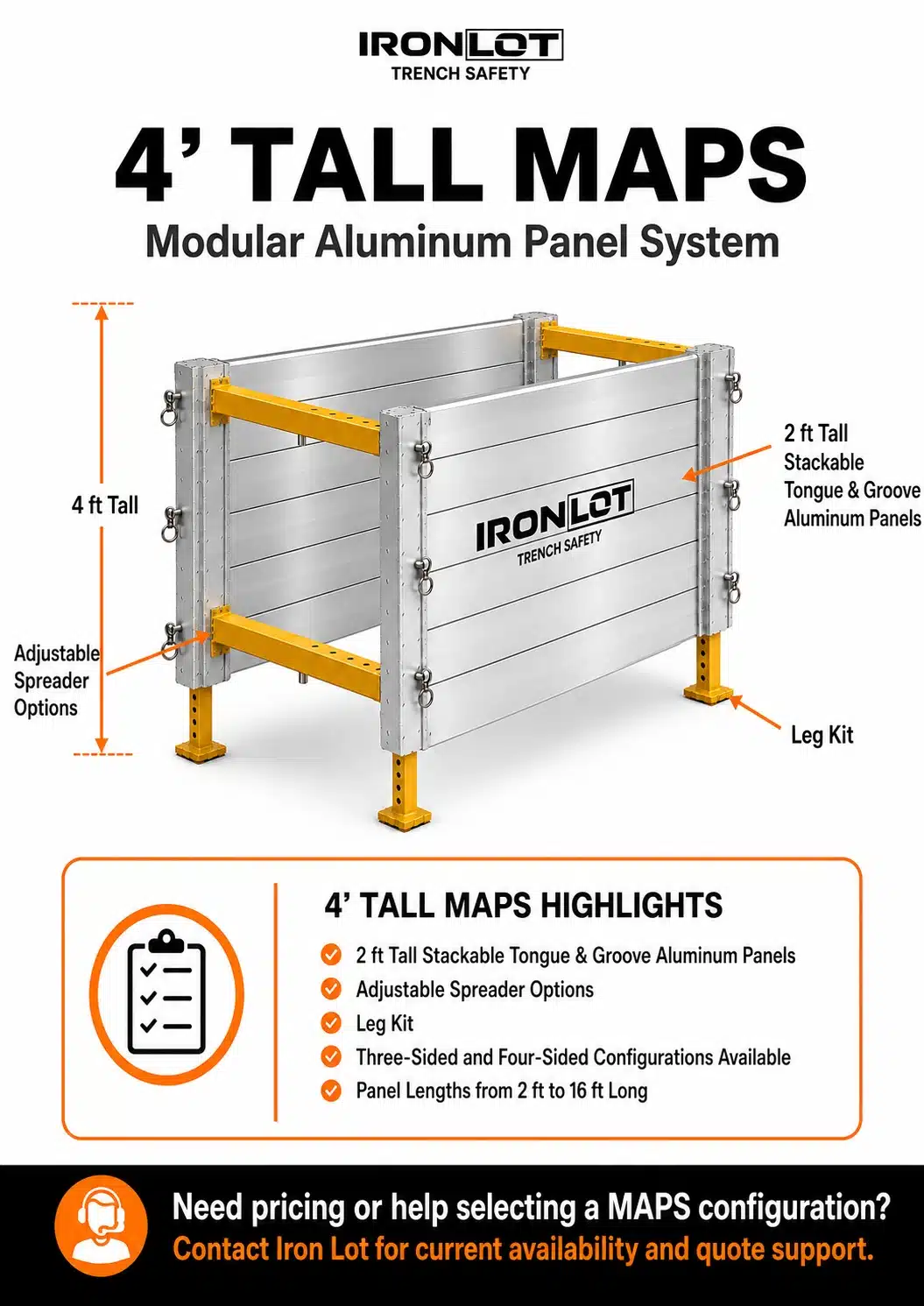
Modular aluminum shoring systems, such as the Pacific Shoring MAPS system, offer another approach. Rather than relying on one permanently assembled trench box, these systems use individual panels and compatible components to create approved protective configurations.
For contractors working across different excavation sizes and jobsite conditions, modular equipment can offer advantages in versatility, transportation, handling, and long-term equipment management.
Here are four reasons to consider modular aluminum shoring alongside traditional trench boxes.
Greater Configuration Flexibility
A conventional trench box generally has fixed panel dimensions. While spreader configurations and certain accessories may be adjustable, the shield's overall length and height are typically determined by its manufactured design.
Modular aluminum shoring takes a different approach.
Systems such as Pacific Shoring MAPS use individual aluminum panels and compatible components that can be selected for different approved excavation configurations.
Depending on the available components and manufacturer's tabulated data, contractors may be able to configure equipment for localized utility work, rectangular excavations, or other supported applications.
The advantage: A modular component inventory may support multiple excavation requirements, reducing the need to purchase a separate fixed-size shield for every application.
More Flexible Freight and Shipping
Shipping trench protection equipment can represent a significant portion of the delivered equipment cost, particularly for large steel shields.
Conventional trench boxes may require flatbed transportation and specialized loading arrangements because of their dimensions and assembled weight.
Modular systems offer a different shipping profile.
Individual panels and components can often be arranged more compactly than a fully assembled trench box. Depending on component dimensions, total shipment weight, and carrier requirements, this may allow more efficient freight arrangements.
For contractors ordering equipment from regional distribution locations, component-based shipping may also provide additional logistical flexibility.
The advantage: Compact component shipments may reduce freight complexity and transportation costs for certain orders, although actual savings depend on the equipment configuration, shipment size, origin, and destination.
Easier Jobsite Handling and Assembly
Large steel trench boxes often require substantial lifting equipment for unloading, positioning, and removal. This can create additional logistical considerations on smaller or congested jobsites.
Modular aluminum panels can offer handling advantages because individual components are generally smaller and lighter than a complete steel shield.
For example, Iron Lot's MAPS panel specifications include 2-foot-high aluminum panels in several lengths, allowing contractors to evaluate individual component dimensions and weights before selecting equipment.
Some modular components may be suitable for manual handling, while others require mechanical lifting or additional personnel. Assembly procedures depend on the specific system and configuration.
The advantage: Smaller individual components may simplify equipment transportation, unloading, storage, and positioning on jobsites where access or lifting capacity is limited.
Individual Component Replacement
Trench protection equipment is exposed to demanding jobsite conditions, including repeated handling, transportation, soil pressure, and contact with excavation equipment.
When a conventional trench shield sustains structural damage, the affected equipment must be evaluated before it can return to service.
Modular systems offer an additional equipment-management advantage: individual panels and compatible components can often be identified and replaced separately.
Rather than treating the entire configuration as one permanently assembled unit, contractors can maintain an inventory of individual system components.
The advantage: Replaceable components may simplify inventory management and reduce the cost of maintaining a modular shoring system over time. Damaged equipment must still be removed from service and evaluated according to applicable requirements.
Modular Aluminum Shoring vs. Conventional Trench Boxes
Both systems serve important roles in excavation safety. The best choice depends on the excavation dimensions, soil conditions, installation method, available equipment, and manufacturer's approved configurations.
| Consideration | Modular Aluminum Shoring | Traditional Trench Box |
|---|---|---|
| Configuration | Multiple compatible component combinations may be available | Typically manufactured with fixed panel dimensions |
| Shipping | Individual components may pack more compactly | Larger assembled shields may require flatbed freight |
| Handling | Smaller individual components; lifting needs vary | Complete shield handling generally requires machinery |
| Maintenance | Individual compatible components may be replaceable | Repairs or replacement depend on damage and manufacturer approval |
| Best Fit | Projects benefiting from configurable component systems | Projects benefiting from established shield dimensions and repetitive installations |
Which Trench Protection System Is Right for Your Project?
Traditional steel and aluminum trench boxes remain practical solutions for many utility and infrastructure projects, particularly where crews perform repetitive installations using consistent excavation dimensions.
Modular aluminum shoring systems offer another option for contractors who value adaptable equipment, component-based transportation, and flexible inventory management.
The decision should be based on the complete project requirements, including excavation geometry, soil conditions, protective-system ratings, installation procedures, and total delivered cost.
Explore Modular Trench Shoring with Iron Lot
Iron Lot supplies trench safety equipment for utility contractors, excavation companies, municipalities, and infrastructure projects.
Whether you're comparing modular aluminum panels with conventional trench boxes or need help identifying a suitable configuration, our team can assist with product information, pricing, and freight options.