
How Bedding Boxes Help Keep Underground Utility Projects Moving
Keeping underground utility projects moving requires more than efficient excavation and pipe installation. It also requires a dependable supply of bedding material at the right location and at the right time.
Whether installing water mains, sewer lines, storm drainage systems, or other underground utilities, contractors must continually manage the movement of bedding aggregate into the excavation.
When material is stored away from the active work area, equipment operators may need to interrupt other tasks to retrieve aggregate, reposition stockpiles, or make additional trips across the jobsite.
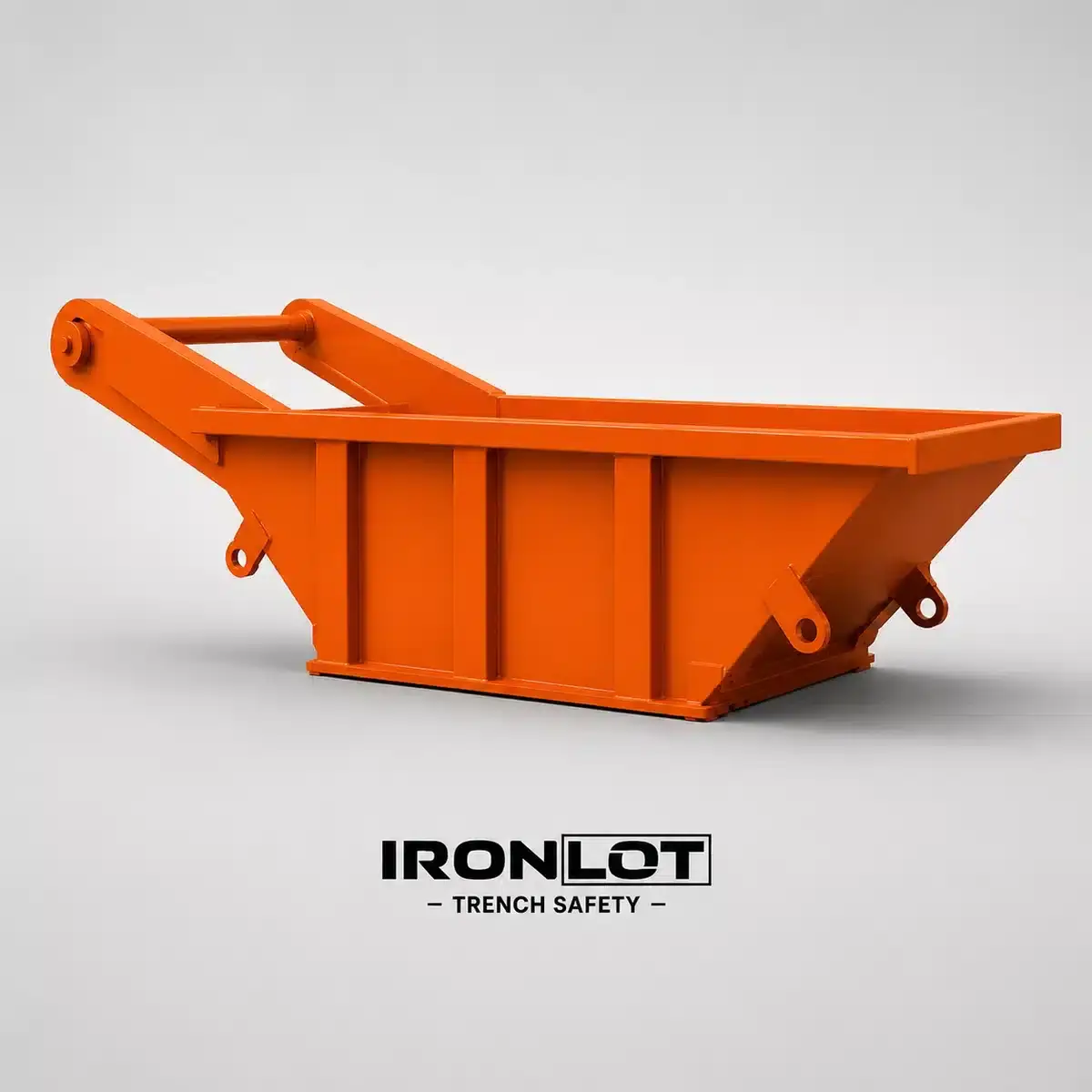
The practical advantage: A bedding box -also known as a stone box, gravel box, or mizer box- provides a dedicated container for staging aggregate near the excavation, helping crews organize material handling and reduce unnecessary interruptions during utility installation.
Why Bedding Material Handling Matters
Underground pipe installation typically follows a sequence of excavation, trench preparation, bedding placement, pipe installation, backfilling, and compaction.
Each stage depends on having the necessary equipment and materials available when needed.
Bedding aggregate is particularly important because it helps establish the support conditions required beneath and around underground pipe. Material selection, placement, thickness, and compaction must follow the applicable pipe installation requirements and project specifications.
On many projects, bedding aggregate is delivered in bulk and stored in stockpiles away from the excavation. Although this approach can work well, it may introduce additional handling and equipment movement.
Proper bedding placement is only one part of a successful underground pipe installation. The backfilling process is equally important for providing pipe support and protecting the installation. Learn more in Iron Lot's guide to proper trench backfilling .
Repeated Equipment Trips
Excavators and support equipment may need to travel between the stockpile and active excavation to retrieve bedding material.
Limited Working Space
Loose aggregate stockpiles can occupy valuable space on roadway projects, utility easements, and congested construction sites.
Material Organization
Uncontained aggregate may spread beyond its designated storage area or become mixed with surrounding soil and debris.
Interrupted Production
Pipe installation crews may experience delays when bedding material is not available at the excavation when required.
How a Bedding Box Fits into the Workflow
A bedding box is a heavy-duty container designed to hold bedding aggregate and other approved construction materials. Unlike a loose stockpile, it keeps material within a defined container that can be positioned near the active work area.
Depending on the box design, available equipment, and manufacturer instructions, contractors can load, stage, and reposition bedding boxes as excavation progresses.
Load
Fill the bedding box with the required aggregate using appropriate loading equipment.
Stage
Position the box in an approved location near the active excavation for convenient material access.
Replenish
Refill or reposition the box as work progresses, using the manufacturer's approved handling methods.
Consider a contractor installing a sewer main along a roadway. Without a bedding box, the excavator may need to retrieve aggregate from a separate stockpile or depend on another machine to deliver material.
With bedding material staged closer to the excavation, the crew can access aggregate as needed while maintaining the required pipe installation sequence.
New to bedding boxes? Learn how they are constructed, what materials they handle, and where they are commonly used.
Five Ways Bedding Boxes Can Improve Jobsite Efficiency
Keep Material Close to the Trench
Staging bedding aggregate near the excavation can shorten the distance equipment must travel to retrieve material.
This can be particularly useful on long utility runs where the active work area moves as pipe installation progresses.
Reduce Unnecessary Equipment Movement
A dedicated material staging location can help reduce repeated trips between distant stockpiles and the excavation.
Actual time savings depend on the jobsite layout, loading process, and equipment available.
Improve Material Organization
A bedding box provides a defined storage area that helps contain aggregate and limit the spread of loose material.
This may also help reduce incidental mixing with surrounding soil and debris when appropriate handling practices are followed.
Support Consistent Pipe Installation
Maintaining a dependable supply of bedding material can reduce interruptions during trench preparation and pipe installation.
Bedding boxes support material handling, but do not replace proper bedding placement, compaction, or pipe installation requirements.
Make Better Use of Limited Jobsite Space
Roadway work, municipal repairs, and construction in developed areas often require contractors to operate within restricted work zones.
A bedding box can provide a defined area for staging aggregate without relying on a large loose stockpile. The box must still be positioned where it will not obstruct access, interfere with traffic control, or create unsafe loading near the excavation.
Common Bedding Box Applications
Bedding boxes can be useful on many underground construction projects, but their value depends on the type of work, material demand, and available equipment.
Water & Sewer Main Installation
During continuous pipe installation, contractors can coordinate bedding aggregate staging with the changing location of the excavation.
Storm Drainage Projects
Bedding boxes can help organize aggregate when installing multiple pipe sections, drainage structures, and connections.
Municipal Utility Repairs
A defined material staging area may be helpful on roadway projects and utility repairs with restricted working space.
Commercial & Industrial Utilities
Bedding boxes can support organized material handling where equipment access and available storage space are limited.
For smaller spot repairs requiring only a limited quantity of bedding material, a traditional stockpile or direct material delivery may be sufficient. The best approach depends on project duration, material demand, site access, and the contractor's preferred workflow.
Bedding Box vs. Traditional Aggregate Stockpile
A bedding box is not necessarily the best solution for every project. Both methods can work effectively when properly planned.
| Consideration | Bedding Box | Loose Stockpile |
|---|---|---|
| Material Containment | Aggregate remains within a defined container. | Material may spread beyond the original pile. |
| Repositioning | Can be relocated using approved equipment and handling methods. | May require rehandling or moving material separately. |
| Jobsite Space | Provides a defined storage footprint. | Requires suitable ground space for the pile. |
| Material Accessibility | Can be staged near the work area where conditions permit. | Depends on stockpile location and equipment access. |
| Equipment Requirements | Requires compatible equipment for approved handling. | Requires equipment for loading and transporting aggregate. |
| Best Fit | Projects benefiting from organized, repositionable material staging. | Projects with adequate storage space and straightforward material access. |
The most efficient option depends on how the contractor plans to load, transport, stage, and place the required bedding material.
Choosing the Right Bedding Box
Not all bedding boxes are designed for the same applications. Before purchasing a box, contractors should evaluate the project's material requirements, equipment capabilities, and working conditions.
Material Capacity
Select a box that holds enough aggregate to support the intended workflow without creating unnecessary handling or transportation demands.
Equipment Compatibility
Evaluate the equipment used to handle the box, including lift capacity, lift radius, approved attachment points, and site conditions.
Dimensions & Access
Consider the box's footprint, working clearance, and ability to fit within the available construction area.
Construction & Durability
Compare structural design, empty weight, material capacity, and manufacturer-approved handling methods.
Important: The total loaded weight includes both the bedding box and its contents. A box that can be handled safely when empty may exceed equipment capacity once filled with aggregate.
Need help comparing sizes and configurations? Our bedding box selection guide explains the importance of capacity, loaded weight, equipment compatibility, and jobsite requirements.
Bedding Box Options from Iron Lot
Iron Lot supplies bedding boxes for underground utility contractors, municipalities, and construction companies.
Available options include sizes ranging from 2.25 cubic yards to 12 cubic yards.
When comparing bedding boxes, contractors should consider more than purchase price. The appropriate model should match the project's material requirements, equipment capabilities, transportation needs, and working conditions.
Contact Iron Lot for assistance with available product specifications, pricing, freight arrangements, and information needed to compare equipment options.
Better Material Handling Starts with Planning
Bedding boxes are relatively straightforward pieces of construction equipment, but their value comes from how they fit into the overall excavation workflow.
Keeping bedding aggregate organized and accessible can help contractors reduce unnecessary equipment movement, improve material staging, and maintain a more consistent pipe installation process.
For underground utility projects involving continuous pipe installation, restricted work areas, or significant aggregate requirements, a properly selected bedding box may be a useful addition to the equipment lineup.
The key is choosing a box that matches the project and developing a safe, efficient plan for loading, positioning, replenishing, and handling material.
Have Questions About Bedding Boxes?
Review our bedding box information page or call Iron Lot to discuss bedding box sizes, specifications, availability, and other equipment options for your next project.
Bedding Box Information Call 336-516-8011