Description
7′ Pacific Shoring Vertical Hydraulic Shore — 17″ to 27″
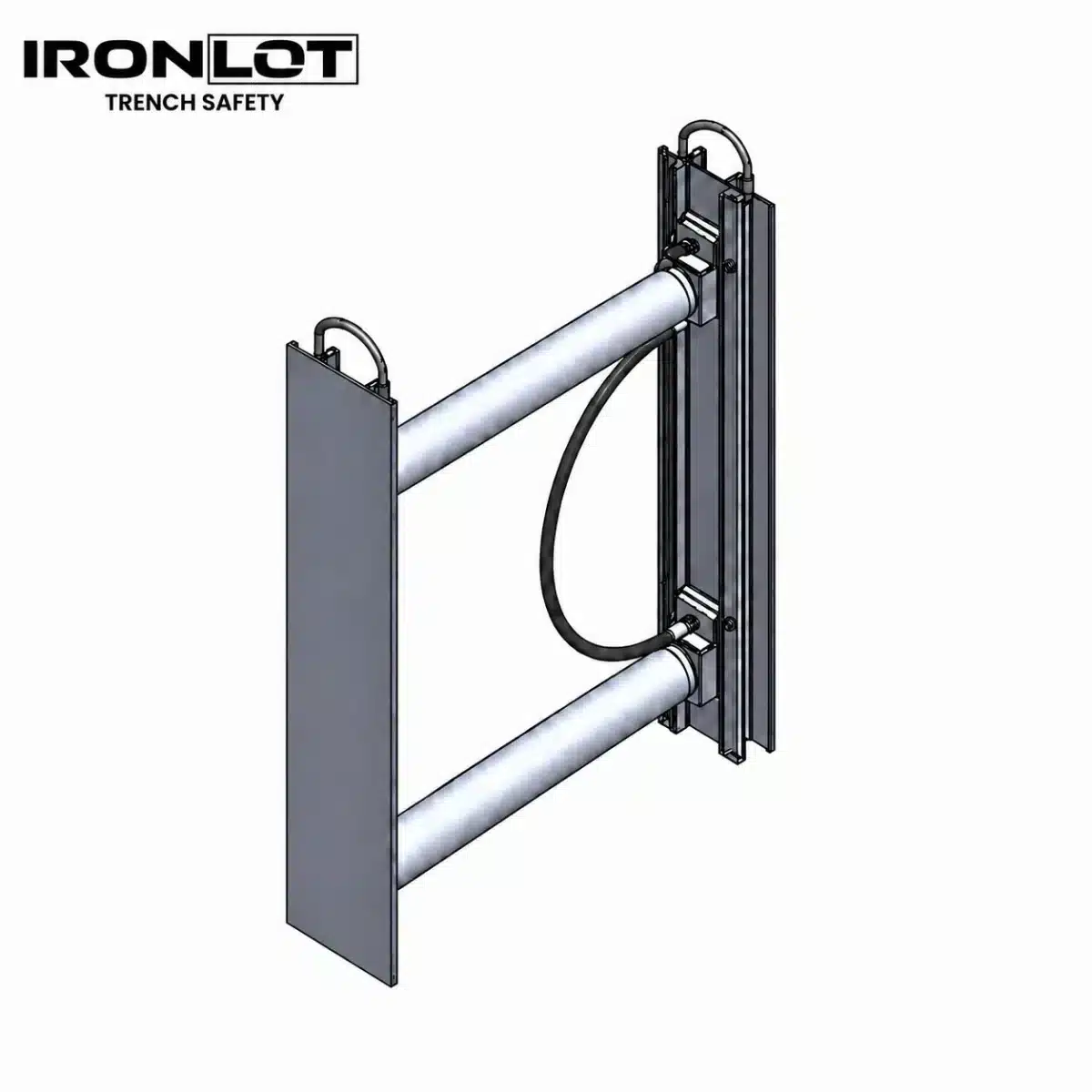
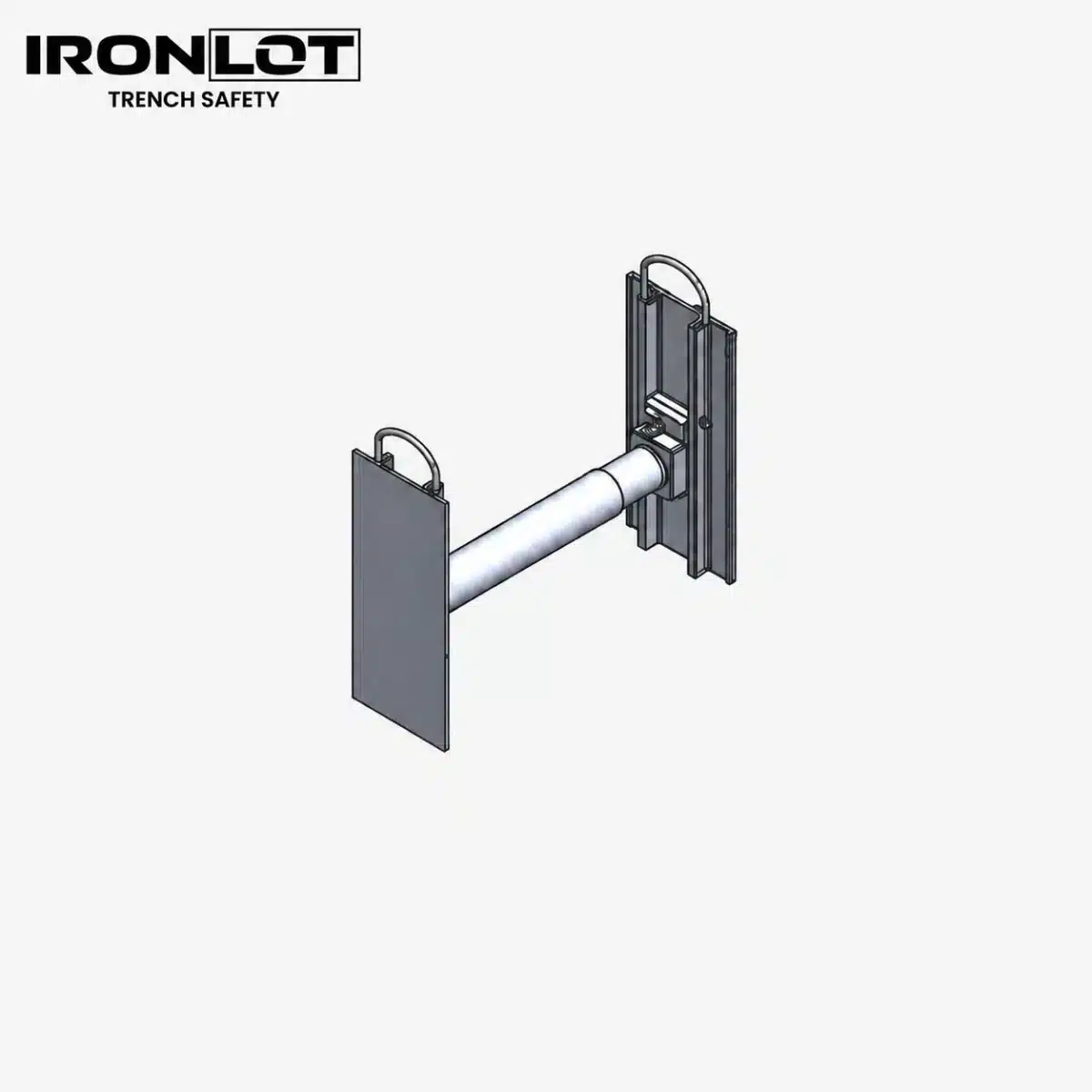
The Pacific Shoring PSV-07-17-27-HB is an aluminum vertical hydraulic shore designed to support opposing trench walls in narrow utility excavations ranging from 17 to 27 inches wide.
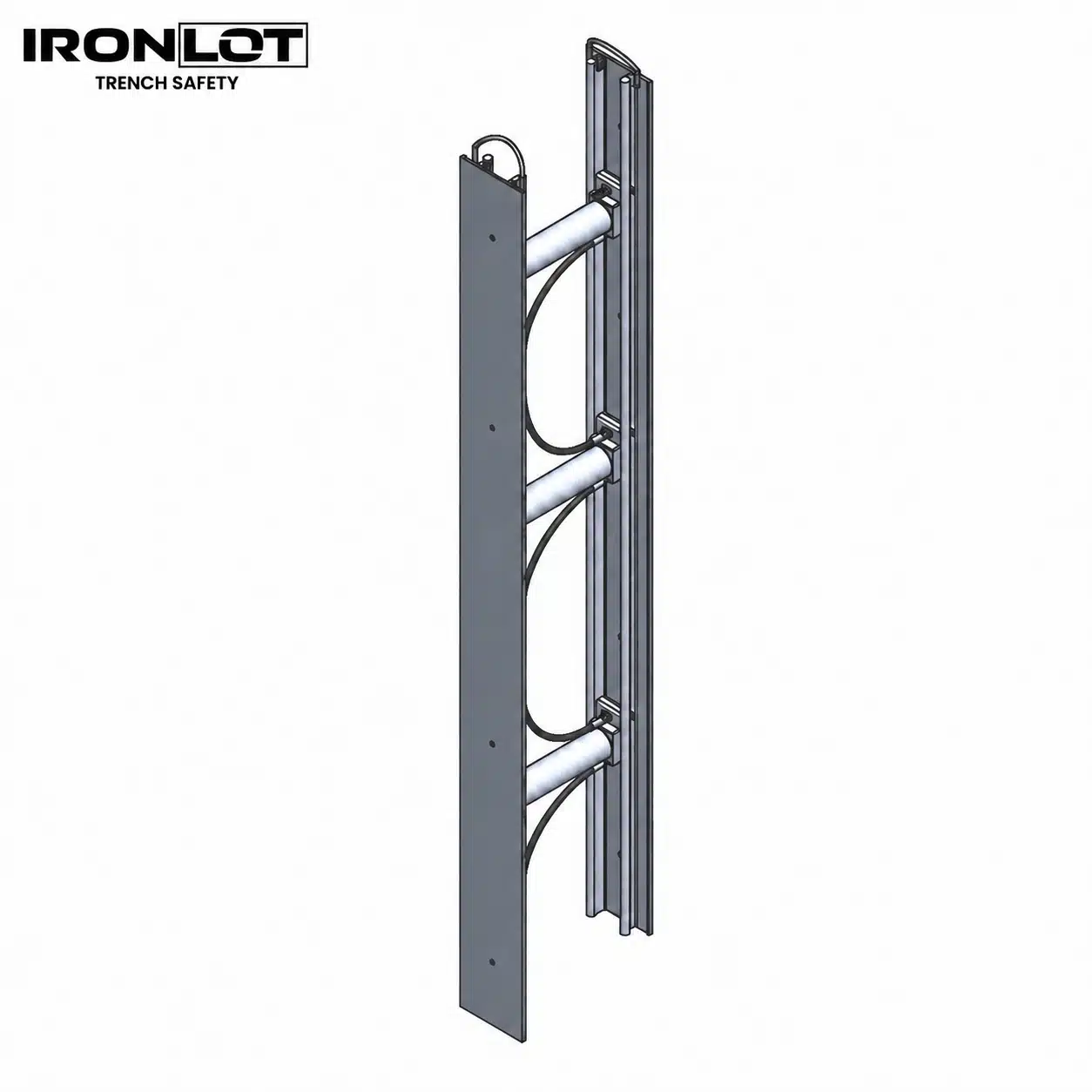
This model uses 84-inch vertical rails and three 2-inch hydraulic cylinders. Its narrow operating range is suited to focused water, sewer, gas, electrical, telecommunications, conduit, drainage, and industrial utility work where hydraulic shoring can provide trench-wall support without the sidewalls of a trench shield.
The PSV-07-17-27-HB weighs 68 lbs. Because of its 7-foot rail length, the shore should be staged, lifted, installed, and removed using suitable equipment and a job-specific handling procedure. Pacific Shoring vertical shores are designed to be installed and removed from outside the excavation.
This individual shore does not have a standalone soil-depth rating. Allowable excavation depth, horizontal shore spacing, vertical cylinder placement, sheeting requirements, surcharge conditions, and permissible trench conditions must be determined from Pacific Shoring’s current manufacturer tabulated data by the project Competent Person.
Key Benefits & Crew Efficiency
-
17- to 27-Inch Working Range: Designed for narrow service trenches and compact utility excavations.
-
Seven-Foot Vertical Rails: Provides 84 inches of rail coverage for increased vertical contact with opposing trench walls.
-
Three Hydraulic Cylinders: Provides three compression points along the vertical rail assembly.
-
68-Lb Unit Weight: Provides an aluminum shoring configuration that can be transported and staged with appropriate handling equipment.
-
Aluminum Construction: Combines corrosion resistance with lower weight than a comparable steel assembly.
-
Outside-the-Trench Installation: Allows the shore to be lowered, opened, pressurized, inspected, and removed without workers entering an unprotected excavation.
-
Hydraulic Installation: Uses controlled hydraulic pressure to establish firm contact with opposing trench walls.
-
Open Working Area: Supports trench walls without the sidewalls and internal-clearance restrictions of a complete trench box.
-
Modular Protective System: Can be used with additional hydraulic shores and allowable sheeting according to the required system layout.
-
Utility-Focused Design: Practical for underground contractors, municipalities, public works departments, plumbers, and industrial maintenance crews.
Product Specifications
| Product Code | PSV-07-17-27-HB |
|---|---|
| Product Name | Pacific Shoring 7′ Vertical Hydraulic Shore — 17″ to 27″ |
| Rail Length | 7 ft / 84 Inches |
| Minimum Trench Width | 17 Inches |
| Maximum Trench Width | 27 Inches / 2′3″ |
| Number of Cylinders | 3 |
| Hydraulic Cylinder Diameter | 2 Inches |
| Cylinder Locations | Verify the Factory Configuration and Current Pacific Shoring Tabulated Data |
| Unit Weight | 68 lbs |
| Material | Aluminum |
| Product Category | Hydraulic Shoring |
| Manufacturer | Pacific Shoring |
Pricing & Logistics
Price: $913.50 Each
Contact Iron Lot to confirm current pricing, availability, the factory cylinder configuration, compatible hydraulic pumps, installation tools, replacement parts, sheeting options, and freight charges.
The final quotation will identify all components included with the order. Depending on the planned protective system, additional equipment may include:
-
compatible vertical hydraulic shores
-
hydraulic hand pump with pressure gauge
-
hydraulic hose and fittings
-
release tool
-
removal hook
-
approved hydraulic fluid
-
plywood, aluminum, timber, or steel sheeting
-
replacement pins and connection hardware
-
lifting and handling accessories
Freight & Delivery Coordination
At 68 lbs with 7-foot rails, the PSV-07-17-27-HB requires planned handling for unloading, staging, positioning, installation, and removal. The rail length and three-cylinder arrangement can make the assembled shore difficult to control manually even when its total weight appears manageable.
Suitable lifting equipment should be used whenever the shore cannot be safely handled and controlled by the available crew. The contractor is responsible for selecting a handling method appropriate for the equipment, excavation, crew, and jobsite conditions.
Complete system weight will depend on the number of shores, pump equipment, hoses, installation tools, sheeting, and accessories included with the order.
We can coordinate delivery to contractor yards, municipal facilities, equipment locations, and active jobsites. Freight quotations are available for individual shores, complete hydraulic-shoring packages, replacement components, and mixed underground-equipment orders.
Target Applications
The PSV-07-17-27-HB is designed for trench applications where the excavation width remains within its 17- to 27-inch operating range. It is often used around incoming utilities and can be used alongside a trench box.
Potential applications include:
-
water-service installation and repair
-
sewer-service connections
-
utility taps and service connections
-
small-diameter pipe installation
-
conduit installation and maintenance
-
gas-service work
-
electrical and telecommunications trenches
-
irrigation and drainage work
-
utility crossings
-
localized pipe exposure
-
spot repairs
-
industrial piping and maintenance
-
municipal and public works projects
-
narrow street and easement excavations
The 7-foot rails provide substantially more vertical wall contact than shorter Pacific Shoring vertical-shore models while retaining a narrow operating range for compact utility trenches.
The 17- to 27-inch range must provide sufficient space for the pipe, fitting, utility component, installation tools, equipment, and any required worker clearance. Suitability depends on the actual dimensions of the work and the complete protective-system design.
This shore should not be selected solely because its rail length appears to correspond to the excavation depth. Allowable depth and placement depend on soil classification, horizontal spacing, cylinder locations, surcharge loading, sheeting, and the other requirements in Pacific Shoring’s current tabulated data.
How Vertical Hydraulic Shoring Works
Vertical hydraulic shores are compressive support elements installed between opposing trench walls. Once properly positioned and pressurized, the hydraulic cylinders force the vertical rails into firm contact with the soil.
The protective system relies on soil arching between adjacent shores. Where soil is likely to slough or ravel, allowable sheeting is installed behind or between the vertical rails to retain loose material.
The hinged shore can be:
-
inspected and prepared outside the excavation
-
folded for placement
-
lowered into the excavation with suitable handling equipment
-
opened against the opposing trench walls
-
pressurized using a compatible hydraulic hand pump
-
inspected before workers enter the protected area
-
depressurized and folded before removal
Workers must remain within the properly shored portion of the excavation whenever entering, exiting, or performing work.
Three-Cylinder Product Configuration
The product spreadsheet identifies the PSV-07-17-27-HB as a three-cylinder vertical hydraulic shore.
The supplied Pacific Shoring rail-dimension table does not identify all three cylinder centerlines for this exact 7-foot SKU. Because the complete three-cylinder placement is not established by the provided tabulated-data page, this product page does not assign specific cylinder locations.
Before ordering, assembling, installing, or using this shore, verify:
-
the factory-supplied number of cylinders
-
the correct cylinder mounting locations
-
the allowable vertical spacing
-
the appropriate rail configuration
-
the current manufacturer tabulated data covering the complete assembly
The shore must be used only in the configuration supported by Pacific Shoring’s current product documentation and the project Competent Person’s protective-system plan.
Hydraulic Pressure and Cylinder Capacity
Pacific Shoring’s installation procedure calls for vertical hydraulic shores to be pressurized between 750 and 1,500 PSI.
After pressurization:
-
the pressure gauge should hold steady
-
the system should show no pressure loss
-
both rails must maintain firm contact with the trench walls
-
all cylinders must remain properly aligned
-
the shore must not be loose or able to move
-
hydraulic fittings must not show leakage
-
the hydraulic hose should be removed and protected from dirt and contamination
Pacific Shoring identifies its 2-inch hydraulic cylinder assembly as providing a 23,000-lb safe working load for cylinder bulging at a 1.5 factor of safety.
Cylinder capacity does not replace the manufacturer’s spacing tables, soil limitations, surcharge requirements, or sheeting requirements. It does not permit the shore to be used outside the complete tabulated system.
Soil Classification and System Selection
The soil must be classified immediately before the hydraulic shores are installed. Soil, groundwater, surcharge, and excavation conditions can change during a project and may require shores to be repositioned, additional shores to be installed, sheeting to be added, or horizontal spacing to be reduced.
Pacific Shoring’s manufacturer tabulated data addresses:
-
OSHA Type A soil
-
OSHA Type B soil
-
the manufacturer’s defined Type C-60 condition
-
excavation depth
-
horizontal cylinder spacing
-
vertical cylinder placement
-
trench width
-
cylinder and extension requirements
-
sheeting requirements
-
surcharge loading
Type C-60 is a manufacturer-defined condition and is not a separate OSHA soil classification. Pacific Shoring’s tabulated data states that vertical hydraulic shores must not be used in Type C-80 soil under that data.
The 17- to 27-inch operating range falls within the manufacturer’s 0- to 8-foot excavation-width category. That width category alone does not establish allowable excavation depth, shore spacing, or cylinder placement.
The selection tables are based on defined surcharge conditions, including a 20,000-lb equipment surcharge positioned at the specified setback and a spoil pile no more than 2 feet high set back at least 2 feet from the excavation edge.
Other equipment loads, traffic, structures, materials, or spoil-pile conditions require evaluation. Shore spacing may need to be reduced.
Any alteration to the shore or deviation from Pacific Shoring’s tabulated data requires a site-specific plan prepared and approved by a registered engineer.
Shore Spacing and Placement
The PSV-07-17-27-HB is one component within a complete hydraulic-shoring layout. The required number and placement of shores must be determined from Pacific Shoring’s tabulated data rather than from the rail length or trench-width range of one shore alone.
Important placement requirements include:
-
maintain the required horizontal shore spacing
-
maintain allowable vertical cylinder spacing
-
place the upper support point within the permitted distance below the top of the excavation
-
place the lowest required support point within the permitted distance above the excavation bottom
-
maintain trench-wall contact at each cylinder elevation
-
position the shore near vertical
-
account for trench length when determining the number of shores
-
keep workers within the properly shored portion of the excavation
-
reevaluate the layout whenever soil or surcharge conditions change
Short trenches with a length equal to or less than twice the allowable horizontal spacing require at least two shores installed according to the spacing requirements. Longer trenches require at least three shores at the required spacing.
This minimum number of shores is a protective-system layout requirement and not a product-order minimum.
Hydraulic shores may be stacked or longitudinally lapped where permitted, provided the required horizontal and vertical spacing is maintained. Any such arrangement must follow Pacific Shoring’s current tabulated data and the Competent Person’s protective-system plan.
Sheeting Requirements
Sheeting is not considered the primary structural element of the vertical hydraulic-shoring system. Its purpose is to control soil that may slough or ravel between adjacent hydraulic shores.
Sheeting is required whenever sloughing or raveling is likely. When used, it must extend to the top of the excavation and reach the depth required by the manufacturer’s selection tables.
Allowable sheeting materials identified in the tabulated data include:
-
specified CDX plywood configurations
-
specified exterior plywood and form panels
-
Pacific Shoring aluminum sheeting
-
approved timber lagging
-
minimum 1/2-inch-thick steel plate
-
equivalent approved HDPE or timber products
Sheeting may be attached to the hydraulic shore or installed separately behind the rails. The material, thickness, width, orientation, and installation depth must comply with Pacific Shoring’s current tabulated data.
Critical Selection & Safety Factors
Is the PSV-07-17-27-HB Right for Your Excavation?
This model may be appropriate when the trench width remains between 17 and 27 inches and the complete protective-system design calls for a 7-foot vertical hydraulic shore with the verified factory cylinder configuration.
The project Competent Person must evaluate:
-
soil classification
-
excavation depth
-
trench width and length
-
factory cylinder configuration
-
horizontal shore spacing
-
vertical cylinder placement
-
surcharge loading
-
spoil-pile height and setback
-
equipment position and operating weight
-
traffic loading
-
groundwater and water seepage
-
sloughing or raveling
-
trench-wall voids
-
wall verticality
-
adjacent structures
-
existing utilities
-
pipe and utility-component dimensions
-
installation and equipment clearance
-
required worker clearance
-
required sheeting
-
lifting and handling procedures
-
installation and removal sequence
-
changing conditions during each shift
The shore should not be selected solely because the trench falls within its 17- to 27-inch operating range or because the excavation appears to match the 7-foot rail length.
The complete hydraulic-shoring system must satisfy the manufacturer’s current soil, depth, spacing, loading, sheeting, configuration, installation, and inspection requirements.
Installation and Pressurization
Installation must be performed from outside the excavation using suitable lifting equipment, a compatible hydraulic pump, hydraulic hose, pressure gauge, release tool, and removal hook.
A typical installation sequence includes:
-
Verify the shore’s factory configuration against current Pacific Shoring documentation.
-
Inspect the rails, cylinders, hose, fittings, pins, hinges, and hydraulic components.
-
Install required sheeting before placing the shore when the sheeting is not attached.
-
Connect the hydraulic hose to the shore.
-
Attach suitable lifting equipment and a tag line where required.
-
Lower the folded shore into the trench with the hydraulic fitting oriented toward the adjacent wall.
-
Hold or guide the adjacent rail using the proper installation tool.
-
Allow the opposite rail to unfold and lock into position.
-
Confirm that all cylinders are properly aligned with the rails.
-
Close the pump valve.
-
Pressurize the shore between 750 and 1,500 PSI.
-
Confirm that the pressure holds without loss.
-
Verify firm trench-wall contact at every cylinder elevation.
-
Remove the hydraulic hose using the release tool.
-
Protect the hose and fittings from dirt and contamination.
-
Repeat the process at each required shore location.
-
Inspect the completed protective system before workers enter.
Voids at a rail or cylinder contact point must be addressed using an allowable solid block to the trench bank. Excavation faces should be vertical, and the shore must maintain proper soil contact at every required support elevation.
Inspection and Removal
The shored excavation must be monitored for changed conditions. Pacific Shoring calls for inspections at the beginning and middle of the shift, with additional inspections whenever jobsite, soil, groundwater, or surcharge conditions change.
Inspections should include:
-
loose or depressurized shores
-
hydraulic leakage
-
loss of gauge pressure
-
water seepage
-
soil movement
-
surface cracks
-
sloughing or raveling
-
damaged rails or cylinders
-
bent or displaced components
-
changed soil classification
-
increased surcharge loads
-
improper equipment or spoil-pile placement
-
loss of trench-wall contact at any cylinder elevation
Loose shores must be removed and replaced. Shores left in place overnight must be inspected before workers reenter the excavation.
Before removal, hydraulic pressure must be released using the proper tool. Pulling a hydraulic shore without first releasing its pressure can damage the shore and create an uncontrolled movement hazard.
Removal must proceed from outside the excavation and remain coordinated with pipe bedding, initial backfill, and the approved protective-system removal sequence.
Safe Handling and Use
Important handling practices include:
-
install and remove the shore from outside the trench
-
use suitable lifting equipment for the 7-foot assembly
-
use approved lifting points and rigging
-
use a tag line to control suspended equipment
-
keep workers clear of suspended shores
-
keep hands away from hinge blocks and moving connections
-
maintain safe hand placement when opening or folding the shore
-
control the shore throughout lowering and removal
-
keep unnecessary personnel and equipment away from the trench edge
-
do not permit workers beneath a loose or depressurized shore
-
use remote compaction methods outside the protected area
-
maintain safe access and egress
-
stop work when signs of trench-wall movement or protective-system failure are observed
The contractor and Competent Person are responsible for developing a safe installation, lifting, pressurization, inspection, and removal procedure for the specific excavation and ensuring that workers are properly trained before using the equipment.
Request a Quote from Iron Lot
We supply Pacific Shoring vertical hydraulic shores, hydraulic pumps, installation tools, sheeting, trench boxes, manhole boxes, road plates, and related underground construction equipment.
Contact our team for:
-
current pricing and availability
-
complete hydraulic shoring packages
-
additional shore sizes
-
compatible pumps and hoses
-
installation and removal tools
-
cylinder extensions
-
approved sheeting options
-
replacement parts
-
multiple-unit pricing
-
freight and delivery coordination
-
equipment financing information
Warehouse Shipping Locations: California, Texas, North Carolina
Payment Options:
We accept company check, wire transfer, ACH, and credit card payments. We also offer financing through Ascentium Capital.
Financing: Ascentium Capital offers fast and flexible financing. With their quick and convenient way to purchase equipment, working with Ascentium Capital helps you acquire the funds you need for your equipment purchase. With financing and leasing of up to $2,000,000, Ascentium Capital works with you to make the application process simple and at no obligation.
To learn more about Ascentium Capital and how it can assist you, click image below:

Call Iron Lot at 336-516-8011 or request a quote online for current pricing, availability, and freight information.
Not sure which trench box is right for your project? Compare additional trench boxes for sale, including steel, aluminum, and manhole box options.