
Manhole Box vs. Trench Box: What’s the Difference?
Manhole boxes and standard trench boxes are both excavation shield systems, but they are not necessarily designed for the same type of work area.
A standard trench box is commonly configured for linear trenching, while a purpose-built manhole box is typically arranged to provide working clearance around manholes, vaults, structures, and other localized excavations.
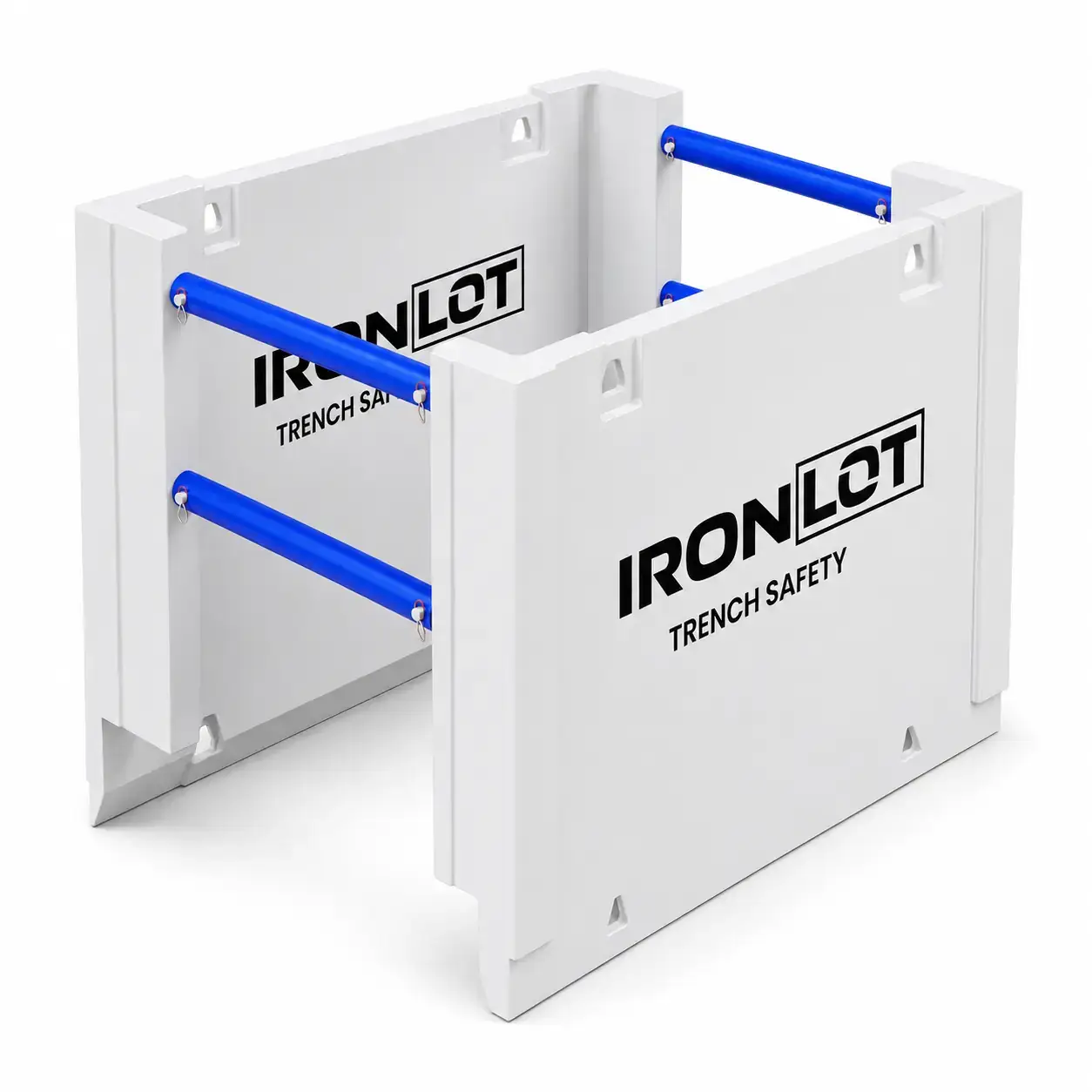
The Short Answer
The biggest difference is usually the configuration of the shield around the work area.
Designed Around a Linear Trench
A standard trench shield typically uses two sidewalls connected by spreaders, with open ends that allow pipe, utilities, equipment, and trenching operations to continue through the excavation.
Designed Around a Localized Structure
A purpose-built manhole shield may use different end-wall, corner, opening, or clearance arrangements to create protected working space around a manhole, vault, or other structure.
A short trench box is not automatically a manhole box. The shield's actual end configuration, corner design, working clearance, dimensions, and manufacturer's tabulated data matter.
What Is a Standard Trench Box?
A trench box, also called a trench shield, is a protective system designed to withstand the forces of a cave-in and protect workers located within the shielded area.
A typical steel trench box consists of two large side panels held apart by spreaders. The ends are usually open so pipe, utilities, excavation equipment, and other work can continue through the trench.
Standard trench boxes are commonly associated with linear underground utility construction, but shorter boxes may also be useful for localized utility work when their dimensions and configuration fit the excavation.
What Is a Manhole Box?
A manhole box, or manhole shield, is a shield system configured for localized excavation work where the crew needs protected working space around a larger structure rather than only along a narrow linear trench.
Depending on the manufacturer and model, a manhole shield may provide openings, reduced end walls, special corner arrangements, or other geometry that allows a structure or connecting utilities to pass through or extend beyond the protected area.
The exact configuration varies. The term manhole box should therefore be reserved for shields that the manufacturer identifies or designs for that purpose.
Key Differences Between Manhole Boxes and Trench Boxes
Linear vs. Localized
Standard trench boxes are commonly used along a trench alignment. Manhole shields are typically intended for a concentrated work area around a structure.
Open Ends vs. Purpose-Built Openings
A standard trench box commonly has open ends. A manhole shield may use special end-wall or opening arrangements for structures and connecting utilities.
Pipe Run vs. Structure Access
A manhole excavation may require substantial clearance around a precast structure for rigging, assembly, connections, and worker positioning.
The Shape of the Excavation Matters
Localized structure excavations may be wider or more square than a typical pipe trench, which can influence shield configuration and spreader requirements.
The Shield Must Fit Around the Work
Manhole rings, vaults, fittings, pipe connections, lifting gear, and worker access all consume space inside the excavation.
Names Are Not Interchangeable
A shield should not be called a manhole box simply because it is short. The manufacturer should identify the intended configuration and permitted use.
Excavation Shape Is a Major Difference
Pipe trenching often creates a relatively long, linear excavation. Manhole and vault installation can require a much broader working area around the structure.
That broader excavation can change the type of clearance needed between the shield walls, end configuration, spreader arrangement, and the amount of room available for lifting and positioning the structure.
Is a Short Trench Box the Same as a Manhole Box?
No. A short trench shield may be very useful for localized excavations, but length alone does not make it a purpose-built manhole shield.
For example, an 8-foot-high by 10-foot-long or 8-foot-high by 12-foot-long steel trench box can be a practical compact shield for utility work where the full height of an 8-foot shield is needed but a longer box would be unnecessarily difficult to position.
Whether a standard trench shield is appropriate for any of those applications depends on the dimensions of the pipe, structure, fitting, vault, or other component and the manufacturer's current tabulated data.
Two shields with the same nominal height and length can have different spreader arrangements, panel construction, end geometry, weights, and allowable depth ratings.
Can a Standard Trench Box Be Used for Manhole Work?
It may be possible when the standard trench shield provides sufficient clearance for the structure, workers, pipe connections, rigging, and equipment and when the complete configuration is permitted by the manufacturer's current tabulated data.
The decision should be based on the actual excavation and structure dimensions—not simply on the fact that the shield appears large enough from the outside.
Can a Manhole Box Be Used for Regular Trenching?
That depends on the specific shield. A manhole box may be capable of use in other excavation configurations, but its geometry may not be as efficient for continuous mainline trenching as a standard open-ended trench box.
The manufacturer's permitted configurations and tabulated data should control the decision.
How Do You Choose Between a Manhole Box and a Trench Box?
Start with the complete excavation and the component that must fit within it.
For a more complete selection process, see our How to Choose a Trench Box guide.
Shield Height Does Not Automatically Determine Allowable Depth
A common mistake is to treat the physical height of a manhole box or trench box as the excavation's allowable depth.
The allowable excavation depth depends on the manufacturer's tabulated data, shield configuration, soil classification, surcharge loading, spreader arrangement, and other design conditions.
A taller box does not automatically mean it can be used deeper, and stacking shields increases physical shielded height but does not automatically increase the allowable excavation depth.
The Competent Person Still Controls the Jobsite Evaluation
Whether the project uses a standard trench box, purpose-built manhole shield, stacked shield system, or another protective system, the excavation still needs to be evaluated by the Competent Person.
Common Manhole Box and Trench Box Selection Mistakes
Choose the Shield Around the Actual Excavation
The difference between a manhole box and a standard trench box is not simply the dimensions printed in the model name. The structure being installed, excavation geometry, internal clearance, spreader arrangement, end configuration, shield design, soil conditions, surcharge loads, manufacturer tabulated data, and Competent Person's evaluation all need to be considered before selecting the protective system.
Need Help Selecting a Shield for Manhole or Utility Work?
Contact us with the excavation dimensions, structure or utility dimensions, required working clearance, project requirements, and delivery location for current trench shield options, pricing, availability, and freight coordination.