
Description
7′ Tall Hydraulic Trench Shoring with 17–27″ Range – Pacific Shoring
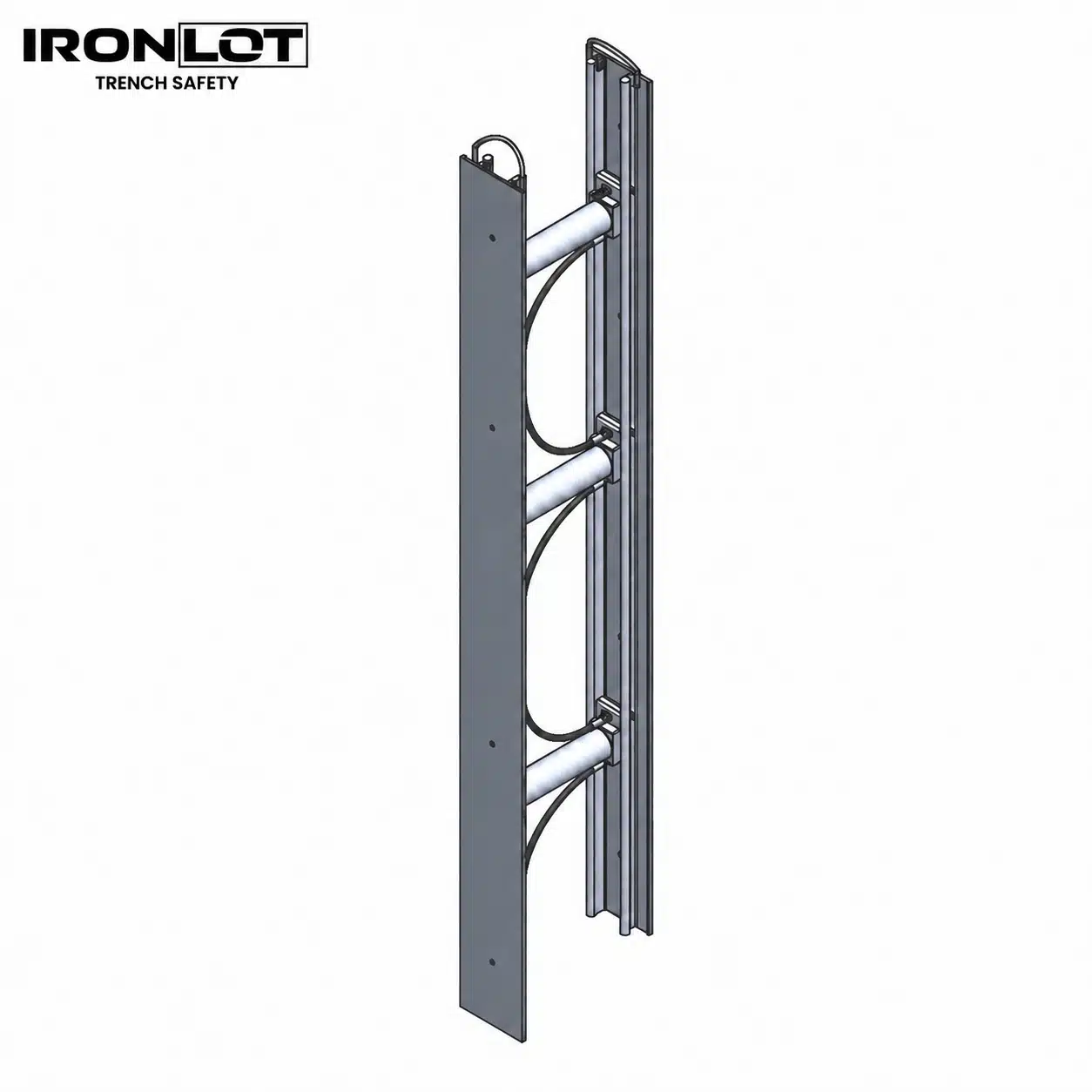
The Pacific Shoring PSV-07-17-27-HB is an aluminum vertical hydraulic shore designed to support opposing trench walls in narrow utility excavations ranging from 17 to 27 inches wide.
This three-cylinder shore uses an 84-inch vertical rail configuration with three 2-inch hydraulic cylinders. Its narrow working range makes it practical for water and sewer service connections, utility taps, conduit installation, spot repairs, and other localized excavations where a full trench shield may be unnecessarily large or difficult to position.
Compared with shorter one- and two-cylinder vertical shores, the PSV-07-17-27-HB provides a longer rail and an additional hydraulic cylinder for use in approved shoring arrangements. Exact cylinder locations and permitted excavation configurations must be verified against the factory configuration and Pacific Shoring’s current tabulated data.
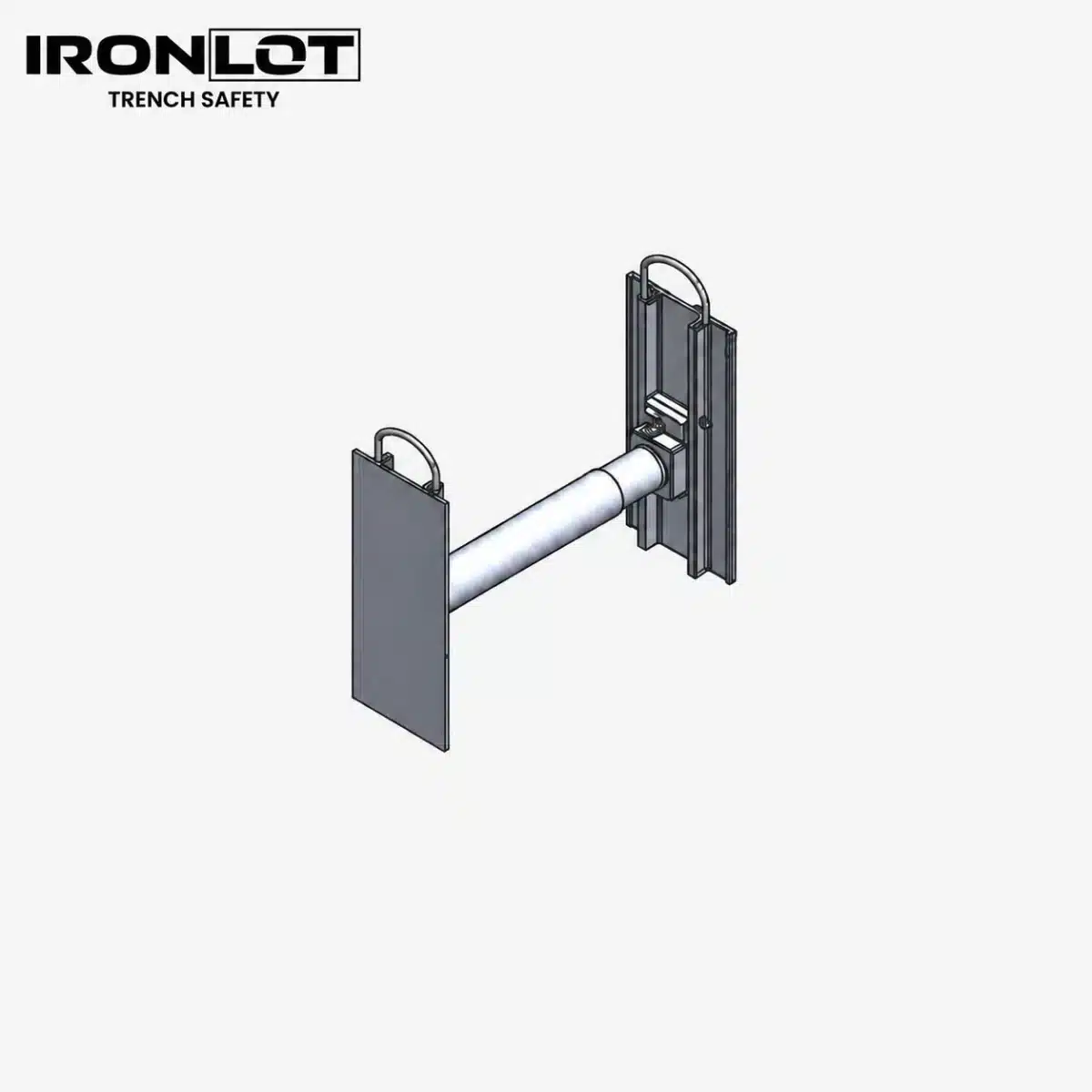
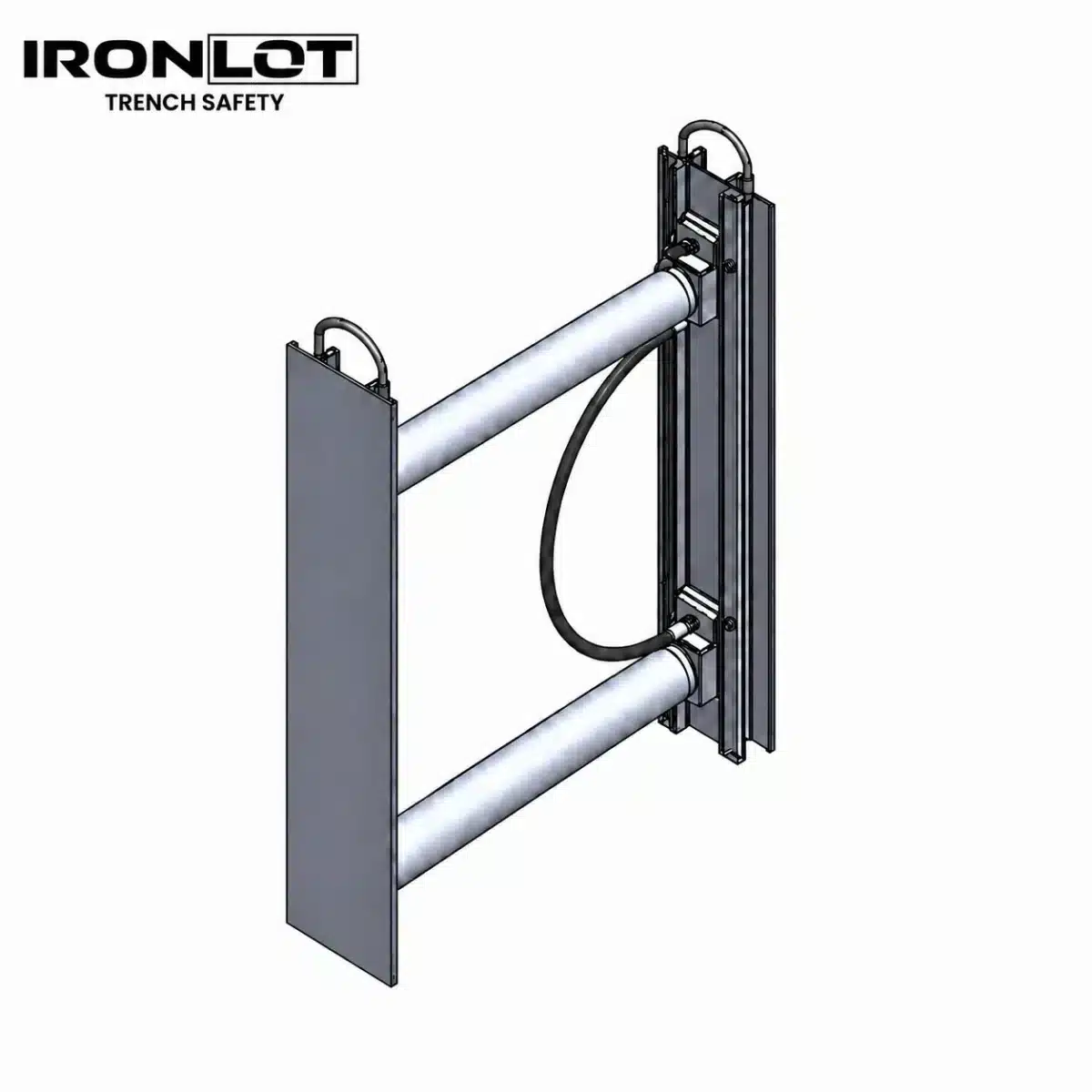
The PSV-07-17-27-HB features aluminum construction and a hinged design intended for installation and removal from outside the excavation. The shore can be lowered into the trench in a folded position, opened against the trench walls, and pressurized using a compatible hydraulic hand pump.
This individual shore does not have a standalone soil-depth rating. Allowable excavation depth, horizontal shore spacing, vertical cylinder spacing, sheeting requirements, and permissible trench conditions must be determined from Pacific Shoring’s current manufacturer tabulated data by the project Competent Person.
Not sure which hydraulic shore is right for your project? View hydraulic shoring information, including available length and width variations.
Key Benefits & Crew Efficiency
- 17- to 27-Inch Working Range: Designed for narrow utility trenches and localized excavations where excavation width must be controlled.
- 7-Foot Vertical Rail Length: Provides an 84-inch rail configuration for utility excavations and approved multi-shore arrangements.
- Three 2-Inch Hydraulic Cylinders: Provide controlled hydraulic support between opposing trench walls.
- Triple Cylinder Configuration: Incorporates three hydraulic support points along the vertical rails, with exact cylinder locations subject to factory configuration and manufacturer tabulated data.
- Aluminum Construction: Combines corrosion resistance with manageable 68 lb weight.
- Outside-the-Trench Installation: Designed for placement, pressurization, and removal from outside the excavation.
- Hydraulic Installation: Uses controlled hydraulic pressure to establish firm contact with opposing trench walls.
- Narrow Excavation Capability: Suitable for utility work where trench width is limited and a compact protective system is needed.
- Modular Shoring System: Can be used with additional shores and approved sheeting according to the required system layout.
- Utility-Focused Design: Practical for contractors, municipalities, public works departments, and industrial maintenance crews.
Product Specifications
| Product Code | PSV-07-17-27-HB |
|---|---|
| Product Name | Pacific Shoring 7′ Vertical Hydraulic Shore — 17″ to 27″ |
| Rail Length | 7 ft / 84 Inches |
| Minimum Trench Width | 17 Inches |
| Maximum Trench Width | 27 Inches / 2′3″ |
| Number of Cylinders | 3 |
| Hydraulic Cylinder Diameter | 2 Inches |
| Cylinder Locations | Verify the Factory Configuration and Current Tabulated Data |
| Unit Weight | 68 lbs |
| Material | Aluminum |
| Product Category | Hydraulic Shoring |
| Manufacturer | Pacific Shoring |
Pricing & Logistics
Price: $1,035
Contact Iron Lot to confirm current pricing, availability, and more information on compatible hydraulic pumps, installation tools, replacement parts, sheeting options, and freight charges.
Freight & Delivery Coordination
The PSV-07-17-27-HB features aluminum construction for transportation and staging at utility excavation jobsites. Complete system weight will depend on the number of shores, pump equipment, tools, sheeting, extensions, and accessories included with the order.
We can coordinate delivery to contractor yards, municipal facilities, equipment locations, and active jobsites. Freight quotations are available for individual shores, complete hydraulic shoring packages, replacement components, and mixed underground-equipment orders.
Target Applications
The PSV-07-17-27-HB is designed for narrow trench applications where the excavation width falls within its 17- to 27-inch operating range. It may be used around incoming utilities or alongside a trench box when the complete protective-system design permits.
Potential applications include:
- water-service installation and repair
- sewer-service connections
- utility taps and tie-ins
- small-diameter pipe installation
- conduit installation and repair
- gas-service work
- electrical and telecommunications trenches
- irrigation and drainage work
- utility crossings
- localized pipe exposure
- spot repairs
- plumbing and industrial maintenance
- municipal and public works projects
- street and easement excavations
The 7-foot rail length and narrow hydraulic working range make this shore useful for localized utility work where excavation width must be controlled and a longer vertical rail configuration is required. Its three-cylinder arrangement provides multiple hydraulic contact locations along the rails, subject to the manufacturer’s approved installation requirements.
The shore may also be incorporated into a stacked or longitudinally lapped system when additional vertical coverage is required and the configuration is permitted by Pacific Shoring’s tabulated data.
Suitability depends on trench depth, soil classification, trench-wall stability, excavation width, shore spacing, surcharge loads, groundwater, sloughing or raveling conditions, required sheeting, and the complete protective-system layout.
How Vertical Hydraulic Shoring Works
Vertical hydraulic shores are compressive support elements installed between opposing trench walls. Once properly positioned and pressurized, the shore creates firm contact at each rail and cylinder location.
The system relies on soil arching between shores. Where soil is likely to slough or ravel, approved sheeting is installed behind or between the vertical rails to retain loose material.
The PSV-07-17-27-HB is hinged so it can be:
- folded for placement
- lowered into the excavation from outside the trench
- opened against the opposing trench walls
- depressurized and folded before removal
Workers must remain within the properly shored area whenever entering, exiting, or working in the excavation.
Hydraulic Pressure and Cylinder Capacity
Pacific Shoring’s installation procedure calls for hydraulic shores to be pressurized between 750 and 1,500 PSI.
After pressurization:
- the pressure gauge should hold steady
- the system should show no pressure loss
- both rails must maintain firm contact with the trench walls
- the shore must not be loose or able to move
- the hydraulic hose should be removed and protected from dirt and contamination
Hydraulic cylinder capacity must be confirmed for the exact shore configuration. Cylinder capacity does not replace the manufacturer’s spacing tables or permit use outside the tabulated system requirements.
Soil Classification and System Selection
The soil must be classified immediately before the hydraulic shores are installed. Soil conditions can change during the project and may require shores to be repositioned, additional shores to be installed, or horizontal spacing to be reduced.
Pacific Shoring’s tabulated data states that vertical hydraulic shores must not be used in OSHA Type C-80 soil.
The selection guide is based on defined loading conditions that include equipment weighing 20,000 lbs or less and a spoil pile no more than 2 feet high, with the applicable setback requirements. Additional or heavier surcharge loads must be evaluated by the Competent Person, and shore spacing may need to be reduced.
Any alteration to the shore or variance from the manufacturer’s tabulated data requires a site-specific plan prepared and approved by a registered engineer.
Shore Spacing and Placement
The PSV-07-17-27-HB is one component within a complete hydraulic shoring layout. The number and placement of shores are determined by the manufacturer’s tabulated data rather than by the dimensions of one shore alone.
Important placement requirements include:
- maintain the required horizontal shore spacing
- maintain a maximum 4-foot vertical cylinder spacing
- place the upper cylinder within the permitted distance below the top of the excavation
- place the bottom cylinder no more than 4 feet from the excavation bottom
- verify the factory locations of all three hydraulic cylinders
- maintain contact with the soil at each cylinder location
- account for trench length when determining the minimum number of shores
- keep workers inside the properly shored portion of the excavation
For trenches 6 feet deep or less, the tabulated data permits one hydraulic cylinder per vertical spacing increment when the cylinder is positioned no more than 4 feet from the excavation bottom and no more than 2 feet below the top.
The three-cylinder configuration of this 7-foot shore must be evaluated using the actual cylinder locations and the applicable manufacturer spacing requirements. Rail length alone does not establish an allowable excavation depth.
Hydraulic shores may be stacked or longitudinally lapped when the required spacing is maintained. These configurations must follow Pacific Shoring’s tabulated data and the Competent Person’s protective-system plan.
Sheeting Requirements
Sheeting is not treated as the primary structural element of the vertical hydraulic shoring system. Its purpose is to prevent soil from sloughing or raveling between the hydraulic shores.
Sheeting is required whenever sloughing or raveling is likely to occur. When used, it must extend to the top of the excavation and reach the depth required by the manufacturer’s selection table.
Approved sheeting materials identified in the tabulated data include:
- specified CDX plywood configurations
- specified exterior plywood and form panels
- Pacific Shoring aluminum sheeting
- approved timber lagging
- minimum 1/2-inch-thick steel plate
- equivalent approved HDPE or timber products
Sheeting may be attached to the hydraulic shores or installed separately behind the rails. Material, thickness, width, and installation depth must comply with the current tabulated data.
Critical Selection & Safety Factors
Is the PSV-07-17-27-HB Right for Your Excavation?
This model is a practical choice when the trench width remains between 17 and 27 inches and the complete protective-system design allows a 7-foot vertical hydraulic shore with three 2-inch cylinders.
The longer rail and three-cylinder configuration may be appropriate when the approved shoring arrangement requires additional vertical hydraulic contact locations. However, the suitability of this model depends on the actual factory cylinder positions, trench conditions, and the manufacturer’s tabulated spacing requirements.
This shore should not be selected solely because the trench falls within its width range or because the rail measures 7 feet long. The complete hydraulic shoring system must satisfy the manufacturer’s tabulated spacing, soil, loading, sheeting, and installation requirements.
Installation and Pressurization
Installation must be performed from outside the excavation using a compatible pump, hydraulic hose, pressure gauge, and release tool.
Voids at a rail or cylinder contact point must be addressed using an approved solid block to the trench bank. The excavation faces should be vertical, and each shore must maintain proper contact with the soil.
Refer to Iron Lot’s comprehensive guide for more information on hydraulic shoring installation and removal.
Inspection and Removal
The shored excavation must be monitored for changed conditions. The manufacturer calls for inspection at the beginning and middle of the shift, with additional inspection when conditions change.
Loose shores must be removed and replaced. Shores left in place overnight must be inspected before workers reenter the trench.
Before removal, hydraulic pressure must be released with the proper tool. Pulling a hydraulic shore without first releasing the pressure can damage the unit.
Removal should proceed from outside the excavation and remain coordinated with pipe bedding, initial backfill, and the approved protective-system sequence. View Iron Lot’s guide on hydraulic shoring inspection and safe use for more information.
Safe Handling and Use
Important handling practices include:
- install and remove shores from outside the trench
- keep workers clear of suspended equipment
- use a tag line when lifting larger shores with equipment
- keep hands away from hinge blocks and moving connections
- maintain safe hand placement when opening or folding the shore
- use lifting equipment when a unit cannot be safely handled manually
- keep unnecessary personnel and equipment away from the trench edge
- do not permit workers beneath a loose or depressurized shore
- use remote compaction methods outside the protected area
- maintain safe access and egress
- discontinue work when evidence of trench-wall collapse or protective-system failure is observed
The contractor and Competent Person are responsible for developing a safe installation and removal procedure for the specific excavation and ensuring that workers are trained before using the equipment.
Request a Quote from Iron Lot
We supply Pacific Shoring vertical hydraulic shores, hydraulic pumps, installation tools, sheeting, trench boxes, manhole boxes, road plates, and related underground construction equipment.
Contact our team for current pricing and availability, complete shoring packages, multiple unit orders, freight options, and more product information.
Warehouse Shipping Locations: California, Texas, North Carolina
Payment Options:
We accept company check, wire transfer, ACH, and credit card payments. We also offer financing through Ascentium Capital.
Financing: Ascentium Capital offers fast and flexible financing. With their quick and convenient way to purchase equipment, working with Ascentium Capital helps you acquire the funds you need for your equipment purchase. With financing and leasing of up to $2,000,000, Ascentium Capital works with you to make the application process simple and at no obligation.
To learn more about Ascentium Capital and how it can assist you, click image below:

Call Iron Lot at 336-516-8011 or request a quote online for current pricing, availability, and freight information.
Reviews
There are no reviews yet.